
On February 19, 2015, the Government of India launched the revolutionary Soil Health Card scheme, whose motto is “Healthy Earth, Green Fields.” Under this scheme, millions of farmers have been provided with free scientific reports to help them choose the right crops, use fertilizers judiciously, and maintain soil fertility over the long term. Learn how this unique scheme works, the complete soil testing process, and how it can significantly reduce your expenses and increase your income.
Soil Health Card
The primary objective of the Soil Health Card Scheme is to provide farmers with a scientific assessment of their land’s soil. Under this scheme, every farmer is issued a free card containing a complete soil report for their land once every two to three years. To date, more than 250 million Soil Health Cards have been distributed across the country, completely free of charge.

Report on 12 Key Parameters
This card contains detailed information on 12 key parameters, including nutrients such as nitrogen, phosphorus, potassium, sulfur, zinc, iron, copper, manganese, and boron, as well as pH, electrical conductivity, and organic carbon. This report informs farmers about the nutrients their soil is deficient in, which crops will yield optimal yields, and the appropriate amount of fertilizer they should apply. If necessary, corrective measures such as lime or gypsum are also recommended for soil improvement.
Scientific Process of Soil Testing
The process of issuing soil health cards is carried out in a completely scientific manner to ensure farmers receive accurate information. First, soil samples are collected from a depth of 15 to 20 centimeters in the field. These samples are taken from a grid of two to two and a half hectares, depending on the field conditions.
These samples are then tested at state government soil testing laboratories, agricultural universities, or private laboratories. After testing, farmers are given a printed card, and they can also download their complete information online from the soilhealth.dac.gov.in portal. This transparent process ensures that farmers receive high-quality information.
Important Benefits of the Scheme
The Soil Health Card Scheme brings numerous and wide-ranging benefits to farmers, vital for both their income and the environment.
First, by knowing the condition of their soil, farmers are able to choose the right crop, which significantly increases yields.
Another major benefit is that by applying fertilizers according to the recommended quantities on the card, farmers reduce costs and reduce the burden of chemicals on land and water.
Third, soil health improves because farmers can maintain soil fertility long-term by applying organic fertilizers, lime, or other corrective measures as needed.
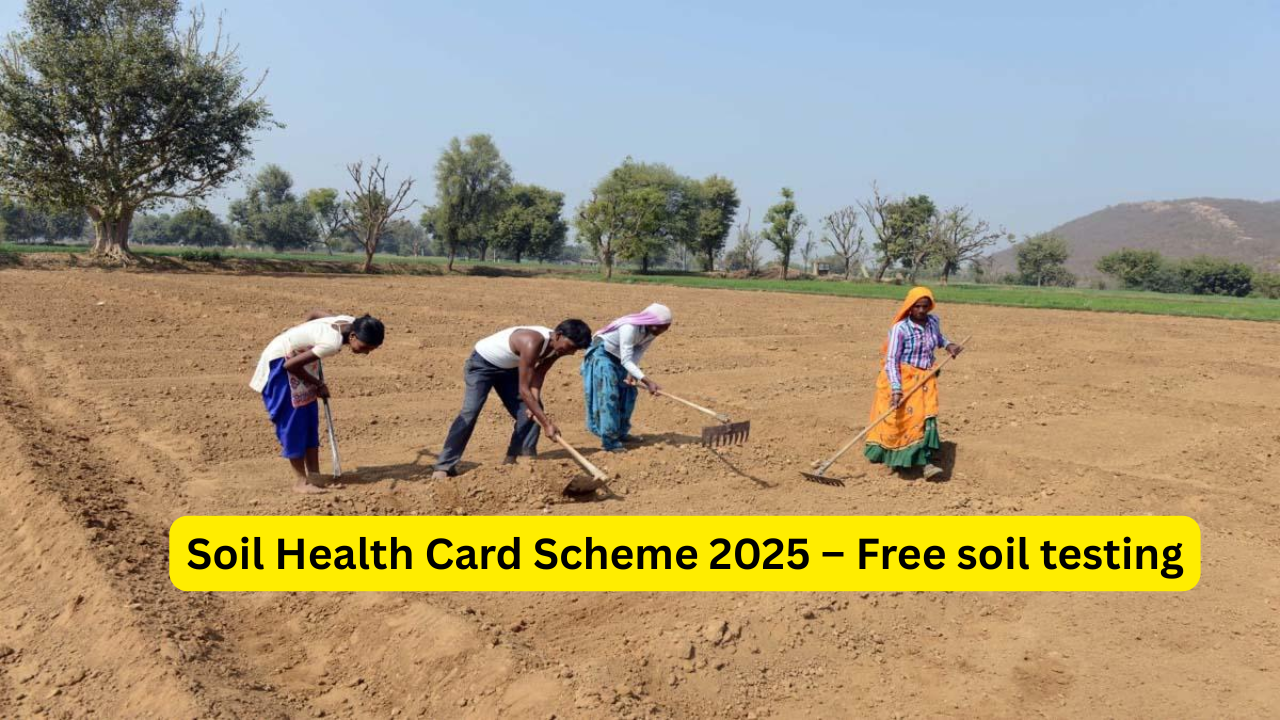
Rural Employment
Increased yields and reduced costs directly increase farmers’ incomes. Additionally, the scheme encourages rural youth to start soil testing laboratories, with up to 75 percent government funding, creating employment in villages.
Easy to Apply
Farmers can apply directly to their nearest Krishi Vigyan Kendra, Block Agriculture Office, or Gram Panchayat. An online application is also available on the soilhealth.dac.gov.in portal. They will need to provide a copy of their Aadhaar card, address proof, and bank passbook. For more information, they can also contact the helpline number 1800-180-1551.