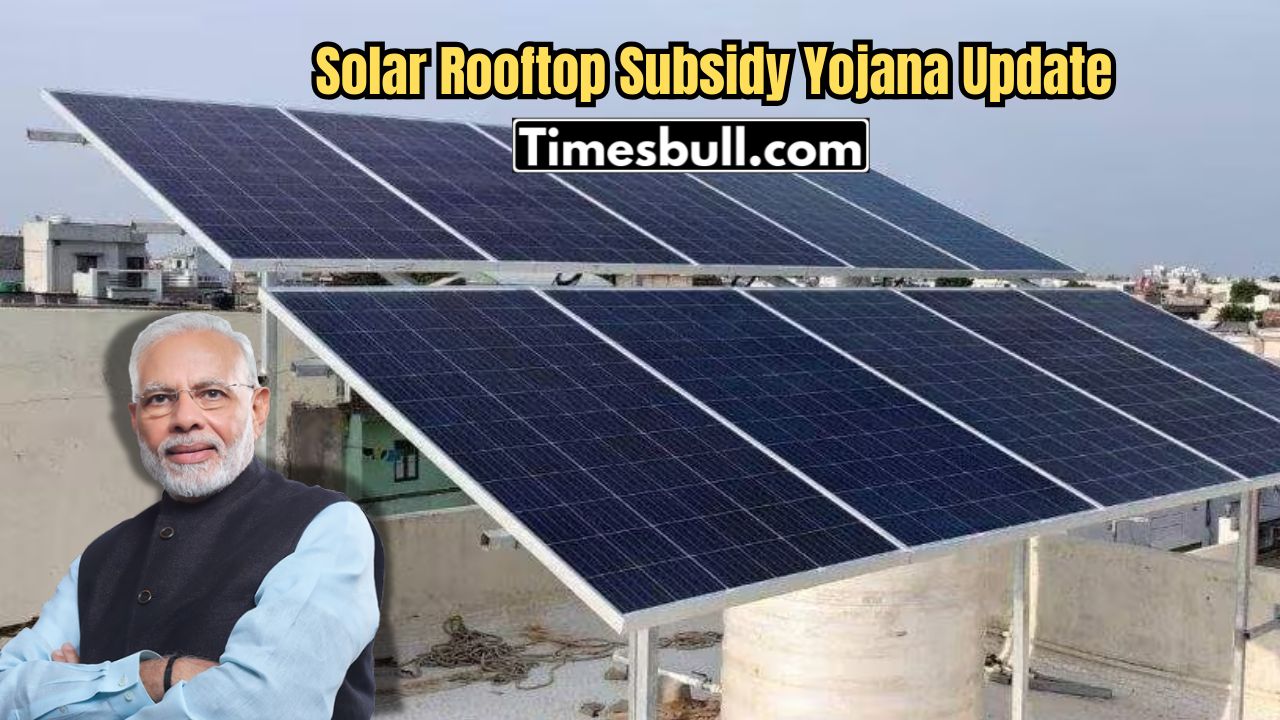
Solar Scheme: The state government has developed a new and innovative scheme to provide free electricity to domestic consumers. Under this scheme, announced by the Chief Minister on March 27, 2025, consumers who install domestically manufactured solar panels under the PM Surya Ghar Yojana will receive an additional subsidy of ₹17,000 from the state government.
This benefit will not be available to consumers installing foreign-made or imported panels, providing a strong impetus to indigenous production. This crucial proposal of the Energy Department has been approved by the Finance Department, and the proposals of DISCOMs and the Energy Department are now under scrutiny.
Free Electricity Scheme and Financial Framework
The state government currently provides an annual electricity subsidy of approximately ₹6,200 crore to domestic consumers under the Chief Minister’s Free Electricity Scheme. This scheme provides a maximum rebate of ₹562.50 to all registered domestic consumers. Under this new initiative, each domestic consumer will be allowed to install a solar panel of 1.1 kilowatts.
Distribution of Subsidy
The estimated cost of installing 1.1 kilowatt solar panels is approximately ₹50,000. To cover this cost, the central government will provide a substantial subsidy of approximately ₹33,000. The remaining additional ₹17,000 will now be borne by the state government.
Thus, eligible consumers can receive a 100% subsidy on the entire cost of ₹50,000, enabling them to adopt solar energy without any cost. According to discoms, approximately 1.04 lakh domestic consumers in the state are fully eligible to benefit from this scheme.
Maximum subsidy on high-capacity panels
It is important to note that even if consumers install high-capacity Rooftop Solar panels, the state government will only provide a maximum subsidy of ₹17,000. The central government subsidy for high-capacity panels will remain the same.
Objective of the Scheme
The primary objective of this groundbreaking scheme is to strongly encourage consumers to adopt clean energy, reduce electricity bills, and promote indigenous production instead of imported panels. The government firmly believes that this initiative will not only propel the state towards energy self-sufficiency but will also significantly contribute to environmental protection. This two-tier subsidy could revolutionize solar energy by making it completely cost-free for consumers.