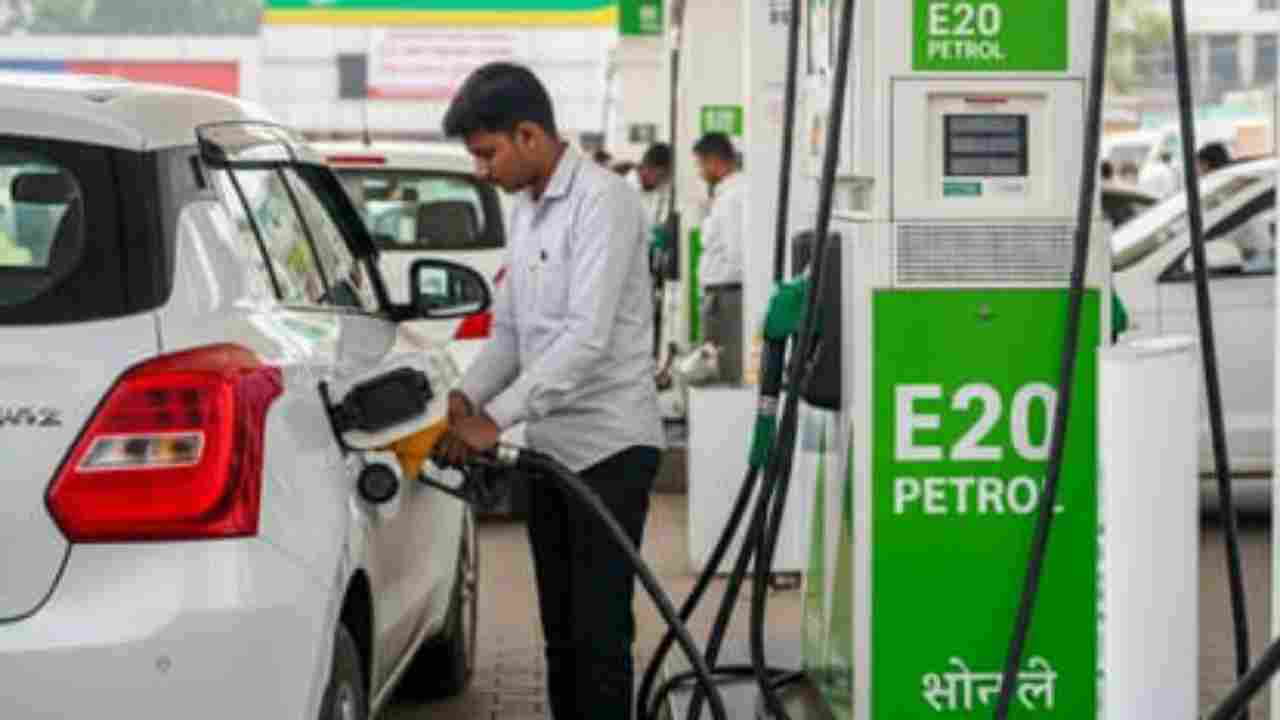
E 20 Petrol: The Central Government has taken a significant decision regarding petrol, which will directly impact the general public and the automobile sector. The central government has clearly instructed oil companies to sell ethanol-blended (E20) petrol in all states and union territories starting April 1, 2026. This petrol will contain a maximum of 20 percent ethanol and will be required to have a minimum research octane number (RON 95).
This order was issued by the Union Ministry of Petroleum and Natural Gas. In a notification issued on February 17th, the ministry stated that oil companies should only supply petrol that meets the E20 standard. This petrol must conform to the standards set by the Bureau of Indian Standards (BIS) and be made available with consistent quality across the country. However, under certain circumstances, exemptions may be granted to certain areas for a limited period.
What is E20 fuel?
E20 fuel is a petrol blend containing 20 percent ethanol and 80 percent conventional petrol. Ethanol is a biofuel produced primarily from sugarcane, corn, or other crops, and is used to reduce dependence on fossil fuels. The government aims to reduce pollution and provide farmers with additional income from their crops by promoting E20. India achieved its target of 10 percent ethanol blending ahead of schedule in June 2022, after which the government set a target of 20 percent by 2025-26.
Why RON 95 is important
Research Octane Number (RON) indicates how strong a petrol engine is against knocking. Knocking can cause engine damage and power loss. Petrol with a higher RON remains stable under pressure. Ethanol has an octane rating of around 108, so when it is mixed with petrol, fuel quality improves. RON 95 ensures engine safety and better performance.
According to the Ministry of Petroleum, ethanol blending has saved India more than ₹1.40 lakh crore in foreign exchange since 2014-15. Crude oil imports have decreased. This benefit is expected to increase further after the new regulations come into effect. Pollution will also decrease, and India will take another strong step towards sustainable mobility.
What will be the impact on vehicles?
Auto industry experts say that most vehicles manufactured after 2023 are ready for E20 petrol. These vehicles will not require any major modifications. However, some users of older vehicles report a 3 to 7 percent reduction in mileage using E20 petrol.
Furthermore, some people have complained on social media about premature damage to parts in vehicles after using E20 fuel, leading to increased vehicle maintenance. The engines and fuel systems of older vehicles are not designed for this higher ethanol blend, which has often led to reduced mileage and starting problems.
Meanwhile, some automakers have introduced E20 conversion kits for older vehicles to reduce the potential damage to engine components caused by ethanol-blended fuel. Companies claim that these conversion kits will not only improve vehicle performance but also prevent reduced fuel mileage. Royal Enfield recently launched these kits for older BS3 and BS4 models like the Bullet, Classic, and Thunderbird.