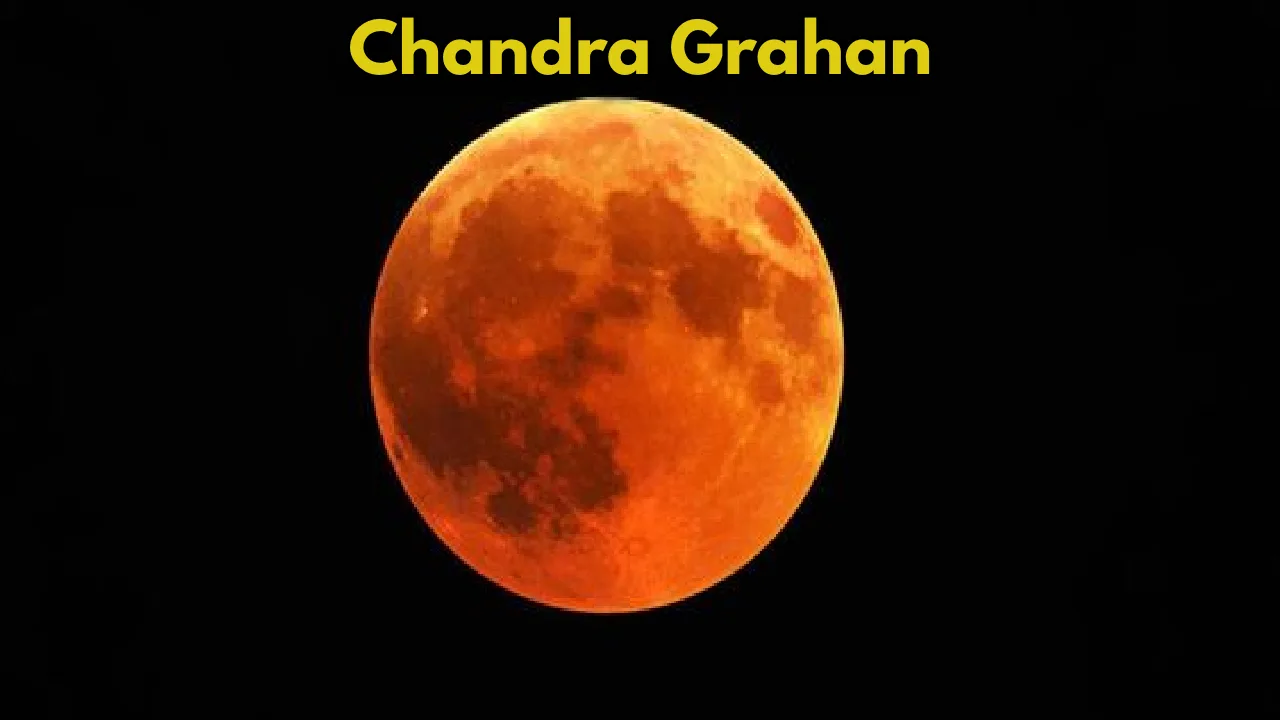
The first celestial event of 2026 is about to take place! On March 3, 2026, the world will witness a spectacular total lunar eclipse. This is a great opportunity for sky enthusiasts, as we will witness the beautiful sight of a ‘Blood Moon’ on this day. The best part? This eclipse will be visible in many parts of India. Let’s find out when the moon will rise in your city and the Sutak period.
Lunar Eclipse 2026: When will it last? (Timing in India)
This eclipse on March 3 will begin at noon Indian time, but we will be able to see it only after the moon rises in India.
Global Eclipse Start: 3:20 PM
Moonrise in India: Around 6:26 PM (slight variations possible depending on location)
Maximum Eclipse Time: 6:33 PM to 6:40 PM
End Time: 6:47 PM
Note: Since the moon will rise in India around 6:26 PM, we will only see the last part of the eclipse (about 20-25 minutes). This view may be visible for a little longer in Northeast India.
Sutak Period: Will temples remain closed?
According to religious beliefs, the Sutak period of a lunar eclipse begins 9 hours before the eclipse begins.
Sutak begins: March 3, 2026, 6:20 AM
Sutak ends: 6:47 PM (with the end of the eclipse)
Since this eclipse is visible in India, the rules of Sutak will apply. As soon as Sutak begins, temple doors are closed, and worship or auspicious work is prohibited during this time.
What will the ‘Blood Moon’ look like?
The most striking feature of this eclipse is the ‘Blood Moon’. When the Earth’s shadow completely covers the Moon, sunlight reflects off the Earth’s atmosphere, causing it to appear deep red or coppery. When the Moon rises in the evening in India, it may appear with this reddish hue.
How to view this spectacle?
Watching a lunar eclipse is completely safe. Unlike a solar eclipse, it doesn’t require any special filters or glasses. Go to the rooftop of a tall building or an open field. Look towards the East in the evening. You can see it with the naked eye, but if you have binoculars, the view will be even more spectacular.
Is it really “terrifying”?
It’s being described as “terrifying” on social media, but from a scientific perspective, it’s a normal and extremely beautiful astronomical event. There’s no need to be afraid. It falls a few days before the festival of Holi, so it holds great cultural significance