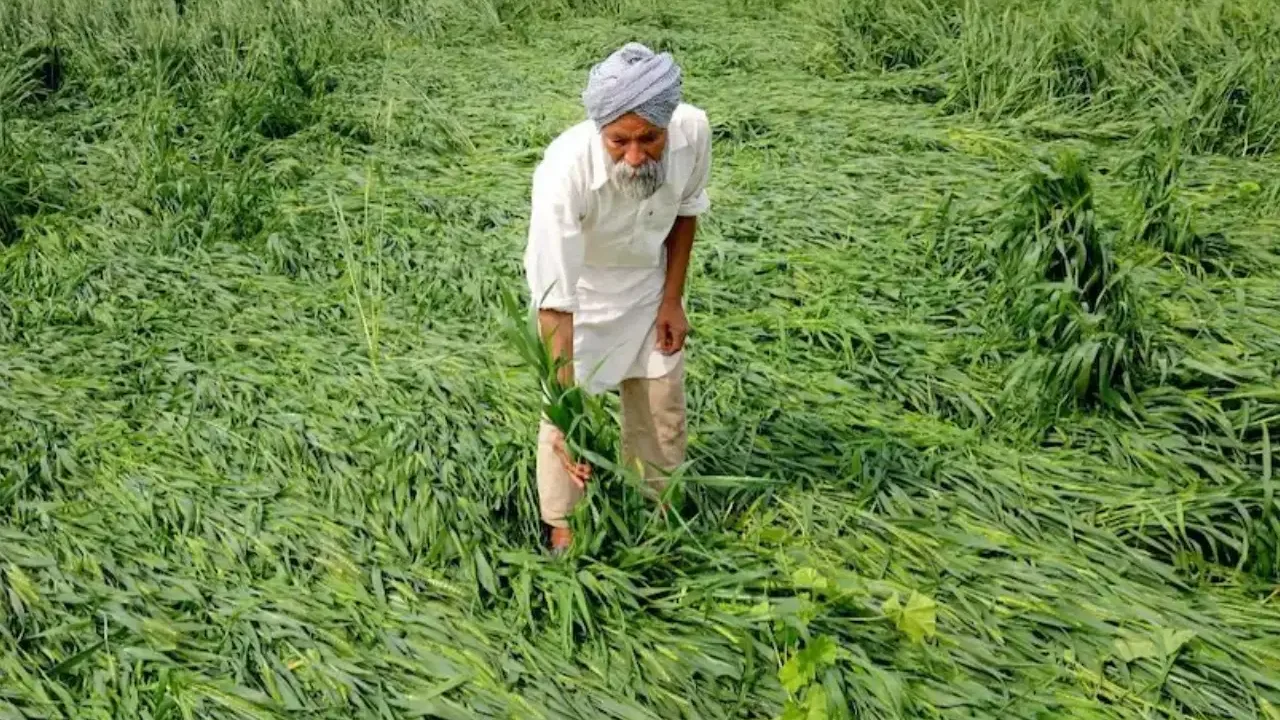
Delhi Government Update: Unseasonal storms and rainfall have caused significant damage to farmers’ crops. Consequently, a deep sense of despair has settled upon the farming community. Did you know that the Delhi Government has now opened its coffers to provide relief to these affected farmers? Farmers will now receive significantly higher financial compensation compared to previous rates.
The Delhi Government has implemented a major revision to the compensation rates. The government has decided to increase the compensation amount to ₹75,000 per hectare. This decision is expected to benefit approximately 10,000 farming families, for which the government will allocate a total of ₹33.32 crore.

A Change Long Overdue
Did you know that since 2015, the compensation rate for crop damage in Delhi has been fixed at ₹20,000 per acre? Farmers and agricultural experts had long argued that, given rising input costs and inflation, this amount was no longer adequate. Furthermore, the overall cost of cultivation has risen substantially over the past decade.
Expenses related to seeds, fertilisers, pesticides, irrigation, labour, and machinery have seen a continuous upward trend. Under these circumstances, the previous compensation rate was insufficient to cover the actual losses incurred by farmers. Consequently, the Delhi Government reviewed its compensation framework and decided to implement a new assistance rate. Affected farmers will now receive financial aid at a rate of ₹75,000 per hectare—an amount significantly higher than the previous rate.
Heavy Rainfall Causes Damage
During August and September 2025, heavy rainfall was recorded across Delhi and its surrounding regions. The incessant rains led to severe waterlogging in agricultural fields. Standing crops in several areas were ruined. Vegetable growers, paddy farmers, and cultivators of other crops bore the brunt of this adverse weather.
While many farmers lost their entire harvest, others suffered partial damage. Experts point out that waterlogging is extremely detrimental to crops, as it adversely affects the plant roots and diminishes overall yield potential. How Many Families Will Benefit?
According to the Delhi government, this decision is set to directly benefit approximately 10,000 farming families. Although the area available for cultivation may be limited in an urbanised state like Delhi, thousands of families here still depend on agriculture. Moreover—particularly in several villages across Outer Delhi—farming remains a primary source of income to this day. For these families, crop loss does not merely signify a reduction in yield; rather, it impacts their entire annual income.