Farmers are the backbone of India and water management is key for farmers. Many farmers use diesel or electrical pumps which makes the cost of farming high. To resolve this egregious issue, the government proposed the Solar Pump Subsidy Scheme to help farmers.
In the scheme, farmers receive collaboration to install solar pumps. For the process of installation the government will assist up to 90% of the total cost. The intent of the proposal is to lower the cost of farming and ultimately increase farmers’ income.
In addition to reducing costs associated with farming, solar pumps also eliminate the need for electricity and diesel, which reduces farmer’s expenses and is also a positive step towards environmental consciousness.
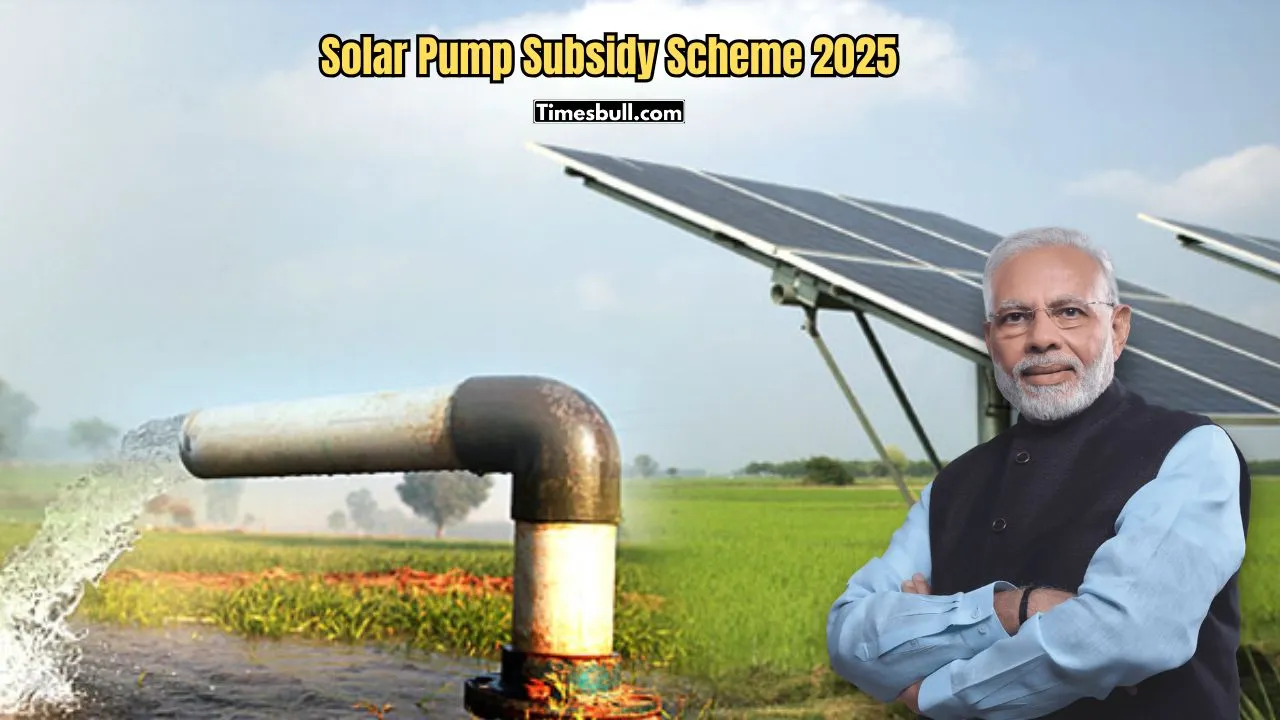
Solar Pump Subsidy Scheme 2025
The Solar Pump Subsidy Scheme is a government plan that helps farmers set up solar pumps for farming. This plan is run by the central and state governments together.
The main goal of this plan is to give farmers clean and cheap energy. It helps them water their fields in every season and grow more crops.
A solar pump uses sunlight to make electricity. This power runs the motor and brings water to the field. It saves money and also keeps the environment clean.
Government Help
Under this plan, farmers get up to 90% help from the government to set up solar pumps. Farmers need to pay only 10% of the total cost. The rest of the money is given by the government.
For example, if a solar pump costs ₹1 lakh, the farmer will pay ₹10,000, and the government will pay the remaining amount.
The subsidy money goes directly to the farmer’s bank account or is given through the department. This makes sure the farmer gets full benefit without any middlemen.
Who Can Get This Benefit?
- This plan is for farmers who have their own land and face water problems. It is mainly for small and medium farmers.
- It also helps farmers in areas where electricity is not regular or diesel pumps are costly. With solar pumps, these farmers can easily water their crops.
- To apply, farmers need to give land papers, ID proof, bank passbook, and details of their water pump or electricity connection.