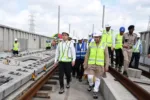
Indian railways: There is a good news for railway passengers. The rail infrastructure of Kolkata, the capital of West Bengal, is about to receive a new and modern direction. Union Railway Minister Ashwini Vaishnav made a major announcement regarding the Kolkata Metro on Saturday.
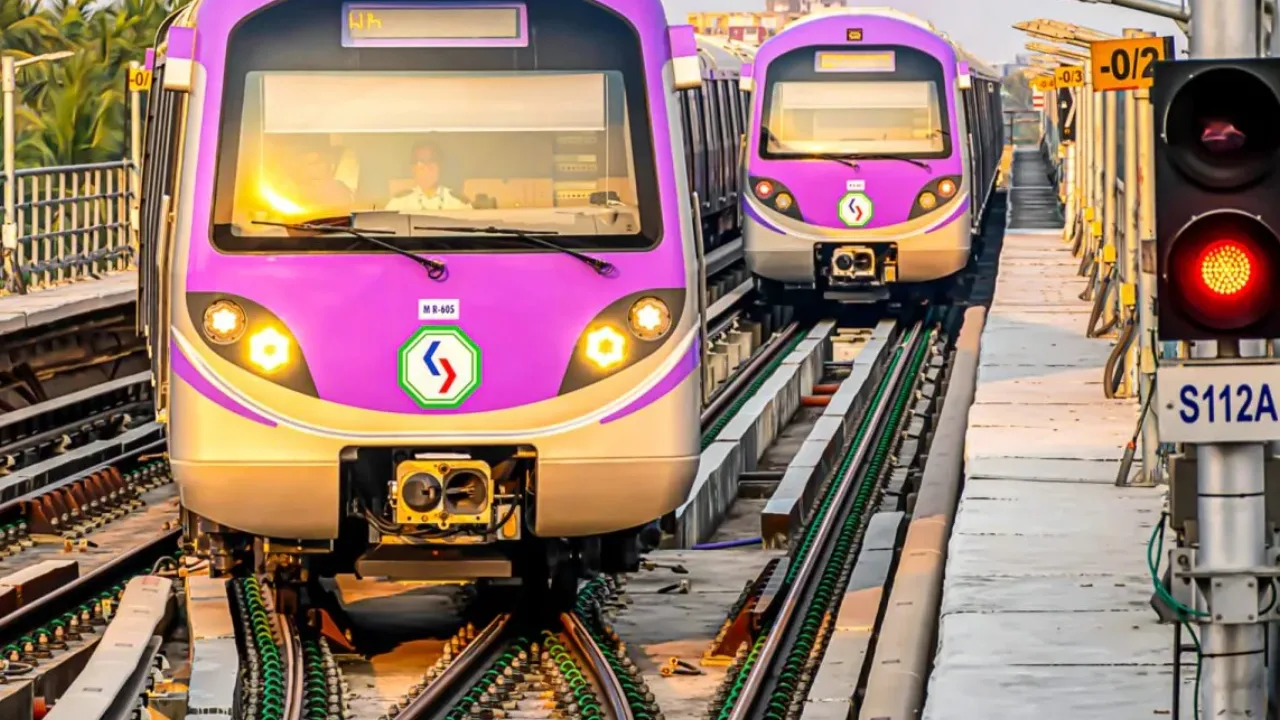
Following a high-level meeting with Chief Minister Suvendu Adhikari at the state secretariat, Nabanna, the Union Minister announced that 60 next-generation trains will be added to the Kolkata Metro network within five years. After experiencing a metro ride himself, he clarified that this historic Metro Service will now be completely modernized.
The pace gained momentum during PM Modi’s tenure
Citing statistics after the meeting, the Union Minister stated that the Kolkata Metro’s development has accelerated at an unprecedented pace in the past few years. He noted that in the first 42 years, only 28 kilometers of the Kolkata Metro network were completed. Furthermore, since Narendra Modi became Prime Minister in 2014, a record 45 kilometers of new metro lines have been added. Railway projects are now expected to accelerate further under the state’s double-engine government.
Projects valued at Rs 1 lakh crore
The Railway Minister announced that railway initiatives exceeding Rs 1 lakh crore are currently in progress in West Bengal. He also criticized the former government, mentioning that several important infrastructure projects, like Chingrighata, faced delays due to insufficient cooperation and legal challenges. However, with the recent changes, issues related to land acquisition and other barriers will be addressed more swiftly. Furthermore, 102 stations in Bengal are undergoing redevelopment as part of the Amrit Bharat Yojana.
Delhi to Siliguri in just 6 hours
Alongside the metro developments, the Railway Minister shared an exciting update about the connectivity between North Bengal and the capital city. He revealed that work is in progress on the proposed high-speed bullet train corridors connecting Delhi-Varanasi and Varanasi-Siliguri. Once completed, this ambitious high-speed corridor will cut the travel time from Siliguri to New Delhi down to just six hours, greatly enhancing travel efficiency.