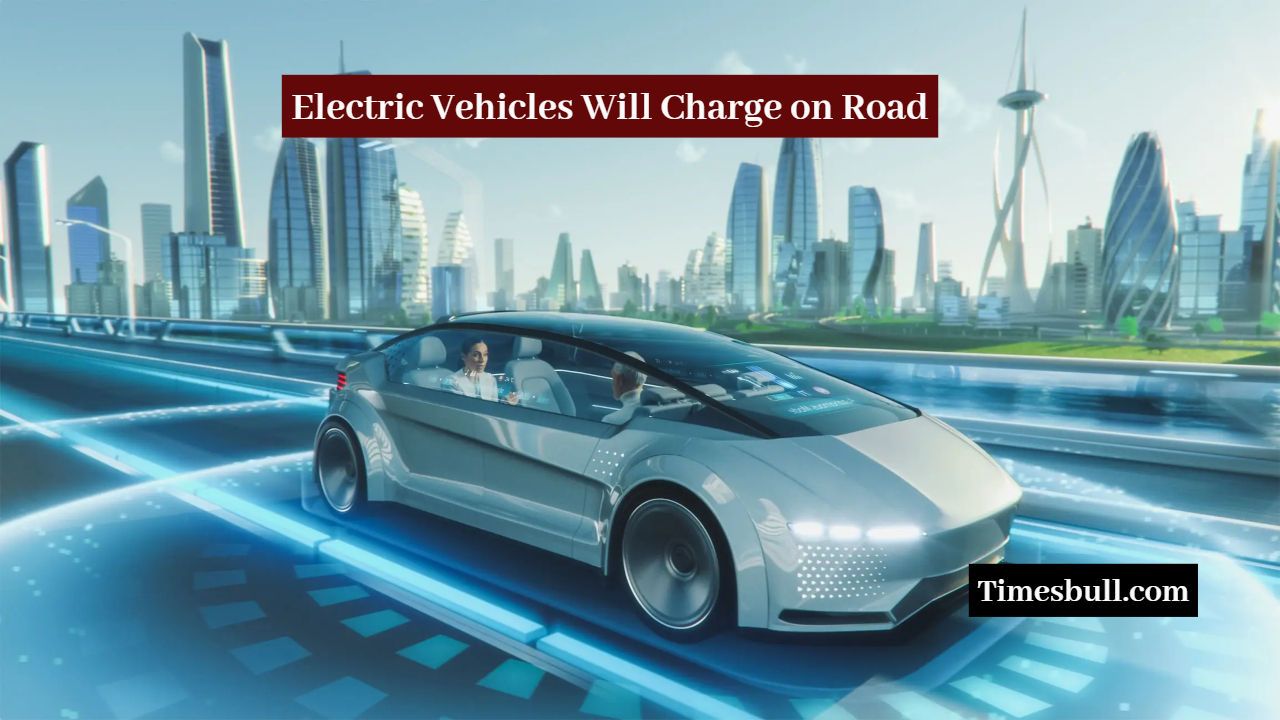
Imagine your electric car speeding down the highway, its battery charging automatically without stopping. No cables, no charging stations, and no waiting. This is no longer a fantasy, but a reality. France has developed the world’s first road that wirelessly charges vehicles while moving. This technology is not only an engineering feat but also a major step towards a sustainable transport system of the future.
Where and how did this unique experiment begin?
This project began on the A10 motorway, located about 40 kilometers southwest of Paris. Led by VINCI Autoroutes, organizations like Electrion, Vinci Construction, Gustav Eiffel University, and Hutchinson have developed this project, called “Charge As You Drive.” This approximately 1.5-kilometer stretch of highway has special electromagnetic coils embedded in the road, enabling vehicles to charge while in motion.
How does this dynamic charging technology work?
This technology involves electromagnetic coils installed beneath the road surface. When an electric vehicle passes over these coils, electricity is transmitted through the magnetic field to a receiver in the vehicle. This energy either directly powers the motor or is stored in the battery. This process eliminates the need for the vehicle to stop. This saves charging time and allows for the use of smaller batteries. For heavy vehicles, this means greater load capacity and lower battery costs.
Expert Opinions and Technological Achievements
According to Nicolas Nottebere, CEO of Vinci Autoroutes, if this technology is implemented on a large scale on France’s national roads, the pace of electrification of heavy vehicles will increase exponentially. Meanwhile, Electreon CEO Oren Ezer says this is a “turning point in the history of electric road technology.” Initial tests have shown the system to have a peak power of over 300 kilowatts and an average energy transfer capacity of 200 kilowatts.
Experiments are underway in other countries
France’s experiment is the first in the world to successfully test dynamic charging in live traffic on a motorway. However, it is not the only country moving forward in this direction. Germany is launching a kilometer-long trial using the same technology on its A6 motorway. Italy is conducting the “Arena del Futuro” project, which is testing dynamic charging for trucks and buses. Sweden, the United States, China, South Korea, and Israel are also working on this technology, which will help determine standards and costs for electric road systems in the future.
What will be the benefits of this project?
This project is not only beneficial for the environment but will also prove to be economically effective. The use of smaller batteries will reduce dependence on imported minerals like lithium and cobalt. Continuous power supply to trucks will reduce the cost of electrification in the logistics sector. This will promote the use of EVs and strengthen the charging infrastructure.
Read More- Chole Paneer Recipe: How To Make These Delicious Restaurant-Style Dishes At Home
The Way of the Future
In the coming months, this pilot project will collect data on road durability, power delivery, and real-time costs. If successful, this technology could be implemented on thousands of kilometers of roads across France and Europe in the coming years. This way, roads will not only be a route, but will themselves become a source of energy—the roads of the future, providing power as well as travel.