



Hyundai Bayon: Hyundai is preparing to launch a new car in the Indian SUV market. The company is set to launch the new Hyundai Bayon in the country in October 2026, positioning it between the Venue and the Creta. Ahead of the launch, the company has been releasing teasers, and the latest one offers a clear view of the SUV’s rear design and overall silhouette. The new Bayon is being developed not merely as a compact SUV but as a more premium crossover. Let’s take a look at the details.
Hyundai Bayon Bookings
Hyundai has opened pre-bookings for the new Bayon. Customers can book the vehicle online or through authorised Hyundai dealerships by paying a token amount of ₹11,000. The SUV is scheduled for launch in the Indian market in October 2026. Leading up to the launch, the company is gradually revealing details about the Bayon through various teaser videos.
New H-Edge Lighting Design
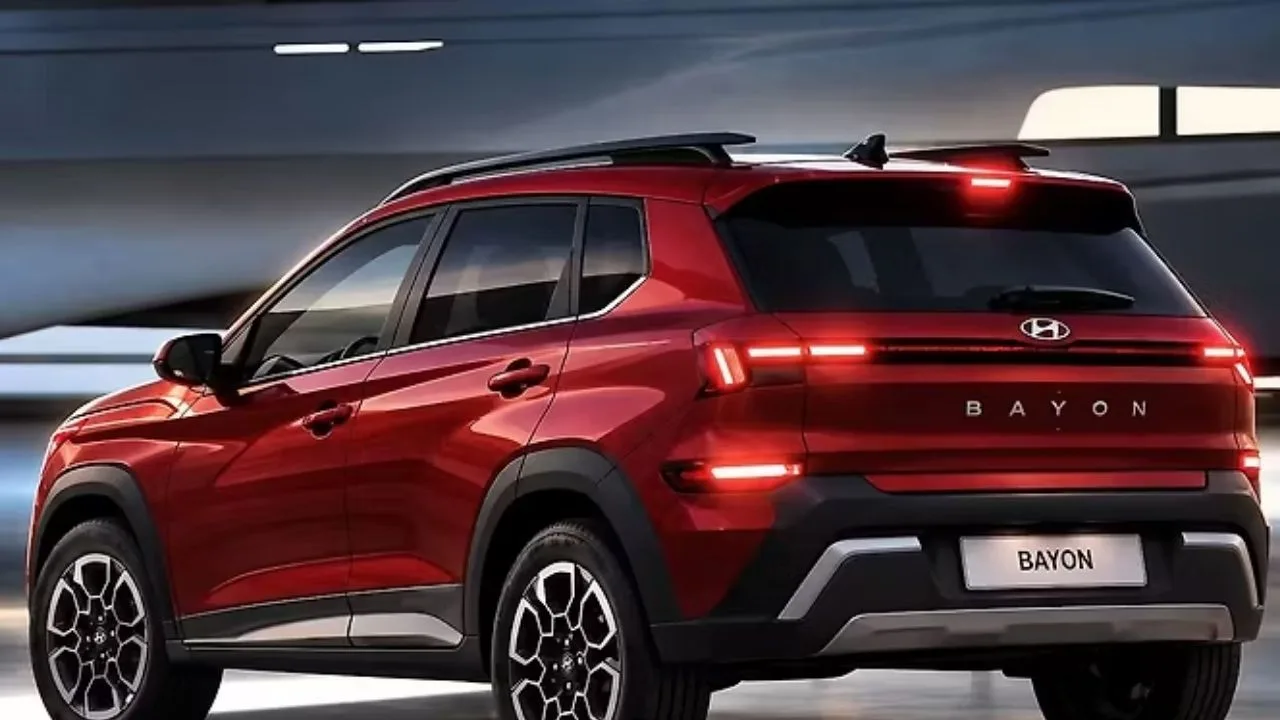
The rear design of the Hyundai Bayon has been a key focus in the teasers. Carrying forward the theme from the front, the rear also features ‘H-Edge’ lighting. A sleek LED strip is visible above the tailgate, positioned just above the rear bumper—a design element not seen in Hyundai’s current models.
Additionally, the reverse lamps are expected to be integrated into the tail-lamp cluster. The SUV also features an integrated roof spoiler with stop lamps, a shark-fin antenna, and the Hyundai logo on the tailgate. A black strip and the ‘BAYON’ wordmark are positioned below the logo.
Front Design
Teasers released so far have also revealed details about the Bayon’s front design. The SUV will feature a sculpted bonnet and Hyundai’s signature H-Edge LED daytime running lights. Elements such as geometric wheel arches, wrap-around door cladding, and bridge-type roof rails further reinforce its crossover character.
Notably, the Bayon’s design will not follow the traditional boxy SUV aesthetic. It features a sleeker, crossover-orientated silhouette, giving it a distinct look compared to the Creta. Hyundai is positioning it for customers who desire the practicality of an SUV combined with a stylish, urban design.

Platform
The Hyundai Bayon will be built on the ‘Global K Enhanced Platform’. According to the company, this platform has been designed to meet Indian safety standards. Development of the SUV has focused heavily on occupant protection, structural rigidity, and advanced safety engineering.
Engine
Regarding the powertrain, the Hyundai Bayon is expected to come with a 1.5-litre, four-cylinder naturally aspirated petrol engine. This engine will generate a maximum power of 114 bhp and a peak torque of 144 Nm. Transmission options will include a 6-speed manual and a CVT automatic.
A standout feature of the Bayon could be its CNG option. It is expected to be Hyundai’s first SUV longer than 4 metres to offer a factory-fitted CNG option. The CNG version is likely to feature an underbody CNG tank, helping to preserve practical cabin and boot space.
Hyundai Bayon Competition
In the Indian market, the Hyundai Bayon will compete directly with several popular models in the midsize SUV segment. In this category, SUVs such as the Hyundai Creta, Kia Seltos, Maruti Grand Vitara, and Toyota Hyryder have already established themselves. Additionally, upcoming new SUVs could further intensify the competition.