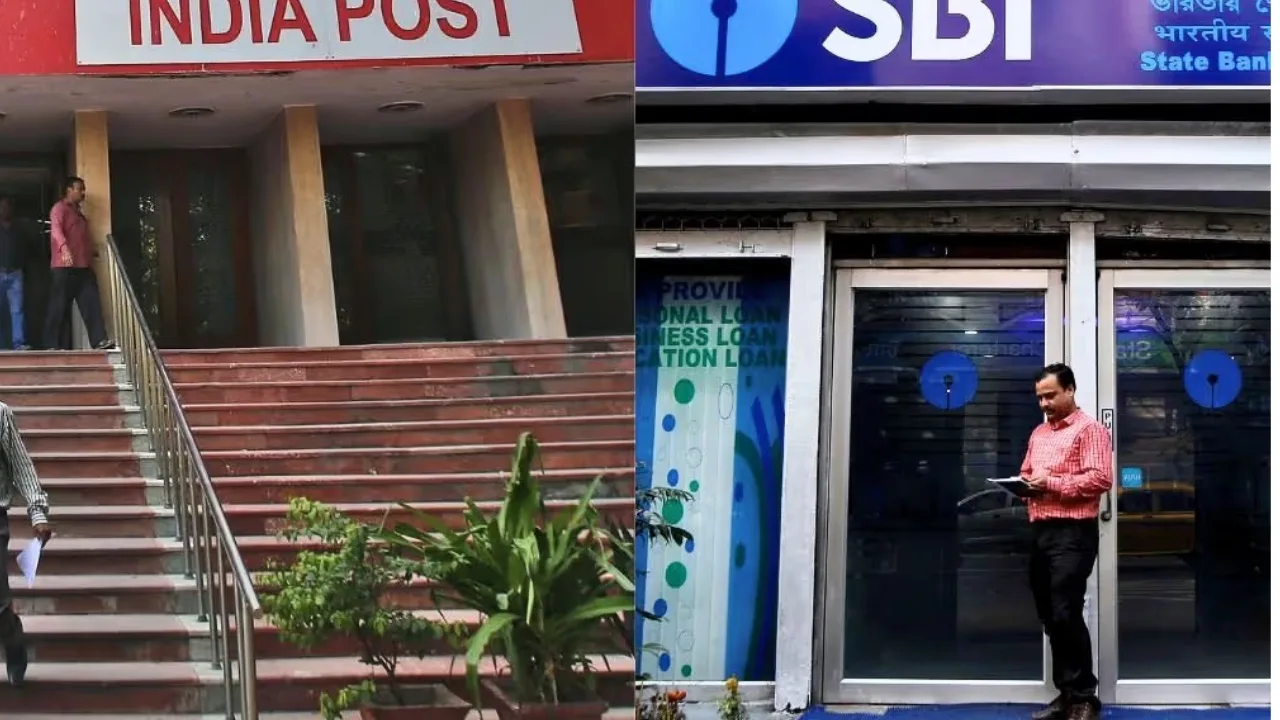
SBI RD vs Post Office RD: If you’re looking to invest a set amount each month and want safe, guaranteed returns, a recurring deposit (RD) could be a great choice. Unlike mutual funds or the stock market, it remains unaffected by market volatility and provides a fixed return on your investment. By depositing Rs 10,000 every month for 5 years, both the Post Office RD and the State Bank of India RD can help you accumulate a significant amount. However, the maturity amount will differ due to varying interest rates.
If you invest Rs 10,000 every month for 5 years, both the Post Office RD and SBI RD can help you grow your savings. However, the Post Office RD currently offers a higher interest rate of 6.7% per year, compared to 6.05% offered by SBI RD.
Over 5 years, your total investment will be Rs 6 lakh in both schemes. At maturity, the Post Office RD is expected to give you around Rs 7.14 lakh, earning you about Rs 1.14 lakh in interest.
In comparison, the SBI RD is expected to grow to about Rs 7.02 lakh, with interest earnings of around Rs 1.02 lakh. This means the Post Office RD can generate nearly Rs 12,100 more than the SBI RD on the same investment amount, making it the more rewarding option based on current interest rates.
Which RD will provide better returns?
According to the current interest rates, investing in a Post Office RD will result in approximately Rs 7.14 lakh after 5 years, while an SBI RD will yield around Rs 7.02 lakh. Therefore, opting for a Post Office RD can give an investor about Rs 12,100 more than an SBI RD. However, this estimate is based on current interest rates, and returns may vary if interest rates change in the future.
What is an RD account?
A recurring deposit (RD) is a savings scheme where you deposit a fixed amount every month.
However, if the account is closed before completion of 5 years, the interest rate of savings account can be earned instead of RD interest.
Key features of SBI RD
RD account can also be opened in SBI with a monthly deposit of Rs 100.
There is a penalty for not depositing the installment on time.
Non-payment of 6 consecutive installments may result in premature closure of the account.
RDs with tenures up to 5 years attract a penalty of Rs 1.50 per month for every Rs 100 EMI
If your goal is to earn higher returns by investing regularly for 5 years, then at current interest rates , a Post Office RD may be a better option than an SBI RD. It not only offers higher interest rates but also offers a larger maturity amount.