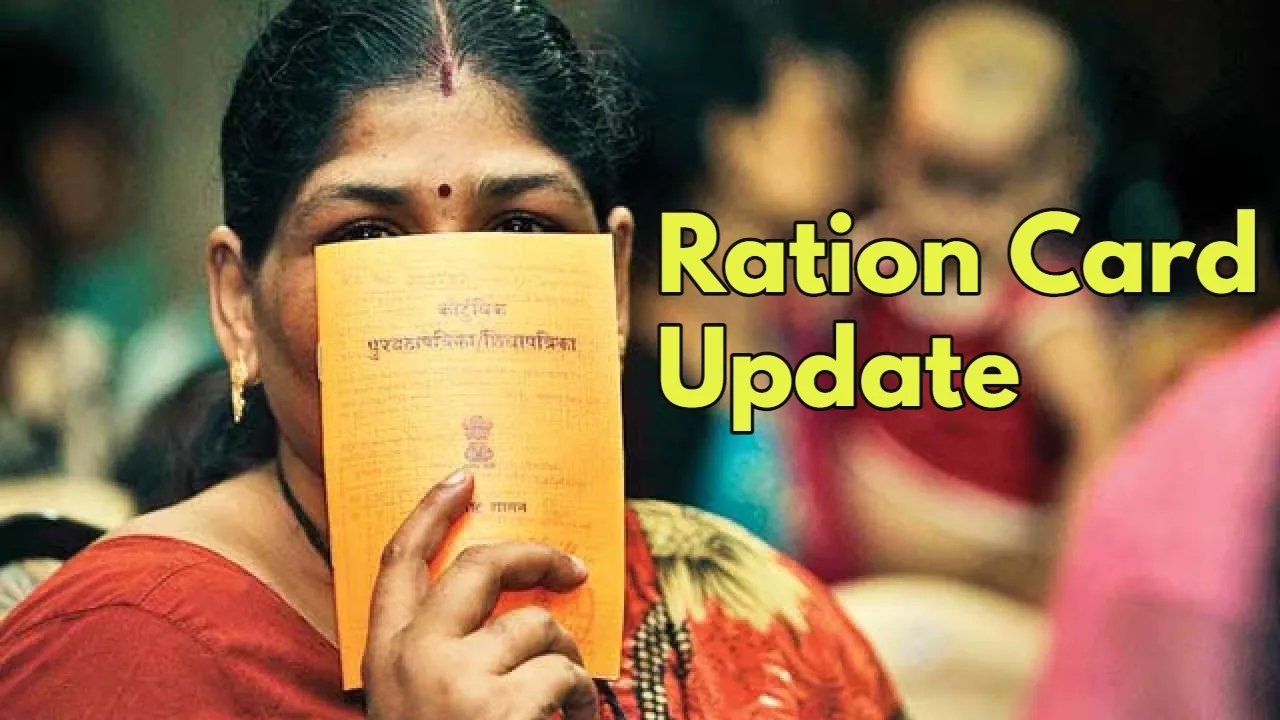
Ration Update: The state government has made a crucial move to tackle the LPG shortage in Bihar. With the disruption in gas cylinder supply, residents have been struggling to cook. As a result, the government has opted to provide Coal at ration shops as an alternative fuel source. This initiative is designed to ensure that no family encounters cooking difficulties.
Every family will receive 100 kg of coal
Through this government program, families holding ration cards will be allocated around 100 kg (one quintal) of coal each month. Currently, this service is available only to those under the National Food Security Act (NFSA). This means that underprivileged families will have access to an alternative cooking fuel despite the gas shortages. However, there is no separate scheme for individuals without ration cards.
How will coal be delivered to the people?
As per media reports, the government has devised a comprehensive plan for coal distribution.
Initially, coal will be procured from coal companies, with Coal India playing a significant role.
Subsequently, the coal will be sent to wholesalers.
From there, it will be distributed to the districts.
Finally, it will be delivered to ration shops via the Public Distribution System (PDS).
This means that just like you receive your rations, you will now also be able to obtain coal.
Special oversight on pricing and distribution
The government has also established a strategy for coal pricing and distribution. Under this plan, wholesalers will incur a fixed charge. A team will be set up in each district to determine the price at which coal should be made available to the public, ensuring that there is no malpractice or black marketing.
This issue may escalate
This decision could provide relief to millions of families facing gas shortages. Particularly, rural and low-income families will see immediate benefits. However, the use of coal also raises concerns about increased pollution, which could have environmental implications. However, the government’s current focus is on ensuring that people’s basic needs are not affected during this crisis.