GST– Preparations for reform in GST or Goods and Service Tax in the country have been in full swing since the announcement made by Prime Minister Narendra Modi from the Red Fort on 15 August. Now the GST Council Meeting is starting from today and in this two-day meeting, final approval will be given on changes in GST rates and two tax slabs instead of four.
The Business Idea: Start These 4 Businesses With Low Investment, Then Earn Big Every Month”/gas-cylinder-why-was-the-number-of-subsidized-cylinders-reduced-government-explains-the-reaso-750917.html" class="tb-related-post-link" rel="bookmark">Gas Cylinder: Why Was the Number of Subsidized Cylinders Reduced? Government Explains the Reaso’s goal through GST reform is to simplify the tax structure and provide direct benefit to consumers. It is expected that after the new changes, the prices of everyday items ranging from milk-cheese to TV-AC and car-bike may come down.
What did the Finance Minister say on GST reforms?
Let us tell you that GST was implemented on 1 July 2017 by eliminating all the different taxes in the country. Although the opposition has always been targeting the government by calling this Goods and Service Tax ‘Gabbar Singh Tax’, but the central government calls it a big step taken in the direction of economic reform.
Now, in preparation to make it easier, brainstorming on various proposals is starting from today to reduce the number of tax slabs included in it and rationalize all the rates. Before the meeting started on Tuesday, Union Finance Minister Nirmala Sitharaman had made a big statement about GST reforms and said that its goal is to completely open up the economy and bring transparency, which will greatly help small.
There will be only two, not four slabs.The central government has prepared to reduce the four tax slabs (5%, 12%, 18%, and 28%) under GST and remove 12% and 28% tax. This means that only 5% and 18% GST slabs will remain. The proposal to abolish 12% and 28% slabs has also been approved in the Group of Ministers (GoM) meeting held after PM Narendra Modi ‘s announcement. The Prime Minister has addressed this GST reform as a Diwali gift for the countrymen. Although, a revenue loss of about 40,000 crores has been estimated due to these changes in GST rates by the government, but these reforms will prove to be a big relief for the common man of the country.
What things can become cheaper?
If the proposals related to GST reform are implemented, then all the items used in everyday life will become cheaper, which includes milk-cheese, namkeen, soap, oil, clothes. Along with this, if the slab changes, a big reduction can also be seen in the prices of shoes, TV, AC, mobile and cars-bikes.
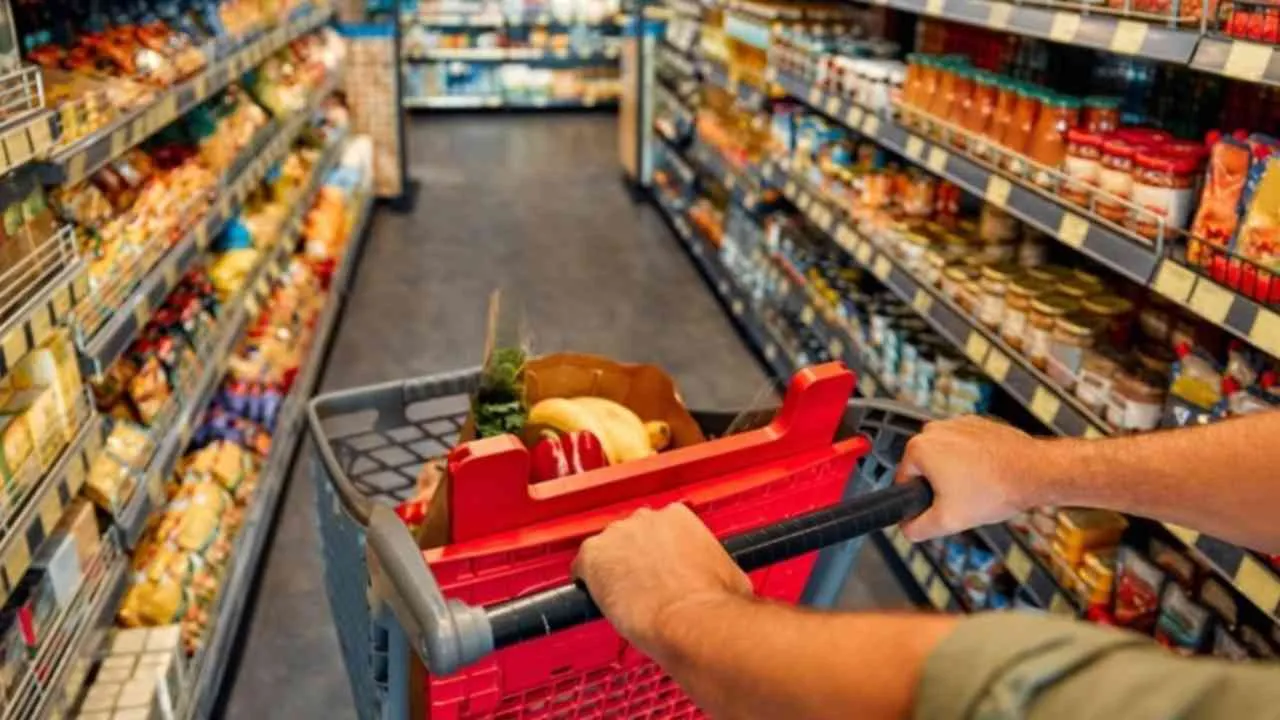
Under the proposal, the items on which the GST slab is to be reduced from 12% to 5%, i.e. there is a plan to make them cheaper, include packaged foods like: namkeen (bhujia), chips, pasta, noodles, jam, ketchup, packaged juice, condensed milk, ghee, butter, cheese and beverages made from milk.
In the GST meeting, the government is also expected to increase the scope of the Zero GST slab and in such a situation, many essential items of everyday use can be included in this list, which currently come under the scope of 5% and 18% GST. According to a report of Business Today that came recently, these items will especially include food products, in which UHT milk, pre-packaged cheese, pizza bread and roti can be brought in the Zero GST slab. Apart from this, paratha can also be included, on which 18% GST is applicable. There can be a change in the GST slab applicable on cocoa based chocolate, flakes, pastries to ice cream and it can be reduced from 18% to 5%.
Educational items can also be GST free
The government has a proposal to make all educational items GST free. In the council meeting, maps, water survey charts, atlases, wall maps, globes, printed educational charts, pencil-sharpeners as well as practice books, graph books and laboratory notebooks can be exempted from GST, on which currently 12% tax is applicable.
Along with this, there is a proposal to reduce the rates applicable on handloom products, shoes less than Rs 1,000, cement, ready-mix concrete, then the rates of big items electronics and household appliances which have been shifted from 28% to 18% slab till now may change, due to which the prices of AC, television, fridge, washing machine, mobile phone may decrease. A decision can be taken on reducing the duty of small cars, two-wheelers by about 10% (from 28% to 18%).