

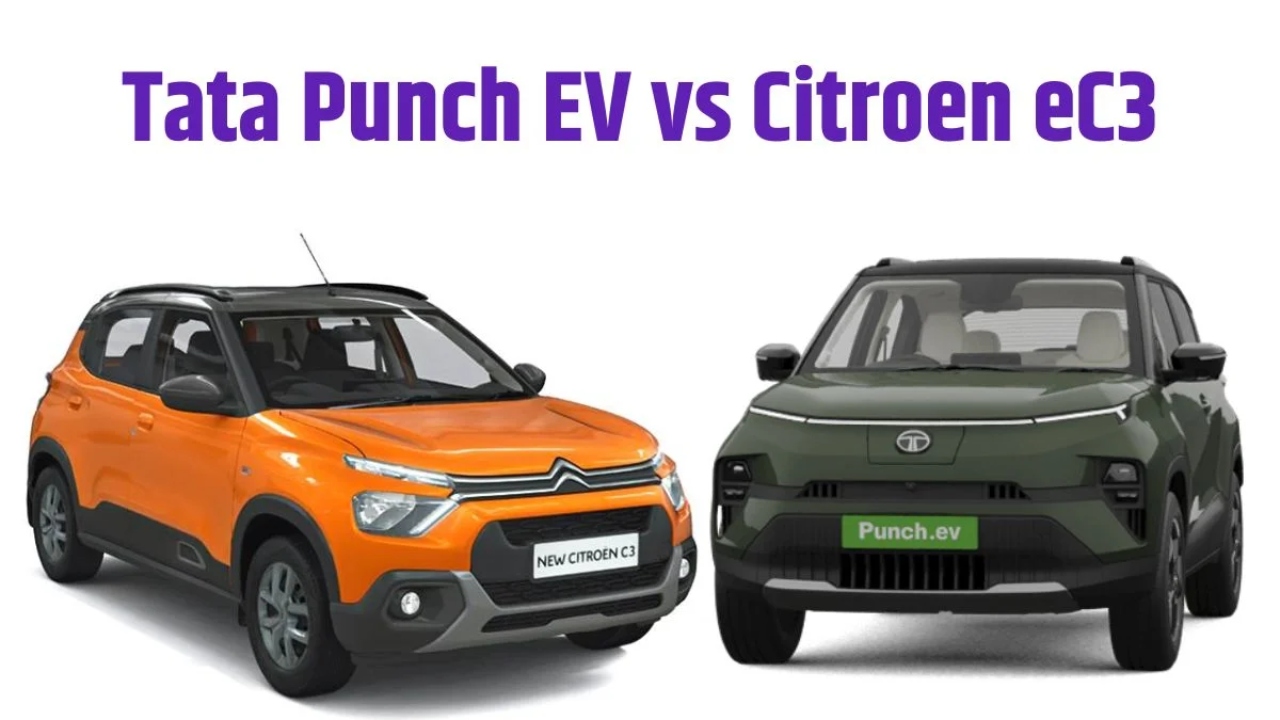
Tata Punch EV Vs Citroen eC3 : Tata Punch EV vs the Citroen eC3 is garnering a lot of noise, for the compact electric SUV market is going up swiftly in India, and people are talking about collecting that small electric SUV that has been built just for the city. But really, which has the greater power? Here is the battle of power features and value for money.
Design And Styling
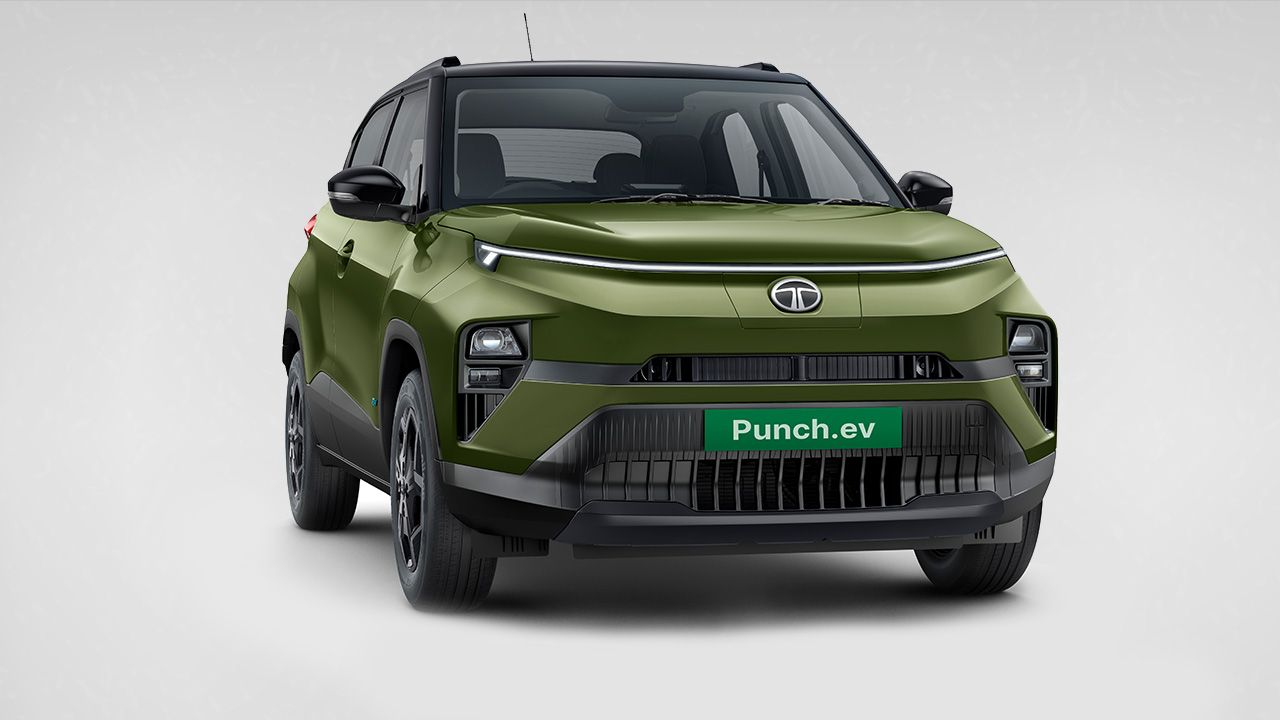
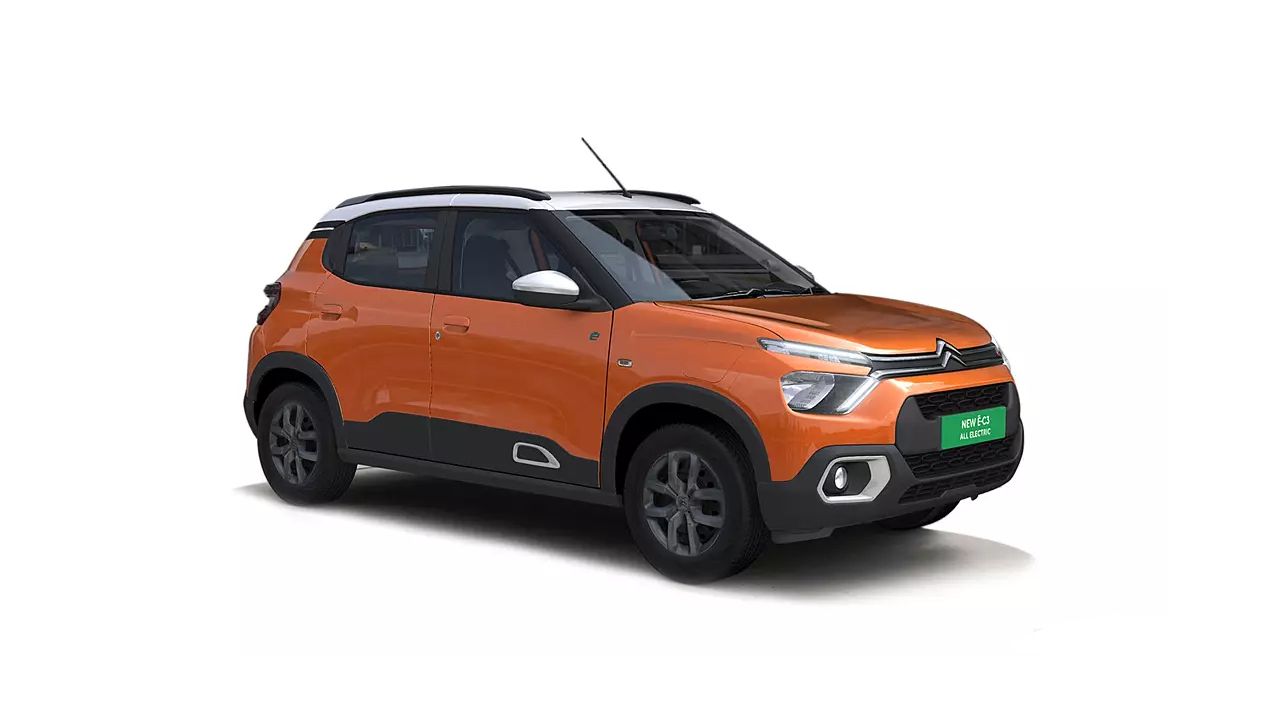
The overall design is sharp and to the point, as per the new EV design language of Tata. The closed grille, the LED DRLs, and a new bumper all make this appear like a small EV that is big and powerful. Citroen eC3 also has some typical European design features, such as a rounded forehead, two-tone bodywork, and Citroen’s signature style, which makes it distinguished. The Punch EV goes a bit more futuristic, while the eC3 looks a little cuter and dressier.
Battery And Range
The two batteries available with the Tata Punch EV are the 25kWh and the 35kWh. This should take care of the range within an ambit of about 300-420 km, which is pretty much apt for city and highway driving. Citroen eC3, in turn, boasts a 29.2kWh battery and claims a 320 km range. Punch EV, compared to it, charges quite better regarding the timeliness since it offers rapid charging support with a source that claims to charge the vehicle from 10%-80% taking only 56 minutes with a 50kW DC charger.
 Features And Technology
Possible with features that feel premium and often similar to those found on Nexon EV, Punch could have an array of features, including a 10.25-inch touchscreen, open-car compatibility, digital driver display, wireless charging, and several ventilated seats. Citroen’s eC3 is relatively basic in terms of aesthetics and features: a usual 10-inch touchscreen supporting Android Auto/Apple CarPlay; however, the drawbacks include a lack of auto AC, rearview camera, or profusion in rapid charging.
Performance And Driving
The Punch EV outputs torque ratings of approximately 122 Nm via its motor, creating the effect of impetuosity off-the-line and a smooth transition through densely populated parts of the city, where comfort under bump conditions is balanced by suspension setup. E3, on the other hand, is carried with a motor outputting a ranking of 57 hp, and 143 Nm torque; smooth transfer to open roads, yet the energy deficit becomes very conspicuous.
Price And Value For Money
Punch EV starts around 10.5 lakh and stretches up to about 15 lakh (ex-showroom). Citroen eC3 goes around INR 12 lakh to INR 13 lakh. Much more endowed with features, ranges, and performance against a rival based on the dollar-and-cent metric, so it wears a better value-for-money tag.
 What one would expect from an electric SUV is to be long-range, feature-rich, and stylish – all of which the Tata Punch EV encapsulates. Citroen eC3 is for a consumer wanting an EV without the bells and whistles of European design. Life is lived in the city for both, although Punch EV is strong on battery options and performance capability, along with rapid charging. In a wide case built from this argument, Punch EV comes out at the apex of small electric SUVs in the market today.