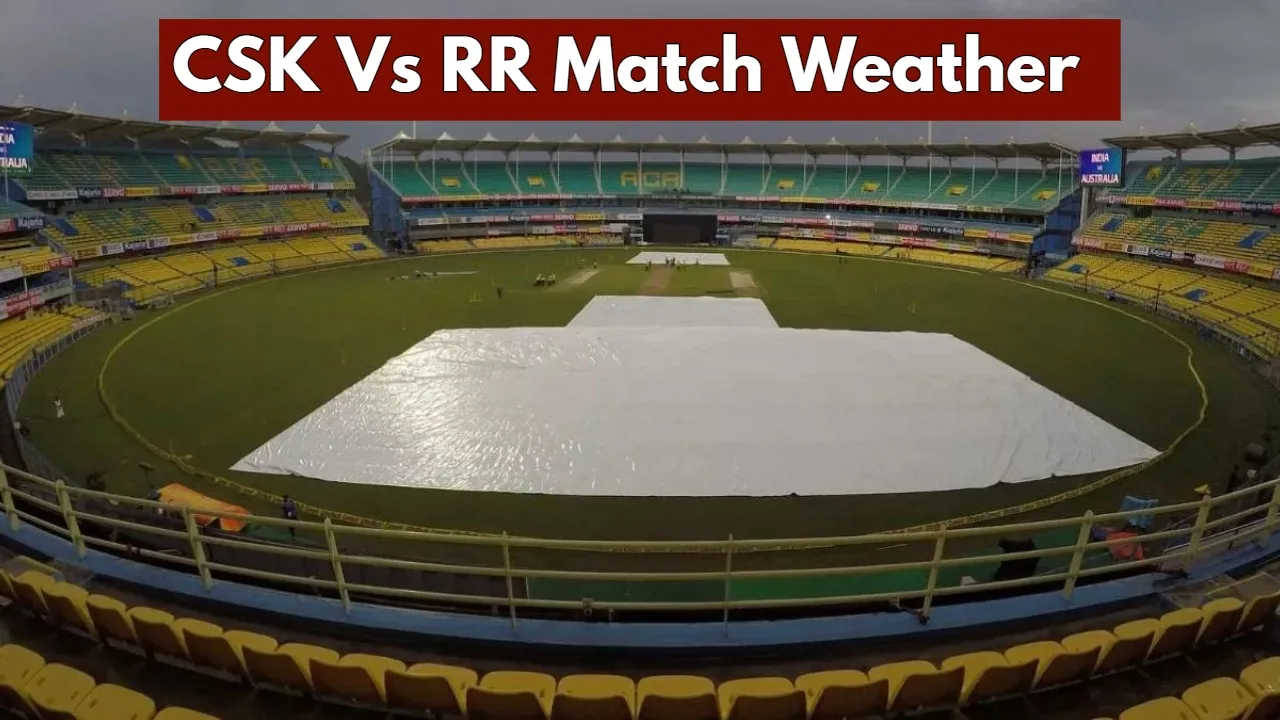
CSK vs RR Update: With renewed hopes and fresh enthusiasm, Chennai Super Kings and Rajasthan Royals are set to clash in the third match of the Indian Premier League 2026. This encounter will take place on Monday, starting at 7:30 PM, at the Barsapara Cricket Stadium in Guwahati. The match promises to be a thrilling affair, as both teams will give their absolute all to secure a winning start to their campaign.
On the other hand, all eyes are also fixed on the weather. Several parts of the country have been experiencing inclement weather recently, accompanied by rainfall. Consequently, cricket fans are keen to know the weather forecast for Guwahati, anxious that rain might potentially wash out the match. You can find the latest updates regarding the weather conditions expected in Guwahati during the match below.
What to Expect from the Weather in Guwahati During the Match
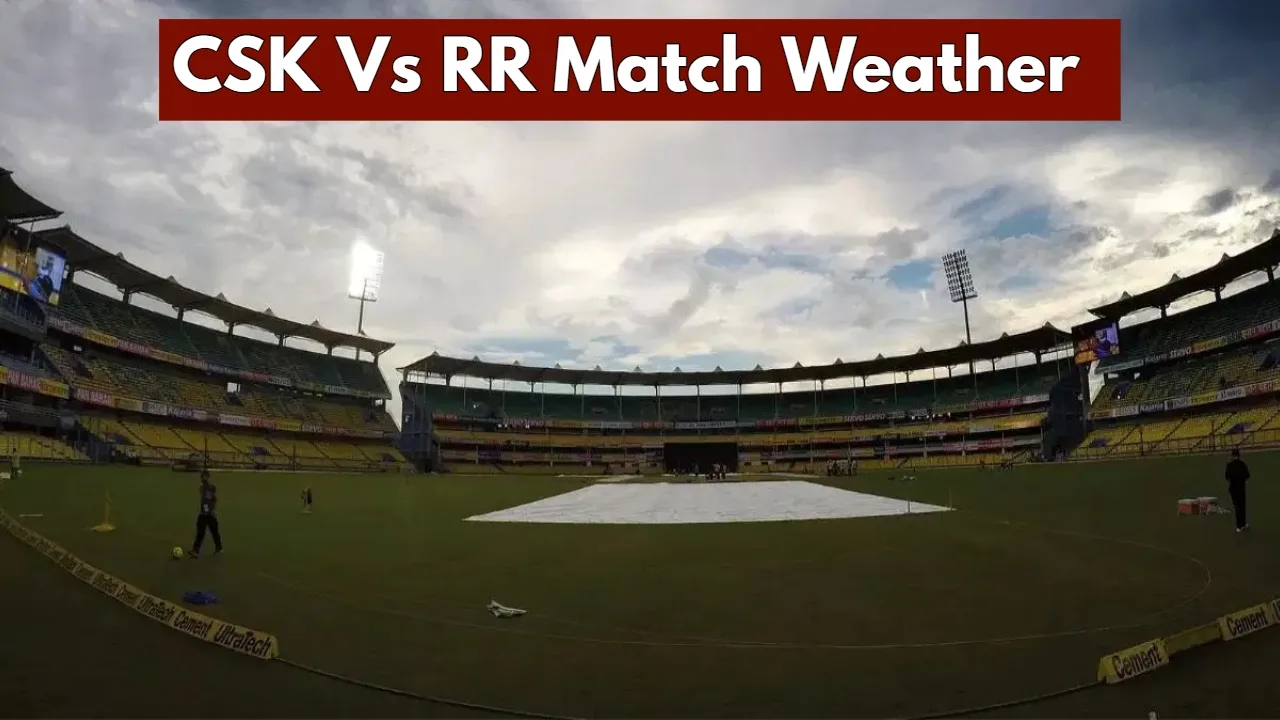
CSK and Rajasthan Royals will face off today in the third match of the IPL season. This match is expected to be a pivotal contest. Regarding the weather, it is likely to remain slightly cool in the evening, with temperatures hovering around 21°C. Additionally, conditions are expected to be quite humid, with humidity levels projected to reach up to 87 per cent.
The dew point is expected to remain at 20°C. The sky is likely to remain mostly overcast, with a cloud cover of 70%. A gentle easterly breeze, blowing at 7 km/h, is expected—though it may pick up speed to reach 19 km/h. Furthermore, there is a 25 per cent probability of rain.
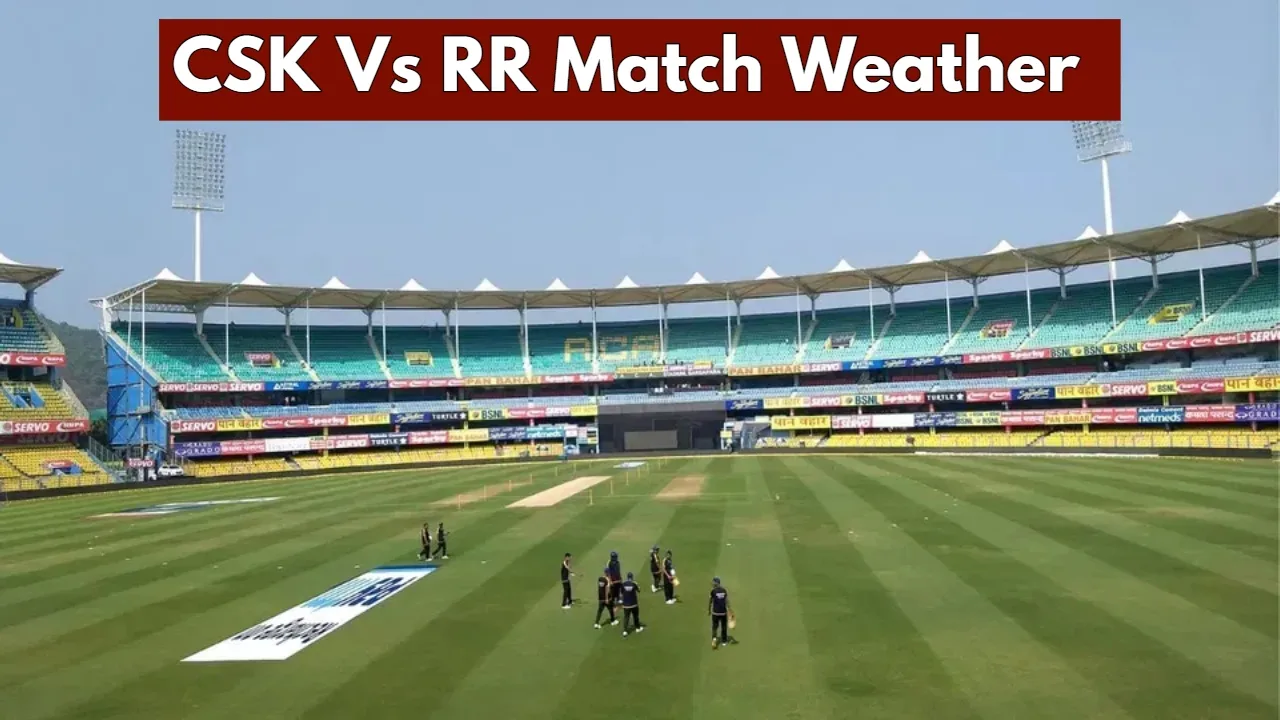
Therefore, while the chances of a rain interruption are low, they cannot be entirely ruled out. Visibility may also be slightly reduced to around 5 m, a nd given the high moisture content in the air, dew could play a significant role in the latter stages of the match.
Know the Pitch Report
The pitch at the Barsapara Cricket Stadium in Guwahati is unique. Its surface is traditionally regarded as an excellent pitch—flat, hard, and conducive to high-scoring games. Additionally, the presence of a fast outfield and relatively short boundaries (approximately 65–68 meters) further enhances the potential for a high-scoring encounter. The average first-innings score typically hovers around 175–185.
Fast bowlers may find some extra pace and bounce during the initial 3 to 4 overs, courtesy of a thin layer of grass on the pitch. Spinners might be seen struggling to grip the ball during the evening hours. Dew could begin to play a significant role starting from the 12th over of the second innings. Consequently, the captain who wins the toss would almost certainly find it a wise decision to opt to bowl first.
Latest News
- Weather warning – Heavy Rain, thunderstorms, lightning Alerts for 13 States Over Next 3 Days

- UP TGT Exam City Slip 2026 Released – Download at upessc.up.gov.in, Exam June 3-4

- ATM Alert: एटीएम में फंस जाए डेबिट कार्ड तो घबराएं नहीं, फटाफट यह काम करने से होगा समाधान

- Post Office Scheme – 7.5% Interest Rate, ₹5 Lakh Becomes ₹7,24,974 in 5 Years, Start with Just ₹1,000

- Best AI Video Editing Laptops Under 60,000 INR: Top Picks Her

- Best CNG Cars: पेट्रोल के बढ़ते दाम के बीच ये सीएनजी गाड़ी खरीदकर खर्च करें कम, माइलेज भी जबरदस्त

- Samsung Stable One UI 8.5 Update to Galaxy Tab S10 FE and Tab S10 FE+

- बुढ़ापे की लाठी बनेंगी ये तीन स्कीम्स, निवेश से पहले जानिए कितना मिल रहा ब्याज

- OnePlus Nord CE 6 vs Samsung Galaxy A57: Which Mid-Range 5G Phone Wins?

- Lenovo LOQ 15 Gen 11 Review: Best Budget Gaming Laptop?