


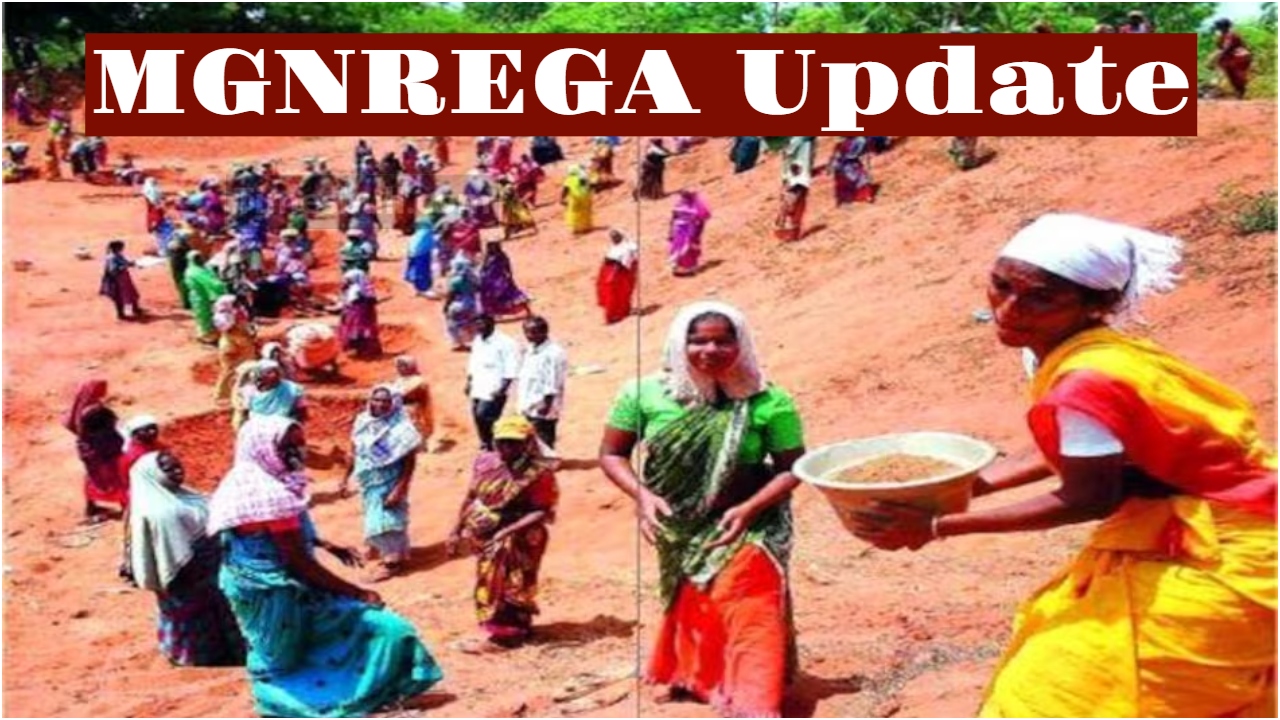
New Delhi: Several schemes are currently running in India that are proving beneficial for the poor and those living below the poverty line. You must have heard of the Mahatma Gandhi National Rural Employment Guarantee Act (MNREGA) scheme. This scheme aims to strengthen rural infrastructure, under which people are guaranteed employment every year.
India is set to make major changes to the name and structure of its large rural employment scheme, MNREGA. The central government appears to be working on introducing a new rural employment law to replace the existing Mahatma Gandhi National Rural Employment Guarantee Act. According to the central government, this change will play a significant role in making India a developed nation by 2047. This will not only change the name of the scheme but also simplify several aspects of its implementation.
Read More: Jio ₹103 Flexi Data Pack: Get 5GB Data + Premium OTT Access for 28 Days.
What changes will accompany the name change?
The new bill that the central government is introducing to create a new law will have significant benefits. The government has named it the Viksit Bharat Guarantee for Rozgar and Ajeevika Mission Gramin Bill 2025. The government is also referring to it as the VB G RAM G Bill in short.
After being passed by both houses of Parliament and receiving the President’s assent, it will replace the MNREGA law in India. There was earlier talk of naming it the Pujya Bapu Rural Employment Scheme, but that is no longer the case. It is now being referred to as the Viksit Bharat G Ram G scheme.
Read More: BCCI forcing Virat Kohli and Rohit Sharma to play this tournament? New instructions from the board
According to sources, the number of days of guaranteed annual employment for rural families under the scheme may also be increased. The number of days could be increased from 100 to 125 days. If this happens, it would be an increase of 25 days compared to the current rules.
Changes in the payment and funding system are also possible
The new rules claim to make the payment system simpler and more efficient. Currently, wages under MNREGA are paid within 15 days, but a weekly payment system is now being considered. Additionally, if work is not provided within 15 days, the government may provide an unemployment allowance.
Previously, the central government bore the entire cost of MNREGA, but now state governments may also be made stakeholders. In some states, the funding split might be 90 per cent from the central government and 10 per cent from the state government. In the remaining states, the central government will bear 6 per cent of the cost,o cost and the state government will bear 94 per cent