

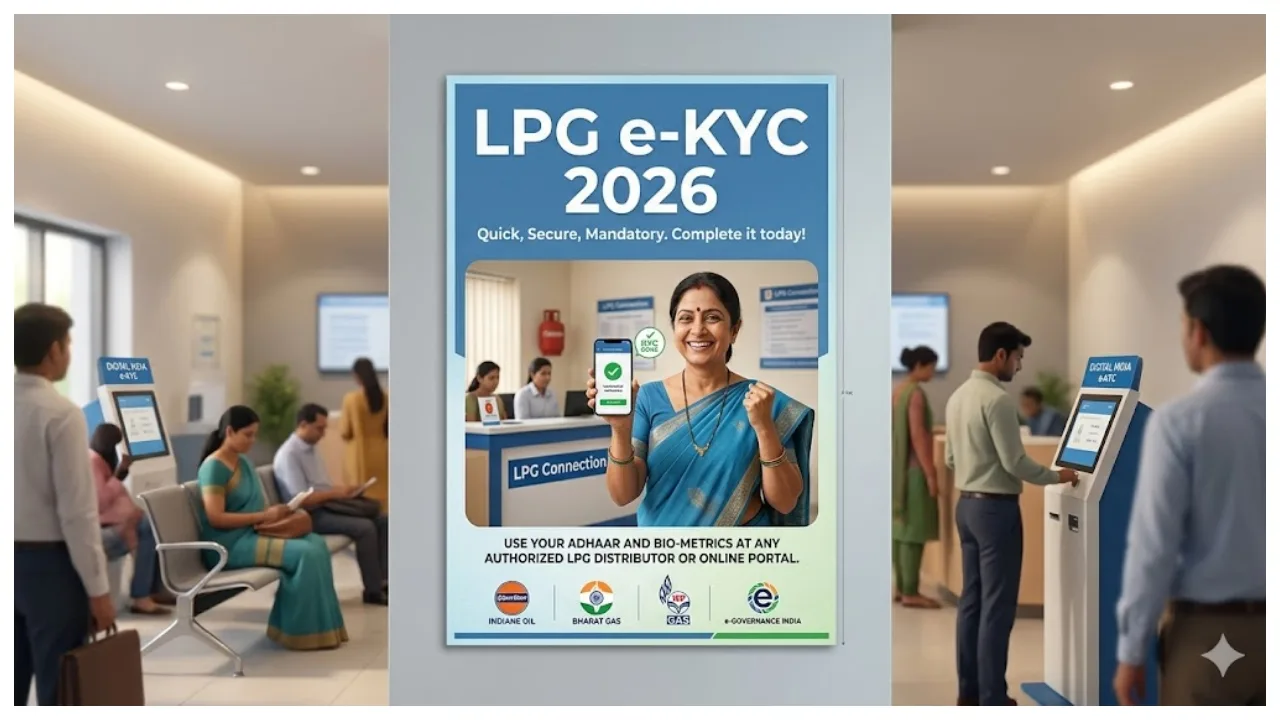
LPG Cylinder E-KYC Update: LPG gas cylinders are still used in most households in India. LPG prices have been rising recently. Meanwhile, there is a lot of discussion about e-KYC. There is also a lot of misunderstanding about e-KYC. Many users are still unclear about whether they need to complete e-KYC. But the government has made it clear that this is not a new rule.
The Ministry of Petroleum and Natural Gas has clarified that e-KYC is only part of the process already underway; it is not a new rule that has just been implemented. The motive behind this is to make LPG user data even more accurate. Let’s know what the government has said, who has to do e-KYC of gas cylinders and who doesn’t.
What is the rule of LPG e-KYC?
The Ministry of Petroleum and Natural Gas has said that this is not a new rule, despite the rumours circulating on social media. The KYC process is already underway. The aim is to keep gas customers’ data accurate and clean to prevent fraud.
Which users have to do e-KYC?
According to official information, e-KWC is not compulsory for all LPG users. It is only necessary for those who have not yet done e-KYC. This means clearly that if you have done e-KYC before, you will not need to do it again.
How to do e-KYC
If you haven’t completed e-KYC yet, do so as soon as possible. LPG companies provide services through mobile apps. For example, India gas consumers can complete this process through the Hello BPCL app. Additionally, you can get e-KYC done at a gas agency near you.
Why is e-KYC important?
The purpose of e-KYC is to bring transparency in the LPG system.
This will prevent fake and duplicate connections.
The government will be able to deliver the subsidy to the eligible beneficiaries.
When will the gas connection be closed?
– According to government rules, it is illegal to have an LPG cylinder connection in a house where piped natural gas is installed.
– If you have a gas connection, but you haven’t had a cylinder refill once in a long time, companies assume that you don’t need it or that it’s an inactive connection.