In a powerful affirmation of a growing partnership, a top UAE official has highlighted Pakistan’s crucial role in the Emirates’ economic strategy. The bond between the two nations is strengthening, moving beyond traditional ties into new frontiers of trade and infrastructure.
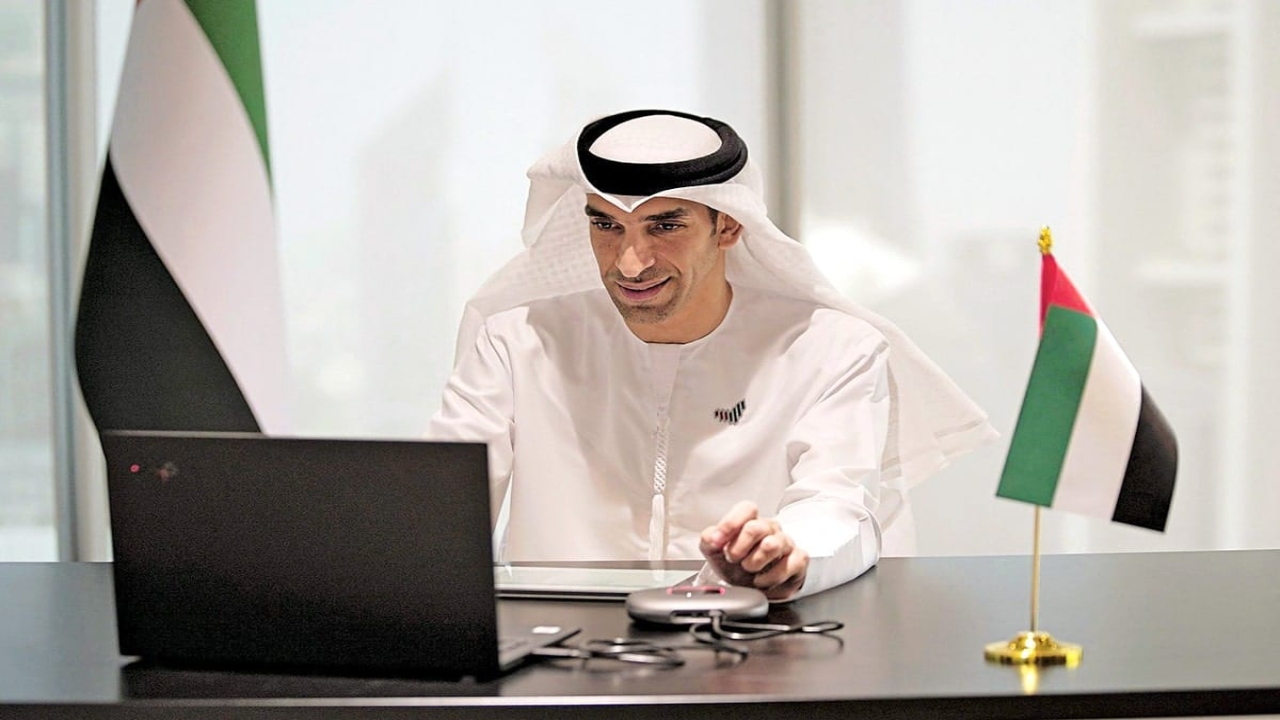
Dr. Thani bin Ahmed Al Zeyoudi, UAE Minister of State for Foreign Trade, recently addressed the ICAP Middle East CFO Conference in Dubai, outlining a future of expanded cooperation. “Pakistan, for us, is an important partner in these efforts,” Dr. Al Zeyoudi stated, pointing to a robust non-oil trade volume of $8.6 billion in the last year.
The collaboration doesn’t stop there. The two countries have joined forces in a monumental $3.3 billion pledge to develop transformative projects, including railways, economic zones, and transport links along a major new trade corridor. This initiative aims to strengthen regional connectivity and bolster what experts call “South-South cooperation.”
Building the Bridges of Tomorrow’s Trade
The UAE is actively working with partners like Pakistan to create new logistics corridors that support regional integration. Dr. Al Zeyoudi explained that these initiatives are designed to forge new supply chain links and solidify the UAE’s position as the region’s premier hub for trade and investment.
“As the global economic center of gravity shifts eastward, we have the opportunity to accelerate its progress,” he said. “This requires connecting markets, building networks, and supporting mutually beneficial growth in a fragmented world. It’s the agility we need for a competitive edge, matched with bold decisions and action.”
Answering Your Questions: “People Also Ask”
What is the trade volume between UAE and Pakistan?
The non-oil trade between the UAE and Pakistan reached $8.6 billion in the latest recorded year. This figure highlights the deep and diverse economic relationship beyond energy resources.
What is the UAE Pakistan corridor?
The UAE-Pakistan corridor is a strategic partnership involving a $3.3 billion investment pledge. This project focuses on developing critical infrastructure, including railway networks, specialized economic zones, and modern transport modes to enhance trade flow and regional connectivity.
Why is the UAE’s economy growing so fast?
The UAE’s rapid economic growth is driven by a proactive trade diversification strategy. A key component is its Comprehensive Economic Partnership Agreements (CEPA) program, which has secured trade deals with 32 countries. This, coupled with record-breaking foreign investment, has positioned the UAE as a global economic leader.
UAE’s Economic Momentum Reaches Record Highs
Dr. Al Zeyoudi’s comments came as he revealed the UAE’s trade diversification strategy is delivering unprecedented results. The nation’s non-oil foreign trade soared to $464 billion in the first half of 2025—a striking 24% year-on-year increase that outpaces global trade growth by four times.
Exports have been a particular bright spot, surging 44.7% and now accounting for over 21% of total non-oil trade, the highest level in the country’s history.
This progress is largely credited to the UAE’s CEPA programme. Since its launch, the UAE has signed far-reaching trade agreements that now give its exporters seamless access to a quarter of the world’s population. “Our ports and free zones are becoming increasingly important hubs in the world’s principal supply chains,” Dr. Al Zeyoudi noted.
The investment story is equally impressive. In 2024, the UAE attracted $45.6 billion in Foreign Direct Investment (FDI), capturing more than half of all investment flows into the Middle East. Simultaneously, Emirati outbound investments reached $23.4 billion, channeling capital into renewables, infrastructure, and logistics projects in emerging economies worldwide.
A Vision for the Next 50 Years
Underpinning this success is a long-term growth model built on openness, innovation, and strategic foresight. Dr. Al Zeyoudi emphasized that the UAE’s economic transformation hinges on anticipating the world’s needs decades into the future.
Over the past 50 years, the UAE economy has expanded an incredible 24-fold, evolving into a global nexus for trade, finance, and technology. “We have built models of excellence in aviation, logistics, tourism, and e-commerce,” he added. “Now, we’re building an ecosystem that embraces the possibilities of tomorrow’s technologies.”
This philosophy of openness remains central. The UAE continues to welcome investments that power new industries, talent that boosts innovation, and trade that sharpens global competitiveness. By forging stronger, deeper connections with partners like Pakistan, the UAE is reinforcing its vital role as a global connector for a new era of trade.