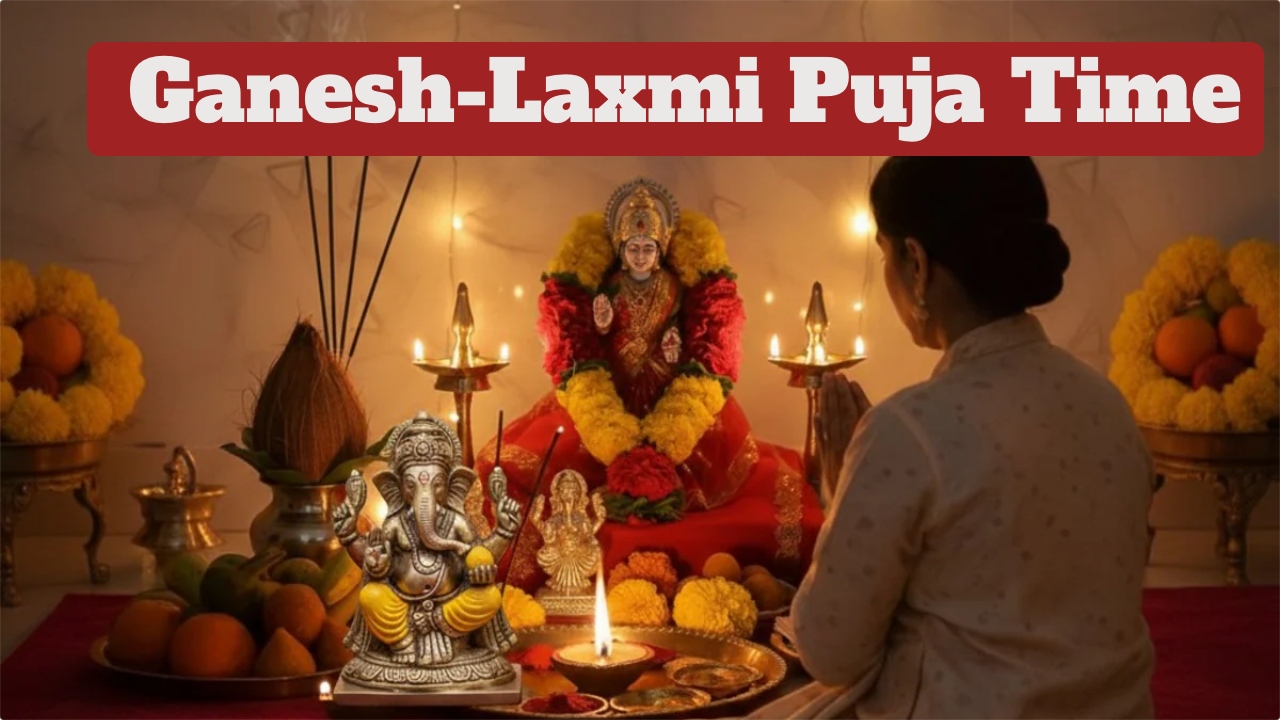
Ganesh Lakshmi Puja Muhurat – As the autumn air crisps and the scent of marigolds and incense fills the atmosphere, the anticipation for India’s grandest festival reaches its zenith. This year, on the 20th of October 2025, the nation will be bathed in the resplendent glow of diyas, celebrating the sacred occasion of Deepavali. This festival of lights is far more than a spectacle; it is a profound spiritual journey, a celebration of the victory of divine light over spiritual darkness and knowledge over ignorance. At its heart lies the worship of Goddess Lakshmi, the bestower of wealth and prosperity, accompanied by Lord Ganesha, the remover of obstacles, and Lord Kubera, the treasurer of the gods.
For many, a significant question had arisen regarding the correct day for the primary Lakshmi Puja. However, as per the authoritative Hindu Panchang, Deepavali will be observed on Monday, 20th October 2025. The reason for this is astrologically significant: the Amavasya Tithi (new moon day) is prevailing during both the Pradosh Kaal and the Mahanishitha Kaal on the 20th, making it the most potent and spiritually charged time for the central rituals of the festival.
Decoding the Auspicious Muhurat for Lakshmi Puja
Timing is everything in Hindu rituals, and adhering to the Shubh Muhurat (auspicious window) is believed to amplify the blessings received. For Diwali 2025, the planetary alignments have created a highly favourable period.
Amavasya Tithi: Begins on 20th October at 3:44 PM and ends on 21st October at 5:54 PM.
Pradosh Kaal: This twilight period, considered exceptionally auspicious for Lakshmi, spans from 5:46 PM to 8:18 PM on the 20th.
- Advertisement -Vrishchik Lagna: The stable and favourable Scorpio ascendant will be in effect from 7:08 PM to 9:03 PM on the 20th.
Synthesising these factors, the most potent and highly recommended Main Puja Muhurat is from 7:08 PM to 8:18 PM on 20th October. Performing the Lakshmi Puja within this one-hour and ten-minute window is said to invite the Goddess’s maximum grace and goodwill into the household.
The Significance of the Divine Trinity: Ganesha, Lakshmi, and Kubera
The Diwali Puja is unique for its syncretic worship of three powerful deities, each representing a cornerstone of a prosperous and harmonious life.
First and foremost, Lord Ganesha is venerated. No Hindu ritual begins without an invocation to the Vighnaharta, the remover of obstacles. His blessings are sought to ensure the ceremony proceeds without hindrances and that the devotee’s path remains clear of future hurdles.
The central deity of the worship is Goddess Lakshmi. She is not merely the goddess of material wealth but also of spiritual abundance, good fortune, and grace. On Diwali night, it is believed that she roams the Earth, entering homes that are clean, well-lit, and filled with devotion, to bless the inhabitants.
Completing this trinity is Lord Kubera, the celestial treasurer and the guardian of wealth. His worship is particularly crucial for those in business and commerce. By venerating Kubera alongside Lakshmi, devotees seek not only to attract wealth but also to manage and preserve it wisely, ensuring its longevity and righteous use.
A Step-by-Step Guide to the Diwali Puja Vidhi
A structured approach to the puja helps inculcate focus and devotion. Here is a detailed guide to performing the rituals.
1. Preparation of the Puja Space: The first step is a physical and symbolic cleansing. The entire house, especially the puja area, is thoroughly cleaned. It is then decorated with a beautiful Rangoli at the entrance, fresh flowers, and strings of lights or traditional diyas. A clean and inviting atmosphere is the first invitation to the deities.
2. Kalash Sthapana (Establishing the Holy Pot): A Kalash (a brass or silver pot) is filled with water. A whole Supari (betel nut), a coin, and a few mango leaves are placed inside it. The Kalash is then covered with a lid and a coconut is placed on top. This Kalash represents the universe and is the focal point of cosmic energy during the puja.
3. Invoking Lord Ganesha: The ritual begins by worshipping Lord Ganesha. His idol or image is anointed with Kumkum and Chandan (sandalwood paste). He is offered red flowers, Durva grass, and his favourite sweets like Modak and Laddoo. Chanting his mantras, such as “Om Gan Ganapataye Namah,” sets a positive tone for the ceremony.
4. Worshipping Goddess Lakshmi: The idol or picture of Goddess Lakshmi is placed next to Ganesha. She is bathed with water, Panchamrit (a mixture of milk, curd, honey, ghee, and sugar), and then wiped clean. She is adorned with a Chandan tilak, offered red lotus or marigold flowers, Akshata (unbroken rice), fruits, and sweets. The chanting of “Om Shreem Mahalakshmyai Namah” resonates through the home, inviting her presence.
5. Honouring Lord Kubera: A specific prayer is offered to Lord Kubera. Eleven cowrie shells (or gold/silver coins) are placed in front of his image. The powerful mantra, “Om Yakshaya Kuberaya Vaishravanaya Dhanadhanyadi Padayeh Dhana-Dhanya Samreeddhing Me Dehi Dapaya Swaha,” is chanted with sincerity, seeking his blessings for the protection and growth of one’s assets.
6. The Bahi-Khata Puja (Worship of Account Books): A distinct and practical ritual for the business community is the worship of their account books, the Bahi-Khata. New ledgers are inaugurated on this day. The old and new books are smeared with Kumkum and Akshata, and a Swastika symbol is drawn on them. This ritual sanctifies the tool of one’s livelihood and prays for a profitable and honest year ahead.
Conclusion: Illuminating the Inner Sanctum
While the external rituals of Diwali—the dazzling lights, the resonant chants, and the elaborate offerings—are profoundly beautiful, their ultimate purpose is to ignite the inner light of the soul. The meticulous cleaning signifies the purification of the heart from negative tendencies. The rows of diyas represent the dispelling of ignorance, one enlightened thought at a time. The worship of Lakshmi, Ganesha, and Kubera is a holistic prayer for a life that is not just materially abundant, but also free of obstacles, ethically grounded, and spiritually rich. This Deepavali, as you light your lamps on the 20th of October, may you remember that the truest wealth is the light of consciousness within, and may your home and heart be forever filled with its divine radiance.