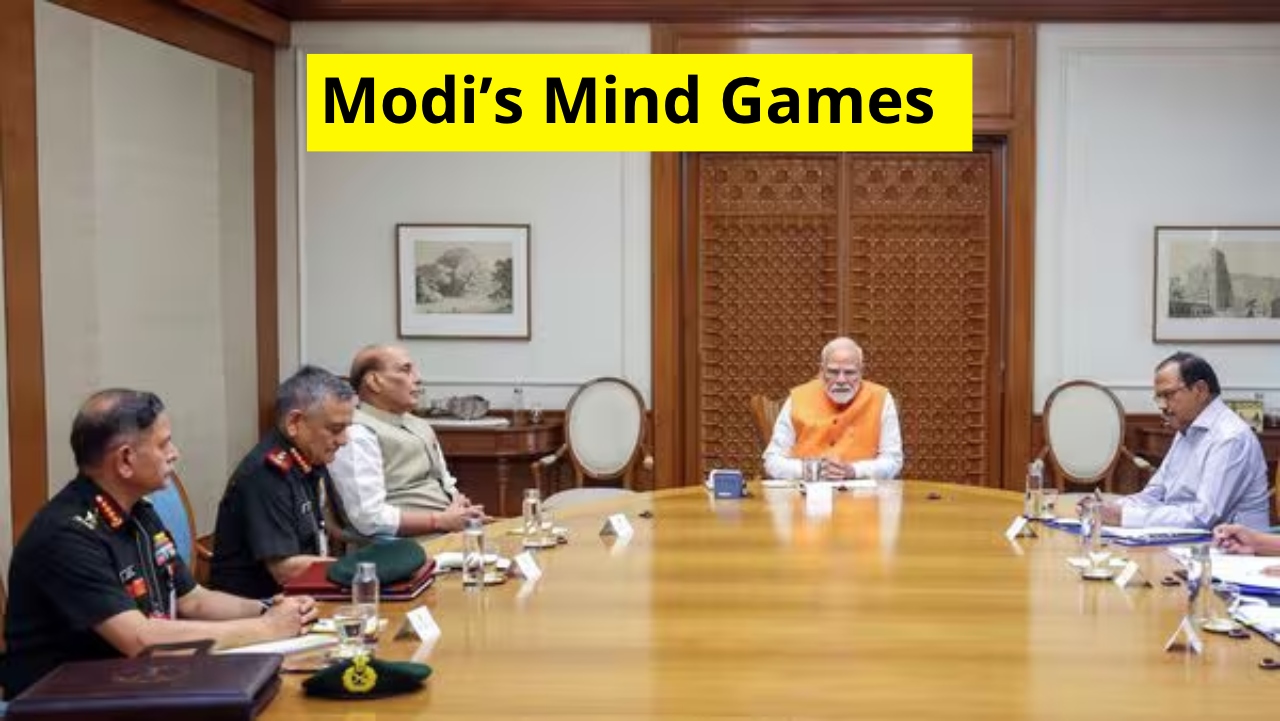
India Pakistan War (pahalgam terror attack): The tension between India and Pakistan has taken a dramatic turn. While Pakistan’s military anxiously awaits India’s next move, PM Narendra Modi remains focused on high-level meetings—without a single minister issuing a statement. Yet, these silent strategies have shaken Pakistan’s leadership, from PM Shehbaz Sharif to Army Chief Asim Munir. Modi’s psychological warfare has forced Pakistani leaders to plead for de-escalation, with Defence Minister Khawaja Asif admitting, “We want to avoid war at any cost.”
Swift Action After Pulwama Attack
When Pulwama was attacked, PM Modi was in Saudi Arabia. Within hours, he instructed Home Minister Amit Shah to visit Kashmir. Shah held emergency meetings with officials, while Modi cut short his foreign trip to chair a security review in Delhi. Pakistan, unnerved by India’s calm, began denying involvement—without India even accusing them.
India’s Counterstrikes: Diplomatic & Economic Blows
-
Suspended Indus Water Treaty
-
Revoked visas for Pakistani citizens
-
Expelled diplomats
Pakistan responded with nuclear threats and warnings of “rivers of blood,” but India’s silence amplified their panic. Their Defence Minister claimed *”India will attack in 2-3 days,”* yet Indian officials ignored the rhetoric.
Pakistan’s Desperation: From Putin to the UN
-
Foreign Minister sought help from Russia, UAE, and the US.
-
PM Sharif called UN Chief António Guterres, pleading to “stop India.”
-
At 2 AM, Pakistan’s Info Minister held a press conference, alleging *”India will strike within 24-36 hours.”*
Conclusion: Modi’s Strategy Wins Without Firing a Shot
Pakistan’s claims of spotting Indian Rafale jets in Kashmir were dismissed. Clearly, Modi’s “quiet strength” has left Pakistan mentally defeated—proving that sometimes, silence speaks louder than bullets.
Related Stories
 India
India India
India India
India India
India India
India India
India India
India India
India India
India India
India