


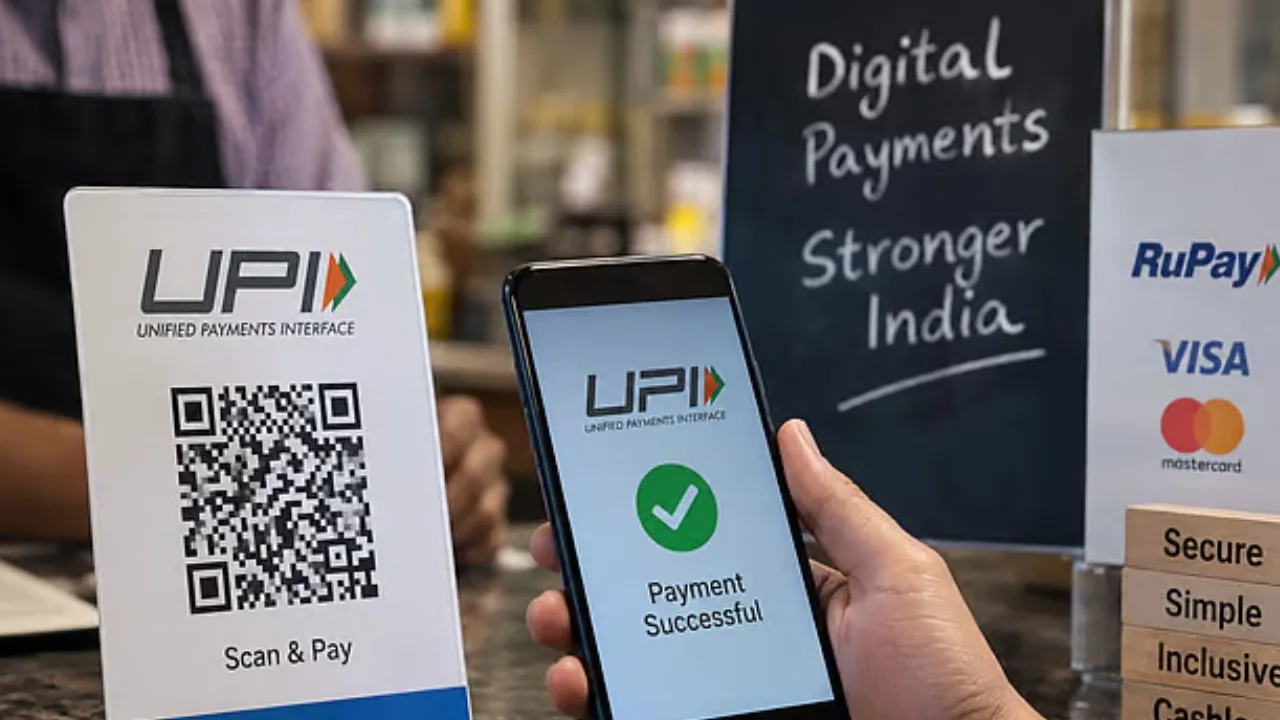
UPI Charges: The rollout of the Merchant Discount Rate (MDR) on UPI transactions exceeding Rs 2,000 might face further delays. According to a Financial Express report citing industry insiders, this postponement could be linked to the upcoming assembly elections in five states in 2027. The government is wary of potential protests from traders and trade unions. The scheduled elections are in Uttar Pradesh, Punjab, Uttarakhand, Goa, and Manipur next year.
UPI MDR Update
The report states that although most regulatory and operational steps for introducing MDR on specific UPI transactions are complete, the government, the Reserve Bank of India (RBI), and the National Payments Corporation of India (NPCI) have yet to finalise an implementation date. If no consensus is reached soon, the rollout might be delayed until after the Uttar Pradesh elections, though this is not guaranteed.
This is not the first time the MDR implementation has been deferred. Initially, the government intended to introduce a 0.4 percent MDR on UPI transactions over Rs 2,000 for merchants starting 15 October 2026. However, the UPI and Services Steering Committee chose to postpone the launch until after Diwali, citing the festive season and operational difficulties. At that time, NPCI announced that a new date would be declared separately.
Which UPI transactions will be exempt from MDR?
As per the proposal announced in September, MDR will apply to UPI transactions above Rs 2,000 for merchants, while smaller payments will remain free of charge. Person-to-person transactions will continue to be free, regardless of the amount. Transactions qualifying under the zero-MDR scheme for small merchants will also remain exempt. For transactions of Rs 75,000 and above, the MDR will be capped at Rs 300 per transaction.
Transactions exceeding Rs 2,000 in essential and low-margin sectors such as railways, telecom, insurance, fuel, and agricultural inputs will incur a flat MDR of Rs 5 per transaction. Payments via mutual funds, securities, and stock brokers and dealers will carry an MDR of 0.02 percent, capped at Rs 300. Trade unions have opposed the plan, and several merchant groups had announced a “No UPI Day” protest on 2 October. However, they retracted this decision following talks with Finance Minister Nirmala Sitharaman.
Distribution of MDR proceeds
The government’s aim in imposing MDR is to establish a sustainable revenue model for the digital payments ecosystem. MDR is the charge merchants pay to payment service providers to process digital transactions. The collected MDR will be allocated among banks and other participants in the UPI ecosystem. Of the total MDR collected, 40% will be directed to customers’ banks, 30% to payment gateways, 20% to the UPI app, and the remaining 10% to the sponsoring bank of the UPI app.