


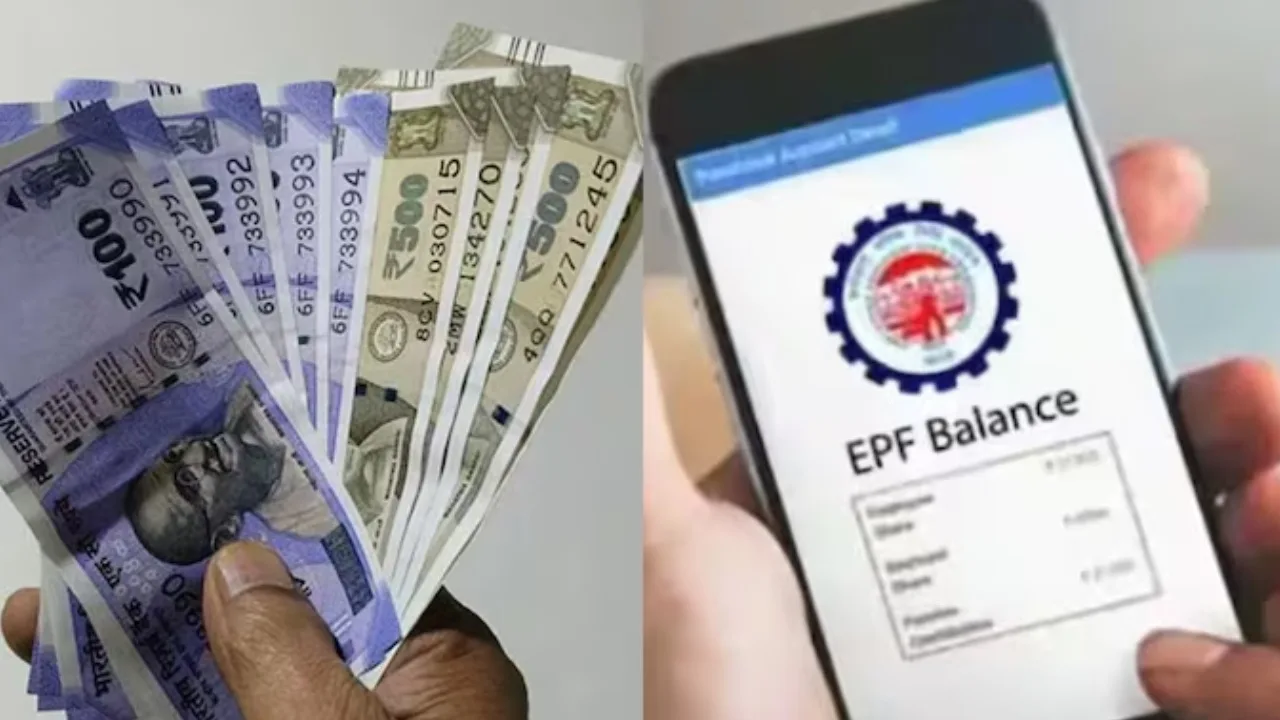
EPFO: If introduced, the new scheme by the Employees’ Provident Fund Organization (EPFO) will benefit 630,000 employees. Under this scheme, instead of withdrawing the entire EPF sum at retirement, employees will have the option to receive it in monthly instalments. They can choose to withdraw their PF funds monthly, quarterly, or annually, according to their preference. Interest will continue to accrue on the remaining balance in their account, as before.
According to reports, the EPFO is expected to discuss this proposal at its Central Board of Trustees (CBT) meeting on 19 November. A Systematic Withdrawal Plan (SWP) is being considered for this purpose.
There are three methods to withdraw money
Under the new arrangement, employees can leave a portion of their PF balance in their account rather than withdrawing the entire amount upon retirement. Subsequent withdrawals will be possible monthly, quarterly, or annually, depending on their needs. Employees may also withdraw a small lump sum and keep the rest in their account, which will continue to earn interest.
630,000 employees stand to benefit
The report states that around 630,000 EPFO members aged over 55 could benefit from this initial phase. This will allow employees to utilise their savings over a longer period after retirement, instead of spending it all at once.
Preparations underway to include gig workers
The EPFO is also working to bring unorganised sector and gig workers into the provident fund system. Under this plan, it is considering allowing such workers to contribute digitally to their PF accounts without employer involvement. However, this proposal is still under consideration. The system will only be implemented after CBT approval and completion of the necessary formalities. After retirement, you could receive a monthly pension of Rs 41,822.
If you have Rs 50 lakh in your EPF account at retirement, you can invest this amount in various options to generate a steady monthly income. There is a notable difference in monthly returns from investing via SWP, bank fixed deposits (FDs), and commercial annuities.
20-year returns on an investment of Rs 50 lakh
EPF SWP: Assuming an 8% annual return, you would receive Rs 41,822 per month, with a total payout of around Rs 1 crore over 20 years.
Bank FD: At a 7% interest rate and an effective post-tax rate of 4.82%, this would yield Rs 32,492 per month, totalling Rs 78 lakh over 20 years.
Commercial annuity: Assuming a 6% return, this would provide Rs 30,637 per month, with a total payout of approximately Rs 73.5 lakh over 20 years.
What is the alternative to SWP?
SWP, or Systematic Withdrawal Plan, involves investing a lump sum in a mutual fund and withdrawing a fixed amount monthly. This uses both the principal and investment returns. However, mutual fund returns depend on market performance, so an 8% return is not guaranteed.
How do you receive a pension via annuity?
Annuities require a lump sum payment to an insurance company, which then pays a regular monthly pension. The pension amount depends on the chosen plan and its terms. An SWP provides Rs 9,330 more per month than an FD and Rs 11,185 more than an annuity. However, SWPs involve market risk, while FDs and annuities come with their own conditions. The total amount received over 20 years includes the original investment and should not be regarded as pure profit.