


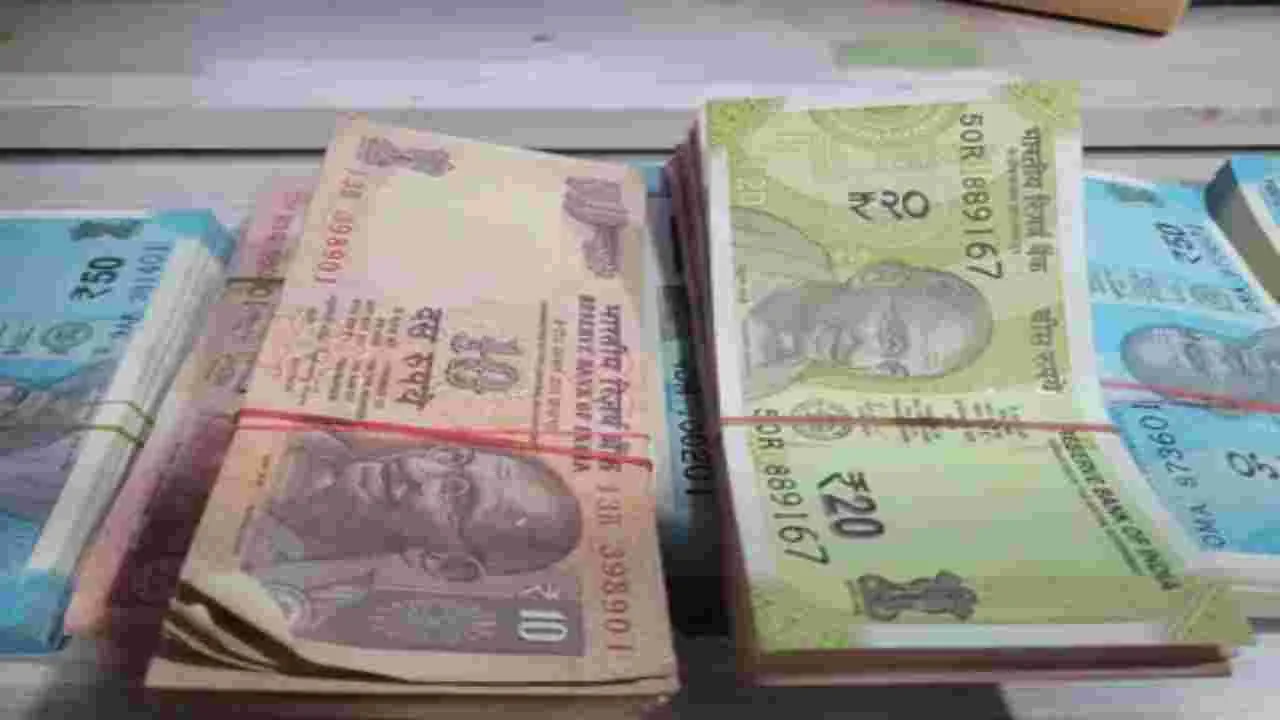
Plastic Notes: We are now in the UPI era, where cash is seldom used. This shift is understandable, as paper notes can wear out quickly and are prone to tearing. Fortunately, this issue may soon be resolved, as the currency in your wallet could soon be made from plastic.
The Reserve Bank of India’s note printing division, BRBNMPL, has launched a global tender for the production of plastic notes. They are currently inviting expressions of interest (EOIs) from companies around the world to manufacture and supply polymer sheets, marking the official beginning of the process to acquire the plastic materials necessary for printing notes. Initially, they may roll out 10 and 20 rupee notes as part of a pilot project.
What exactly are plastic notes?
Plastic notes, also known as polymer notes, are not printed on regular plastic but rather on a special, durable plastic film. This film is coated with a white layer to facilitate the printing of the note. Additionally, these notes include a transparent window, which is a key security feature, making it extremely challenging to counterfeit them.
Which notes will be exchanged first?
Experts suggest that if the pilot project goes ahead, the first polymer notes could be the 10 and 20 rupee denominations. This is because they are the most commonly used notes and tend to wear out the quickest.
How significant is this move by the RBI?
BRBNMPL is the same organization responsible for printing Indian currency at its facilities in Mysore and Salboni. The fact that this company is now seeking proposals from international firms to acquire polymer sheets indicates that this is more than just a concept; it is a tangible step towards implementation. However, it is important to note that plastic notes will not be available in the market next month, as the process is still in its early stages.
In a press conference after the monetary policy on June 5, 2026, RBI Governor Sanjay Malhotra stated that the proposal for polymer notes was under consideration. He clarified that no final decision had been made and that the central bank was assessing the pros and cons.
The idea of polymer notes in India is about 14 years old. It was first discussed around 2009. In 2012, the government approved the field trial of 100 crore polymer notes of Rs 10. In 2014, it was decided that separate centres would be set up in Kochi, Mysuru, Jaipur, Shimla and Bhubaneswar.
Season
These will be tested in
In 2016, the government reported that the process of procuring materials had begun, but due to technical and operational reasons, the plan could not proceed further and the project was shelved. Digital payments have grown rapidly, but the demand for cash is also steadily increasing. By May 2026, cash in circulation in the country reached a record high of Rs 42.86 lakh crore. On the other hand, a large number of torn and soiled notes are being destroyed every year. In 2024-25, approximately 23.8 billion notes were removed from circulation. Printing notes also costs thousands of crores of rupees each year. Therefore, long-lasting polymer notes could be a cost-saving option for the government and the RBI.
Advantages of plastic notes
The biggest advantage is their longevity.
These can last two and a half to four times longer than paper notes.
These do not get damaged quickly by water, do not tear easily and also attract less dirt.
Several studies have found that bacteria are less likely to survive on their surfaces. Most importantly, their transparent windows and advanced security features make them extremely difficult to counterfeit.
But the challenges are no less
Polymer notes are initially expensive because they require special material which may have to be purchased from abroad at present. ATMs and note counting machines across the country may also have to be upgraded to accommodate the new notes. In a hot country like India, the impact of extreme temperatures is also considered a challenge. Furthermore, people in several countries have complained that the new polymer notes stick together and develop permanent creases when folded.
Where in the world are polymer notes accepted?
Australia first introduced polymer notes in 1988 and later replaced the entire currency. Subsequently, more than 40 countries, including Canada, Britain, New Zealand, Singapore, Vietnam, Malaysia, and Brunei, adopted them. Experience from these countries shows that while the initial cost is higher, the notes prove to be more durable in the long run.
What will happen next?
Currently, the EOI is only the first step. Following this, numerous processes such as tenders, technical scrutiny, sample testing, security testing, and pilot printing will follow, meaning paper notes aren’t going away just yet. If everything goes according to plan, small-denomination notes may be introduced, and for a time, both paper and polymer notes will circulate simultaneously. For now, it’s safe to say that the polymer note project, stalled for 14 years, appears to be moving forward with greater seriousness than before.