


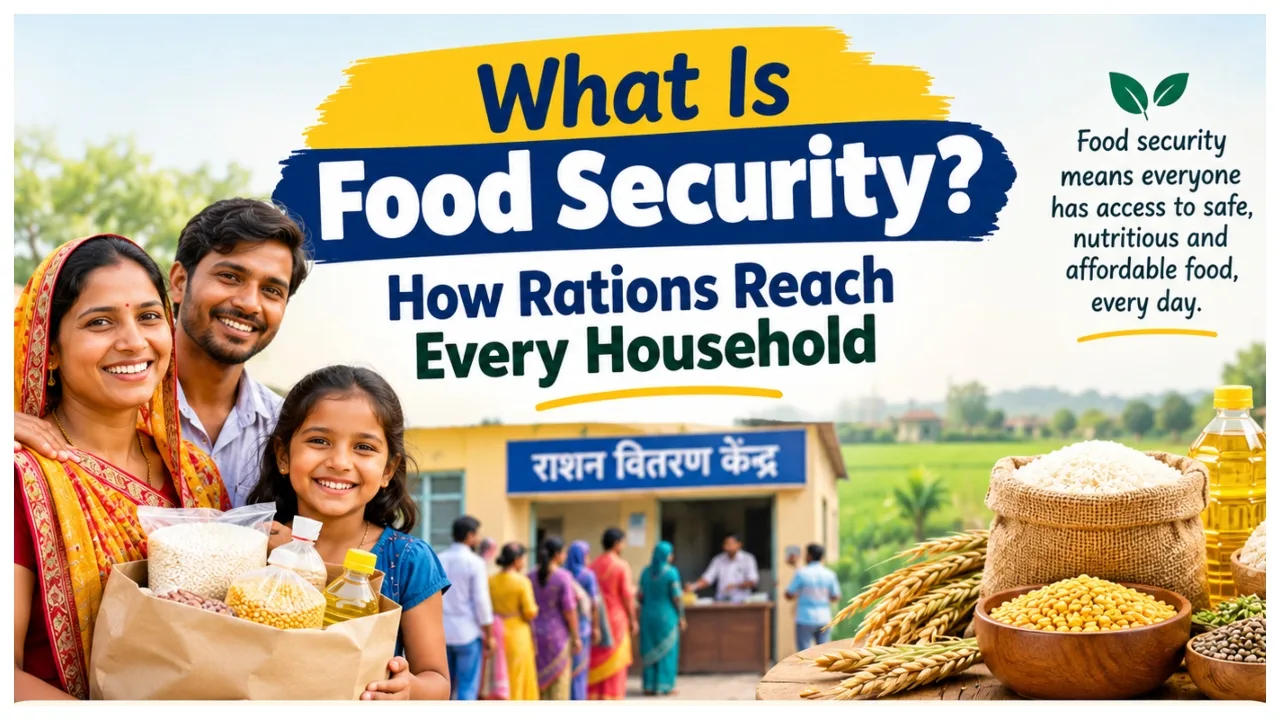
Food Security Explained: If you are a ration card holder receiving your rations on time, are you aware of the elaborate system involved in making this happen? The country possesses adequate food supplies. The Department of Food and Public Distribution has stated that the government’s primary objective is to ensure that every consumer receives sufficient, safe, and high-quality rations according to their needs. A comprehensive system operates to achieve this—ranging from procuring grain from farmers and storing it safely in warehouses to transporting it to ration shops.
The Central Government’s Department of Food and Public Distribution plays a pivotal role in managing the country’s food security system. This system encompasses the procurement, storage, and quality testing of rations, as well as their eventual distribution to consumers. Let us understand this process in detail.
How the System Works
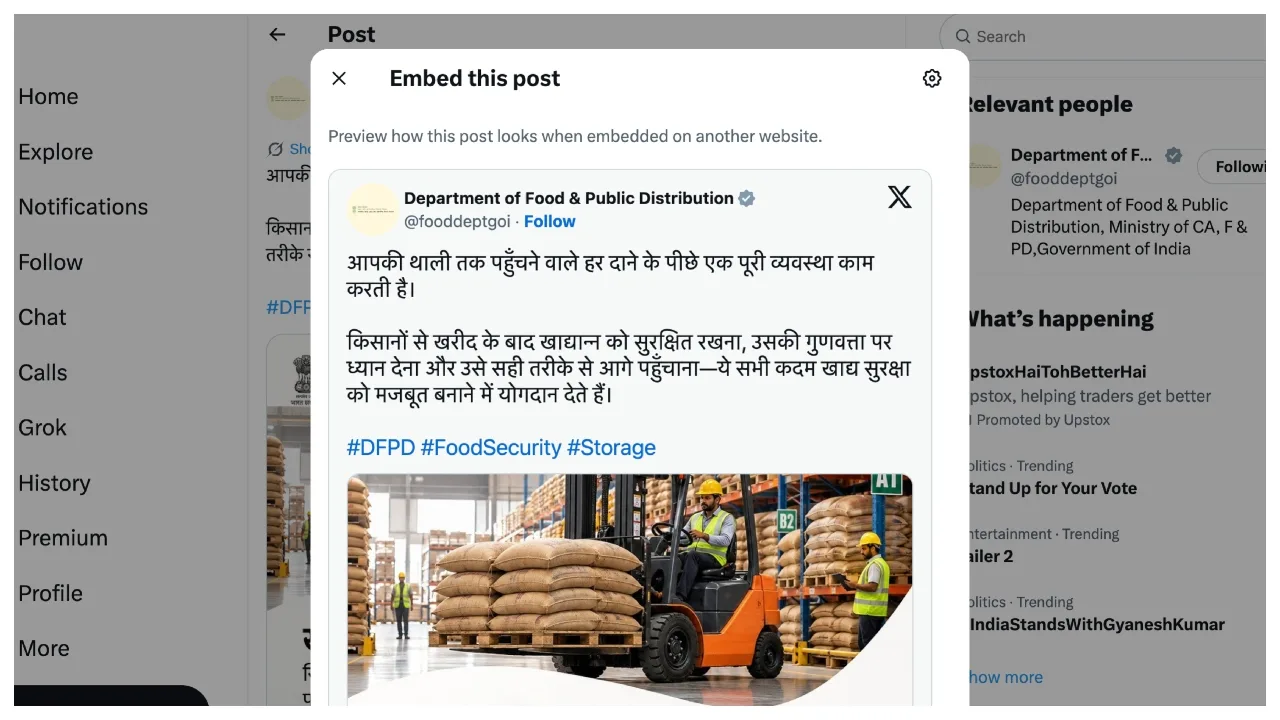
The food security process begins with the farmers. The government determines the Minimum Support Price (MSP) for the procurement of wheat and rice. This ensures farmers receive a guaranteed price for their produce while providing the government with the grain required for the Public Distribution System. After procurement, it is essential to store the grain safely for extended periods; the government has constructed warehouses for this purpose. Various measures are employed within these warehouses to protect the grain from moisture, pests, and spoilage.

Before distribution, the quality of the rations is inspected to ensure the food remains in satisfactory condition until it reaches the consumer. The government then transports the rations from warehouses to various states using railways and trucks. Finally, the rations are made available to consumers at fair prices.
What is the PM Garib Kalyan Anna Yojana?
The government runs various schemes to provide rations to the needy, and the PM Garib Kalyan scheme plays a crucial role in this effort. Under this scheme, eligible individuals—as defined by the National Food Security Act (NFSA)—receive rations free of cost in accordance with established guidelines. This initiative provides economic relief to the poor and needy by ensuring access to food.
Details on Ration Allocation
The government distributes rations under the PM Garib Kalyan Yojana based on specific categories. For the Priority Household (PHH) category, 5 kg of ration is provided per unit (family member); for instance, a family of four receives 20 kg of ration. Additionally, 35 kg of ration is provided to beneficiaries under the Antyodaya Anna Yojana (AAY) category. This food grain is distributed to cardholders on a monthly basis.
System Simplified by the ‘One Nation, One Ration Card’ Scheme
The implementation of the ‘One Nation, One Ration Card’ (ONORC) scheme enables eligible cardholders to collect their rations from any government ration shop across the country. This particularly benefits individuals living away from their home villages or cities due to employment or other reasons, allowing eligible beneficiaries to obtain rations in a different city or state in accordance with the prescribed rules.