


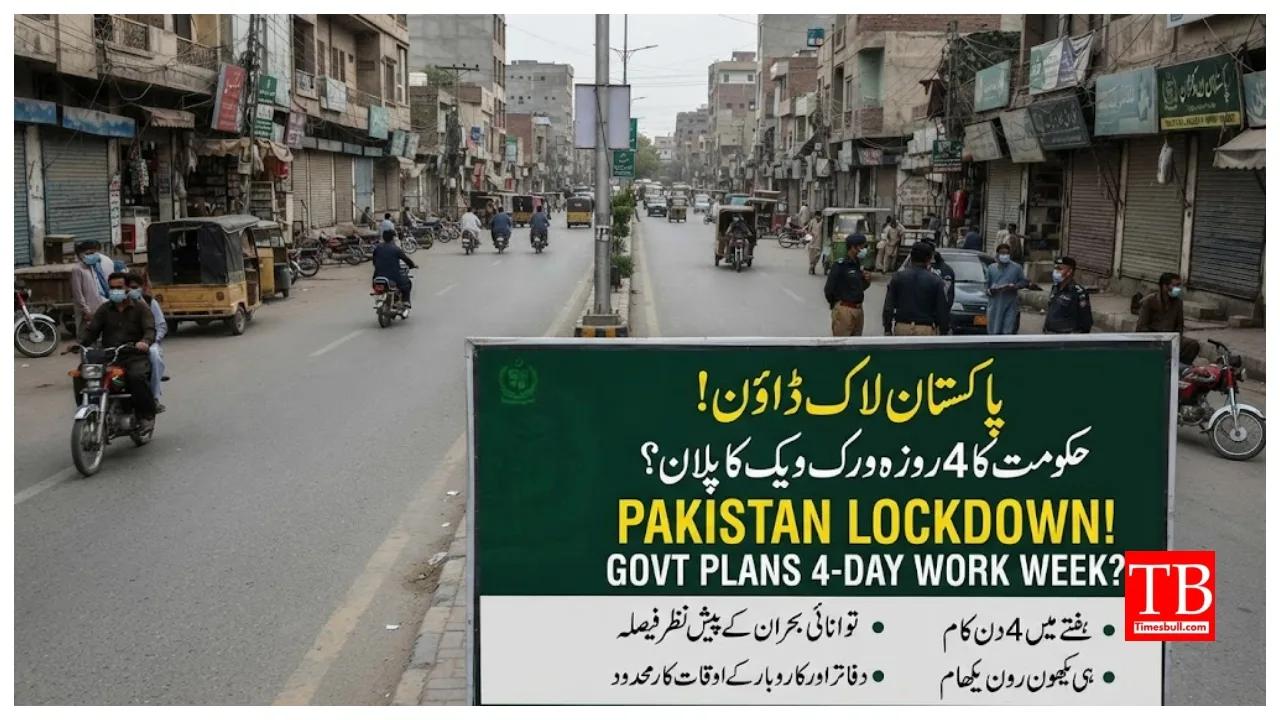
Pakistan Lockdown: Pakistan is reeling from the ongoing conflict in West Asia. Months into the conflict, Pakistan has gained nothing, while the hostilities between the US and Iran continue. The global rise in oil prices is placing immense pressure on Pakistan’s already depleted foreign exchange reserves. The situation in the country has now reached a point where a lockdown-like scenario is emerging.
Prime Minister Shehbaz Sharif recently chaired a high-level meeting to discuss a draft emergency plan. Under this plan, the government is considering several stringent measures to immediately reduce fuel and electricity consumption. Proposals include implementing a four-day workweek (with three days off) for both public and private sector institutions, shifting to online classes, and other similar steps.
Pakistan’s foreign reserves are already critically low, and the government recently acknowledged that it might soon have to plead for assistance from the US. The crisis has deepened as crude oil prices skyrocket in the international market. According to media reports, the government is now planning to implement a “petroleum smart lockdown.” However, the government has not yet made any official announcement regarding the imposition of a lockdown.
Four-Day Work Week
Reports indicate that Pakistan’s situation has become so dire that economic activity could grind to a halt. Under the proposed “petrol lockdown”, both the public and private sectors could enforce a rule limiting operations to just four days a week. There is also a plan to reduce vehicular traffic on the roads by extending the weekend holidays from Friday through Sunday.
– A proposal is in place to open government and private sector offices, schools, and colleges for only four days a week.
– Holidays could be declared for Fridays, Saturdays, and Sundays.
– College and university classes could be shifted to online mode.
– Employees in the corporate and IT sectors could be allowed to work from home for at least two days a week. – Orders may be issued to close commercial markets and shopping malls by 8:00 PM.
– Restaurants and marriage halls may be required to close by 10:00 PM.
– Only essential services, such as medical stores, will be exempted from this rule.