


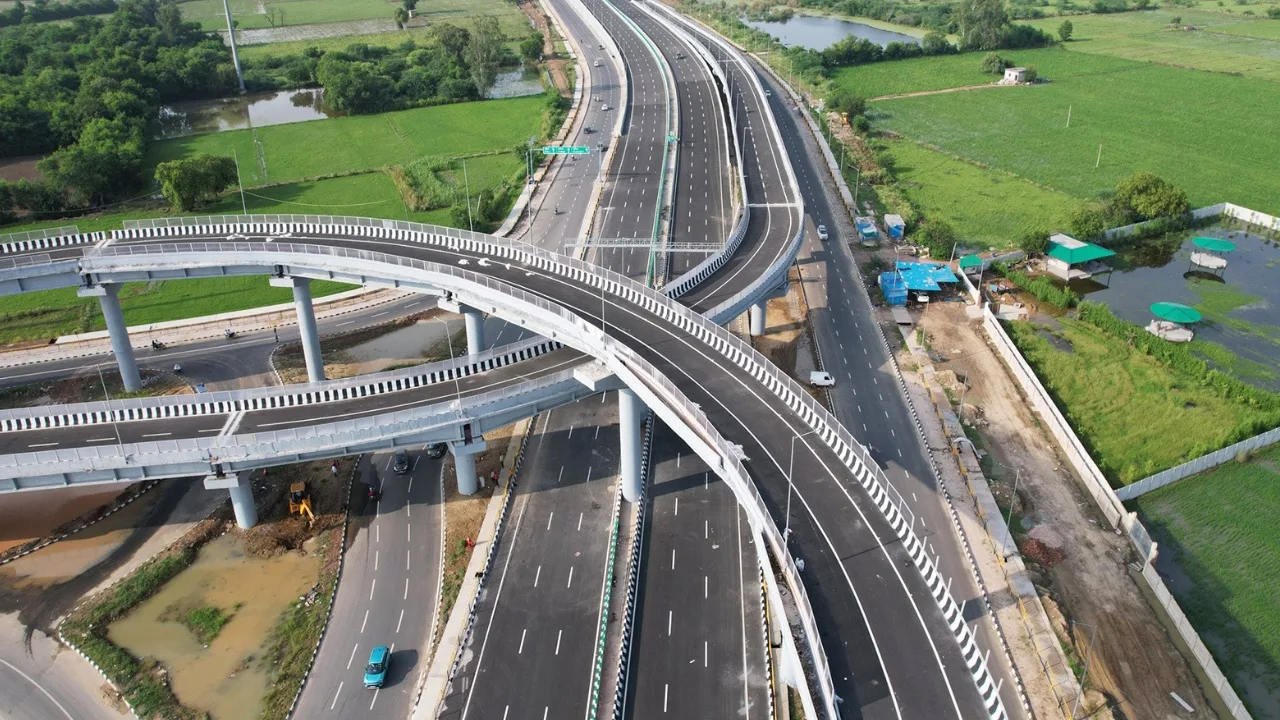
NHAI Rules: The National Highways Authority of India (NHAI) announced new guidelines on Monday, September 21, for planning and designing high-speed, access-controlled national highways. To guarantee smooth traffic flow, the number of lanes and structural design of these highways will be standardized using comprehensive traffic studies. These guidelines apply to all high-speed national highways, including expressways.
The NHAI explained that these guidelines aim to create consistent standards when preparing Detailed Project Reports (DPRs) for highway corridors, establish uniform technical specifications, enhance road safety, and boost the efficiency of India’s national highway network.
Which roads will these new guidelines affect?
The NHAI’s updated guidelines will cover all 4 and 6-lane Greenfield highways (newly constructed in undeveloped areas) and Brownfield highways (high-speed access-controlled routes created by upgrading existing roads).
The NHAI noted that previously, there were no standardized guidelines specifically for planning and designing high-speed, access-controlled national highways except for expressways. Various standards were being used when creating DPRs for these corridors. The new guidelines now offer a consistent framework covering technical and safety requirements.
What are the specific rules?
According to NHAI, the guidelines will determine highway lane configuration and width based on traffic volume. Routes handling up to 15,000 vehicles daily will feature four lanes with a 60-meter width. Routes with 15,000 to 25,000 daily vehicles will have six lanes with a 70-meter width. Routes with 25,000 to 40,000 daily vehicles will include six lanes with a 70-meter width.
NHAI said that ramped interchanges will be built at intersections with expressways, national highways, state highways, and important high-traffic roads. Such facilities will also be provided on roads connecting high-traffic locations such as ports, airports, multi-modal logistics parks, industrial areas, and major tourist destinations.
To control the entry and exit of vehicles on the highways and prevent encroachment, the guidelines provide for construction of a one-metre high wall on the outer edge of the corridor. NHAI said that the construction of this wall along the highways will help in preventing unauthorized entry and entry of stray animals into the high-speed corridors.