


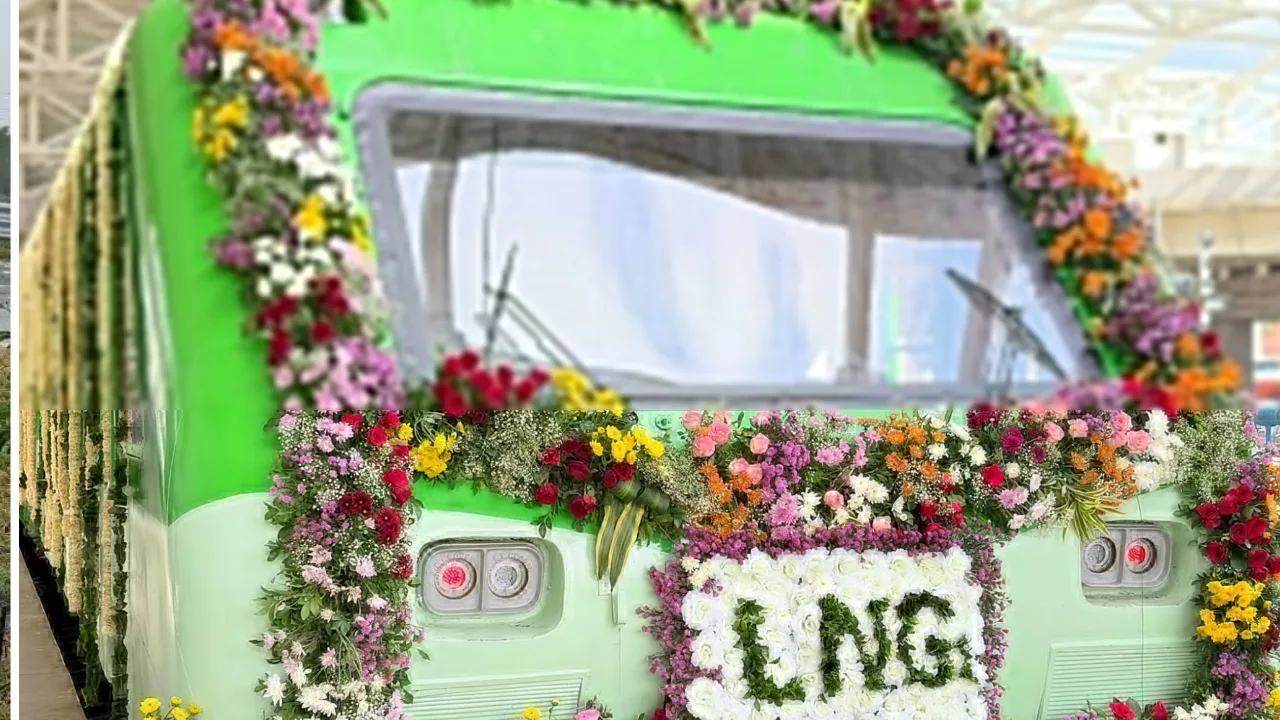
LNG Train: Good news for railway passengers. Liquefied natural gas (LNG) is considered an eco-friendly fuel and is now being utilized by Indian Railways to operate trains. The first LNG train in India has commenced its journey from Sabarmati. Countries like the US, Russia, China, Canada, and Spain are already using LNG, and India has now joined them. At present, the initial LNG train is operational between Sabarmati and Mehsana Junction in Gujarat, employing dual-fuel technology akin to how cars utilize both CNG and petrol.
LNG is a clean and environmentally friendly fuel that is transformed into a liquid by cooling natural gas to extremely low temperatures. This liquefaction process reduces its volume significantly, making it easier to store in train tanks and transport over long distances.
The LNG-powered trains utilize dual-fuel engine technology, operating on a blend of diesel and LNG, rather than relying solely on one type of fuel. The national transporter has introduced an LNG-based fuel system in the train’s power cars for the first time, allowing the engine to run on both LNG and diesel depending on fuel availability.
The train is equipped with a specialized cryogenic tank for storing LNG, designed to maintain extremely cold temperatures. As the train moves, the LNG is converted back into gas through the re-gasification process and is used in combination with diesel as fuel. This results in a substantial reduction of diesel consumption by around 40% to 50%, replacing it with cleaner LNG.
A new chapter in India’s green rail journey begins in Ahmedabad, Gujarat! 🇮🇳
From Sabarmati, Union Home & Cooperation Minister Amit Shah will flag off India’s first LNG-powered train on the Sabarmati-Mahesana route.
Built on diesel + LNG dual-fuel technology, the initiative… pic.twitter.com/oj730lPtqe
“>September 27, 2026
LNG technology is specifically tailored for high-speed and DEMU trains, offering significant fuel cost savings as LNG is more cost-effective than diesel. This shift to LNG helps in cutting down smoke and harmful gas emissions, making rail travel more environmentally friendly.
The increased storage capacity of liquid fuel in the train enables it to cover over 200 km without frequent refueling stops. The dual-fuel system reduces engine strain, ensuring smooth acceleration, and enhancing both speed and efficiency.