


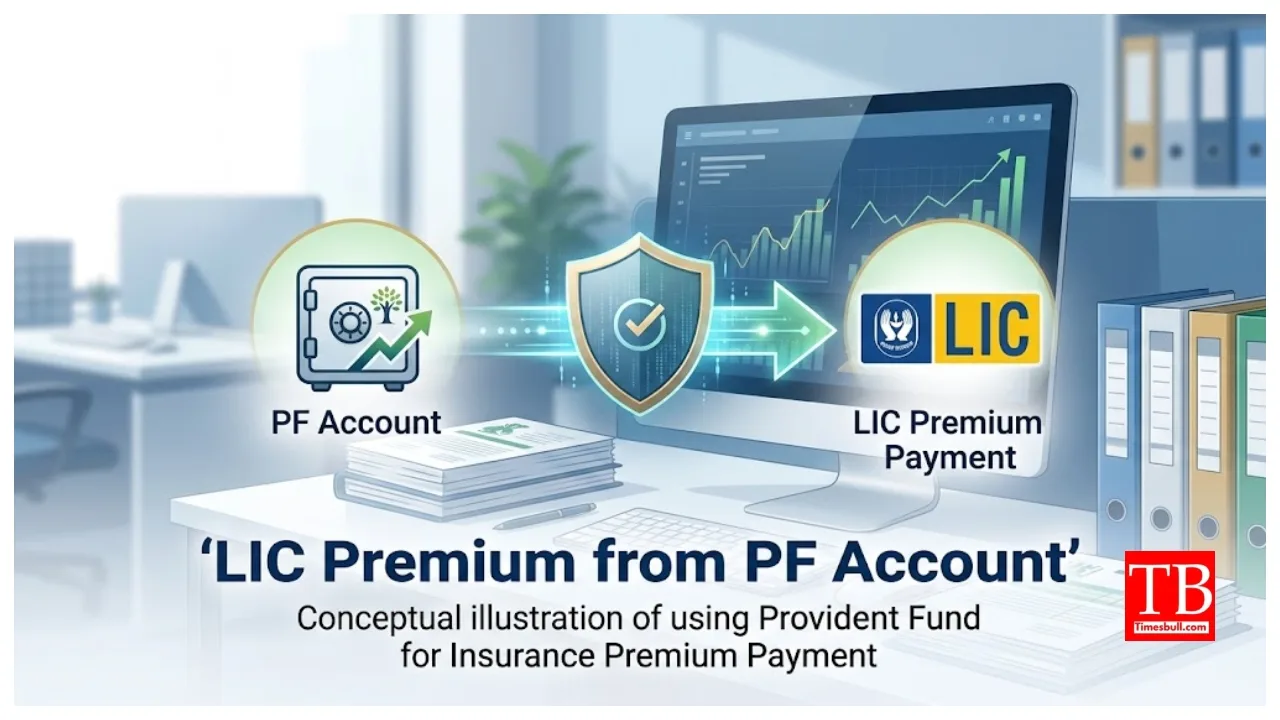
LIC Premium Payment: People often purchase LIC policies but start worrying as the premium due date approaches, especially when their monthly budget is already strained. In such situations, paying the LIC premium becomes difficult, leading people to borrow money from friends and relatives just to keep the policy active. However, if you are an EPFO member, there is an option available that many are unaware of: the facility to pay LIC premiums using funds from your EPF account.
EPFO rules include a provision—Form 14—specifically for paying LIC policy premiums. The EPFO website identifies Form 14 as the document used for financing LIC policies. Through this facility, a member can instruct the EPFO to withdraw funds from their PF account to pay the LIC premium. Form 14 facilitates the payment of not only the initial premium but also subsequent premiums.
Who cannot avail of this facility?
To avail of this facility, your EPF account must hold a sufficient balance to cover at least two years’ worth of LIC premiums. Form 14 guidelines specify conditions regarding the duration of membership and the required account balance; simply being an EPFO member is not enough. First, verify whether the accumulated amount in your EPF account meets all these criteria.
Apply using Form 14.
If you wish to use this facility, you must submit an application to the EPFO using Form 14. You will need to provide details regarding your LIC policy and the premium. Once the application is approved, funds can be withdrawn from your EPF account to pay the LIC premium on the due date. Essentially, this eliminates the worry of paying the premium once the due date arrives.
What is the purpose of this facility? Suppose your LIC policy has an annual premium of ₹30,000, but you suddenly lose your job or face a major household expense, leaving you without the funds to pay the premium. In such a situation, you could jeopardise your policy’s status if you don’t pay the premium.
However, if you meet the eligibility criteria and have a balance in your EPF account equivalent to at least two years’ worth of premiums, you can opt to pay the LIC premium using EPF funds by submitting Form 14. This allows you to avoid taking out a separate loan to cover the premium during difficult times.
Withdrawing EPF funds: Is it the right move?
It is crucial to understand that EPF funds are part of your retirement savings. While this money *can* be used to pay LIC premiums, it does not mean you should use this option every time. If you have sufficient funds to pay the premium, there is generally no need to dip into your EPF savings. This option is best considered when there is a genuine shortage of funds and maintaining the policy is essential.
What happens if the LIC premium is delayed?
Missing the premium due date does not mean the policy terminates immediately. According to LIC, a grace period of at least 30 days is provided for quarterly, half-yearly, and annual payment modes, while a 15-day grace period applies to monthly premiums. If payment is not made within this period, the policy may lapse.
Subsequently, a revival option may be available subject to the policy’s terms and conditions. According to LIC, reviving a lapsed policy may require paying outstanding premiums and interest, as well as submitting additional documentation if necessary. Revival periods and conditions may vary depending on the specific scheme.
This facility is exclusively for LIC premiums.
It is important to note that this facility for paying LIC premiums from EPF funds is not a general-purpose withdrawal option for ordinary expenses. EPF makes this facility available specifically for financing LIC policies through Form 14. Therefore, if you have expenses such as house rent, school fees, credit card bills, or any other costs, direct payments cannot be made from your EPF under this facility.