


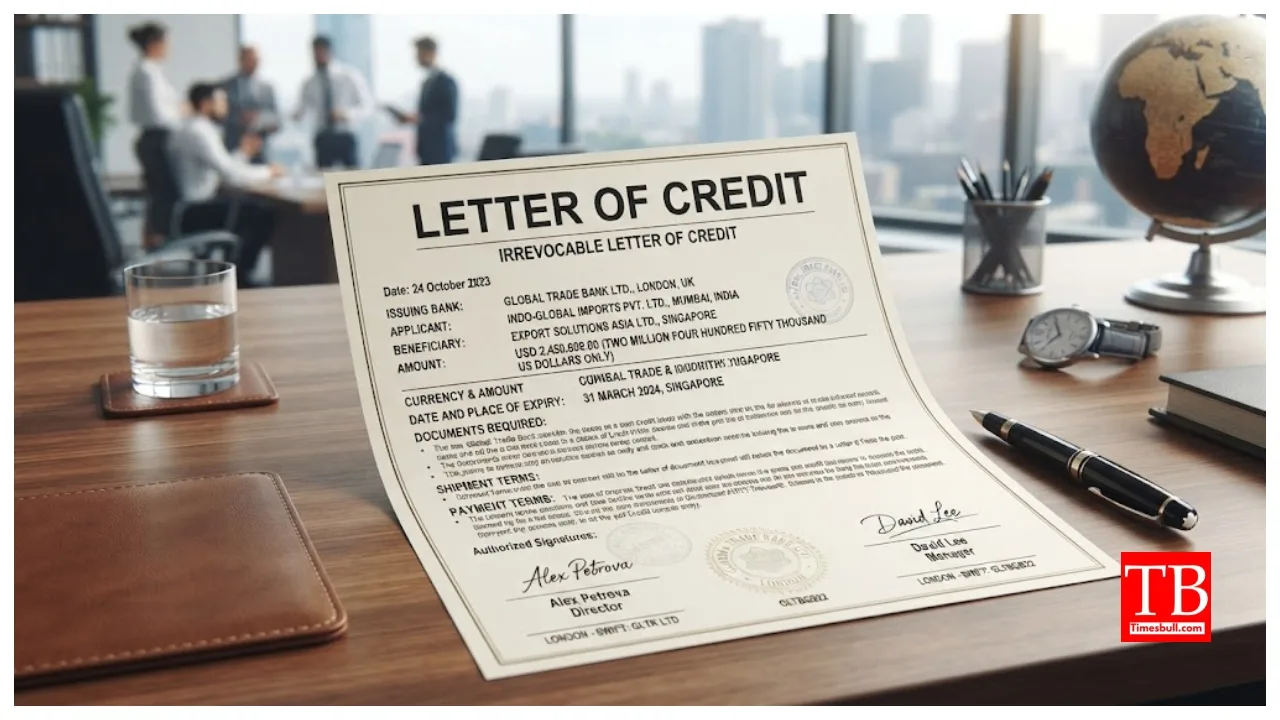
Letter of Credit (LC): In international business, buyers and sellers are often geographically distant. A major concern for the seller is whether they will receive payment after dispatching the goods, while the buyer worries about whether they will receive the goods according to the agreed terms after making the payment. In such situations, a Letter of Credit plays a crucial role. Simply put, an LC is a payment guarantee issued by a bank. It assures the seller that the bank will make the payment provided the seller correctly fulfils the terms and submits the necessary documents specified in the LC.
What is a Letter of Credit?
A Letter of Credit is a banking instrument issued by the buyer’s bank at the buyer’s request. It assures the seller that payment will be made upon the submission of documents that comply with the LC’s terms. While primarily used in import-export trade, LCs are also utilised in domestic trade in certain instances.
How does a Letter of Credit work?
First, the buyer and seller agree on the terms of trade. This includes determining the price, quantity, delivery date, shipment details, and payment terms. Both parties mutually agree on these conditions. Next, the buyer requests that their bank issue an LC. The bank then transmits the LC to the seller’s bank, stipulating that the goods must be shipped by a specific date in accordance with the LC’s terms. The seller must then submit the required documents. These documents undergo verification, and if found to be in order, payment is made to the seller in accordance with the LC’s terms.
Who is involved in a Letter of Credit?
A typical transaction involves several parties. These include the applicant (who requests the bank to issue the LC), the bank, the seller, the advising bank, and the confirming bank, among others.
Types of Letters of Credit
Letters of Credit come in various forms to suit different requirements. These include sight letters of credit, usance letters of credit, confirmed letters of credit, and revocable or irrevocable LCs, among others.
What are the benefits of a Letter of Credit?
For the seller, a letter of credit offers advantages such as increased assurance of receiving payment. It also facilitates trade with new or foreign buyers. The banking system helps mitigate payment risks. For the buyer, payment is linked to specific conditions; the seller receives payment only after fulfilling the agreed-upon terms. It fosters trust in international trade.
Drawbacks of a Letter of Credit
An LC is not entirely risk-free. It entails bank fees and other charges. Furthermore, even a minor error in the documents or terms associated with the LC can lead to “documentary discrepancies,” potentially causing payment delays or other issues. Therefore, carefully review all terms and conditions before issuing or accepting an LC.