
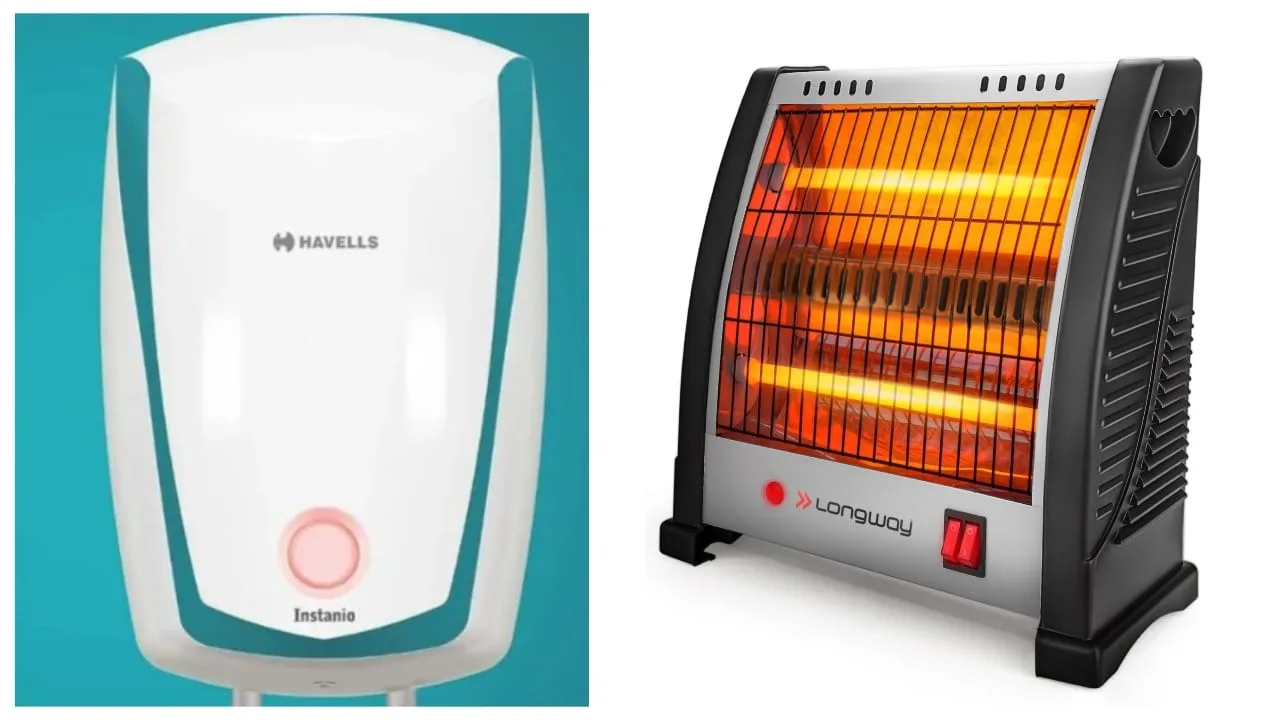
Geyser and Room Heater Buying Guide: As winter begins, geysers and room heaters become essential appliances in most homes. They provide much-needed relief from the cold, but they can also cause a sudden spike in electricity bills. Many people end up buying these appliances without proper research, and the impact is felt directly in their monthly expenses. If you plan to buy a new geyser or room heater this winter, keeping a few key points in mind can help you stay warm without overspending.
Avoid Choosing Excess Power Capacity
One of the most common mistakes buyers make is choosing a geyser or heater with more power than they need. Higher-wattage or larger-capacity appliances consume more electricity, even when your usage is limited.
Right Geyser Capacity for Your Family
When it comes to geysers, capacity is crucial. For a small family or limited hot-water needs, a 10- to 15-litre geyser is usually sufficient. On the other hand, larger families should opt for a 25-litre geyser to ensure enough hot water without repeatedly running the appliance. Choosing the correct size helps reduce unnecessary power consumption.
Choosing the Correct Room Heater Wattage
Room size should determine the wattage of your heater. For small rooms, a heater rated at 1000 to 1500 watts is sufficient. Larger rooms may require a 2000-watt heater for effective heating. Using a higher-wattage heater than necessary will only increase electricity usage without providing additional comfort.
Importance of BEE Star Rating
If you want to keep your electricity bill under control, always check the BEE star rating before making a purchase. Appliances with a 4-star or 5-star rating are designed to be energy efficient. While they may cost slightly more upfront, they help reduce electricity bills over the long term. Cheaper products without star ratings usually consume more power and prove costly over time.
Understanding Different Types of Heaters and Geysers
Today’s market offers multiple options, including instant, storage, oil-filled, and infrared heaters. Instant geysers are ideal for quick water heating and are well-suited for limited use. Oil-filled and infrared heaters are designed to keep rooms warm for longer durations while maintaining balanced power consumption. Most modern models also come with safety features such as auto-cutoff, thermostats, and overheat protection.
Smart Usage Tips to Reduce Power Consumption
Buying the right appliance is only half the job; using it correctly is equally important. Geysers should not be kept on continuously; they should be used only when needed. Room heaters should not be operated in closed rooms for long periods. Using timers and temperature controls efficiently can further help reduce electricity usage.
Conclusion
In conclusion, choosing a geyser or room heater with the right capacity, good energy rating, and modern safety features can make a big difference during winter. With thoughtful selection and smart usage, you can stay comfortable throughout the season while keeping your electricity bill under control. A little awareness today can lead to substantial savings in the long run.
Latest News
- Weather warning – Heavy Rain, thunderstorms, lightning Alerts for 13 States Over Next 3 Days

- UP TGT Exam City Slip 2026 Released – Download at upessc.up.gov.in, Exam June 3-4

- ATM Alert: एटीएम में फंस जाए डेबिट कार्ड तो घबराएं नहीं, फटाफट यह काम करने से होगा समाधान

- Post Office Scheme – 7.5% Interest Rate, ₹5 Lakh Becomes ₹7,24,974 in 5 Years, Start with Just ₹1,000

- Best AI Video Editing Laptops Under 60,000 INR: Top Picks Her

- Best CNG Cars: पेट्रोल के बढ़ते दाम के बीच ये सीएनजी गाड़ी खरीदकर खर्च करें कम, माइलेज भी जबरदस्त

- Samsung Stable One UI 8.5 Update to Galaxy Tab S10 FE and Tab S10 FE+

- बुढ़ापे की लाठी बनेंगी ये तीन स्कीम्स, निवेश से पहले जानिए कितना मिल रहा ब्याज

- OnePlus Nord CE 6 vs Samsung Galaxy A57: Which Mid-Range 5G Phone Wins?

- Lenovo LOQ 15 Gen 11 Review: Best Budget Gaming Laptop?