

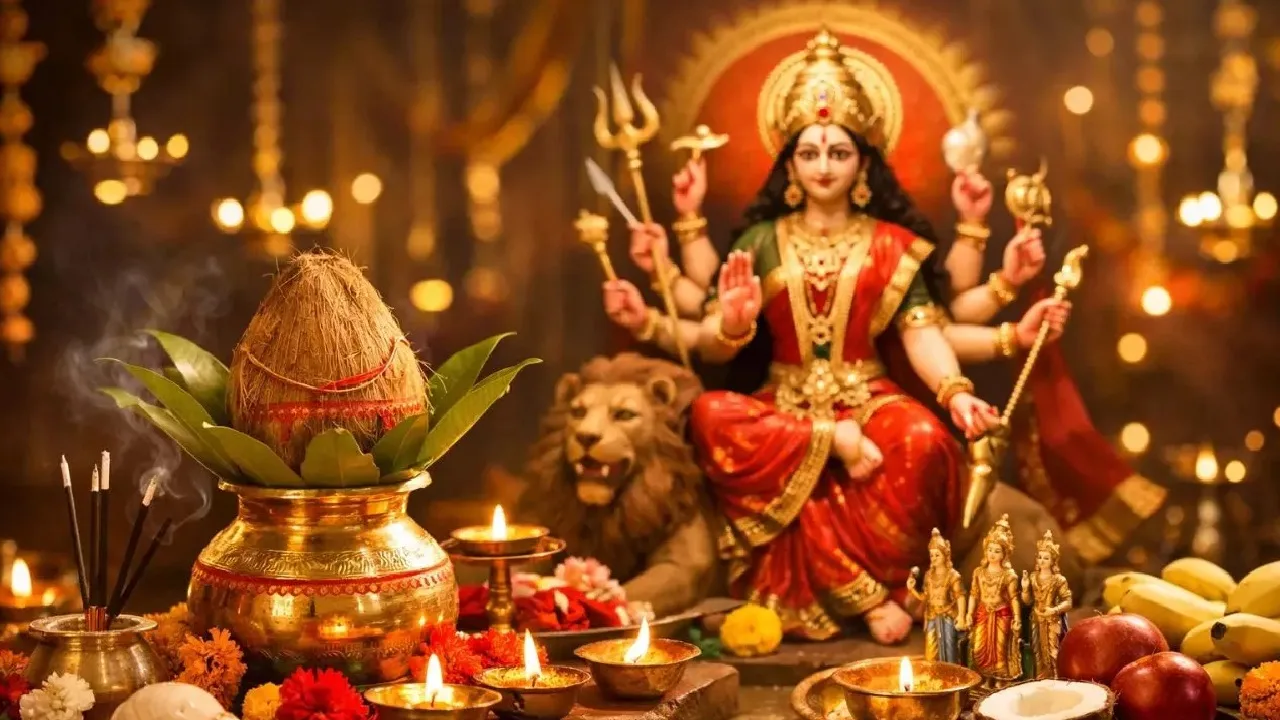
Chaitra Navratri 2026 – Festivals hold a unique charm in Hinduism, yet certain months stand out as being directly intertwined with our faith and the promise of new beginnings. Following the period of dormancy associated with *Kharmas*, the month of *Chaitra* is now upon us—bringing with it not only the fragrance of spring but also marking the commencement of *Chaitra Navratri* and the Hindu New Year.
This year, *Chaitra Navratri* begins on March 19, 2026. Although *Navratri* occurs four times a year, the *Chaitra* and *Sharadiya* *Navratris* hold the utmost significance for householders. Let us explore the auspicious timings for worship this time around, as well as the specific pitfalls you should strictly avoid.
When is *Ghatasthapana*? Note Down the Auspicious Timings
According to the *Panchang* (Hindu almanac), *Chaitra Navratri* commences on the *Pratipada Tithi* (first day) of the *Shukla Paksha* (waxing phase of the moon) in the month of *Chaitra*. In 2026, the specific timings for these dates are as follows:
*Pratipada Tithi* Begins: March 18, 2026, from 11:39 PM onwards.
*Pratipada Tithi* Ends: March 19, 2026, until 08:58 PM.
*Udaya Tithi*: Based on the *Udaya Tithi* (the date prevailing at sunrise), the first day of fasting (*Vrat*) and the *Ghatasthapana* ceremony for *Navratri* will take place on March 19.
Timings for *Kalash Sthapana* (*Ghatasthapana*):
Morning *Muhurat* (Auspicious Time): March 19, between 06:25 AM and 07:41 AM (This is considered the most auspicious time).
*Abhijit Muhurat*: If you happen to miss the morning window, *Kalash Sthapana* may also be performed in the afternoon, between 12:05 PM and 12:53 PM.
A Word of Caution! Never, Under Any Circumstances, Use These 5 Items During the Worship of the Goddess. While devotion is paramount, the scriptures (*Shastras*) indicate that certain items are not pleasing to Goddess Durga. An inadvertent error in this regard may diminish the spiritual efficacy of your worship:
*Tulsi* Leaves: Although the *Tulsi* (Holy Basil) plant is considered immensely sacred, the *Devi Bhagavat Purana* explicitly prohibits the use of *Tulsi* leaves during the worship of Goddess Durga. Mata Rani is very fond of red flowers (especially the hibiscus); offer only these.
Stale Fruits or Wilted Flowers: Always offer only fresh fruits as *Bhog* (sacred food offering) during the *Puja*. Furthermore, never offer “sniffed flowers” (flowers that someone has already smelled). Additionally, offering *Madar* (Crown Flower/Milkweed) blossoms to Mother Durga is also prohibited.
Broken or Damaged Items: When procuring the earthen pot or lamp (*Diya*) for the *Kalash Sthapana* (ritual pot installation), ensure that it is free of any cracks or chips. The use of broken or damaged materials is considered inauspicious.
Leather Goods: Do not keep belts, wallets, or any other leather items in or around the *Puja* room (prayer area). Leather is considered a symbol of impurity.
Garlic and Onions: During these nine days, strictly refrain from bringing *Tamsic* food (containing garlic and onions) into the home. Strive to maintain a *Sattvic* (pure and harmonious) atmosphere.
Simple Puja Method: How to Please Mother Ambe
The nine days of Navratri are dedicated to the nine distinct forms of the Mother Goddess (ranging from Shailputri to Siddhidatri).
Starting the Morning: Wake up during the *Brahma Muhurat* (the auspicious pre-dawn period), take a bath, and wear clean red or yellow attire.
Decorating the Altar (Chowki): Spread a red cloth over a wooden stool (*Chowki*) and install the idol or image of Mother Durga upon it.
The Eternal Flame (Akhand Jyoti): If you are able to do so, keep an *Akhand Jyoti* (continuous lamp) burning for the entire nine days; otherwise, ensure you light a lamp both in the morning and in the evening.
Recitation andAarti: During the *Puja*, reciting the *Durga Saptashati* is considered the most meritorious act. If you are short on time, perform the *Durga Chalisa* and the Mother Goddess’s *Aarti* with deep devotion and reverence.
Pro Tip: At the conclusion of the *Puja*, be sure to offer a prayer for forgiveness, asking the Mother Goddess to pardon any mistakes or oversights you may have inadvertently committed.