


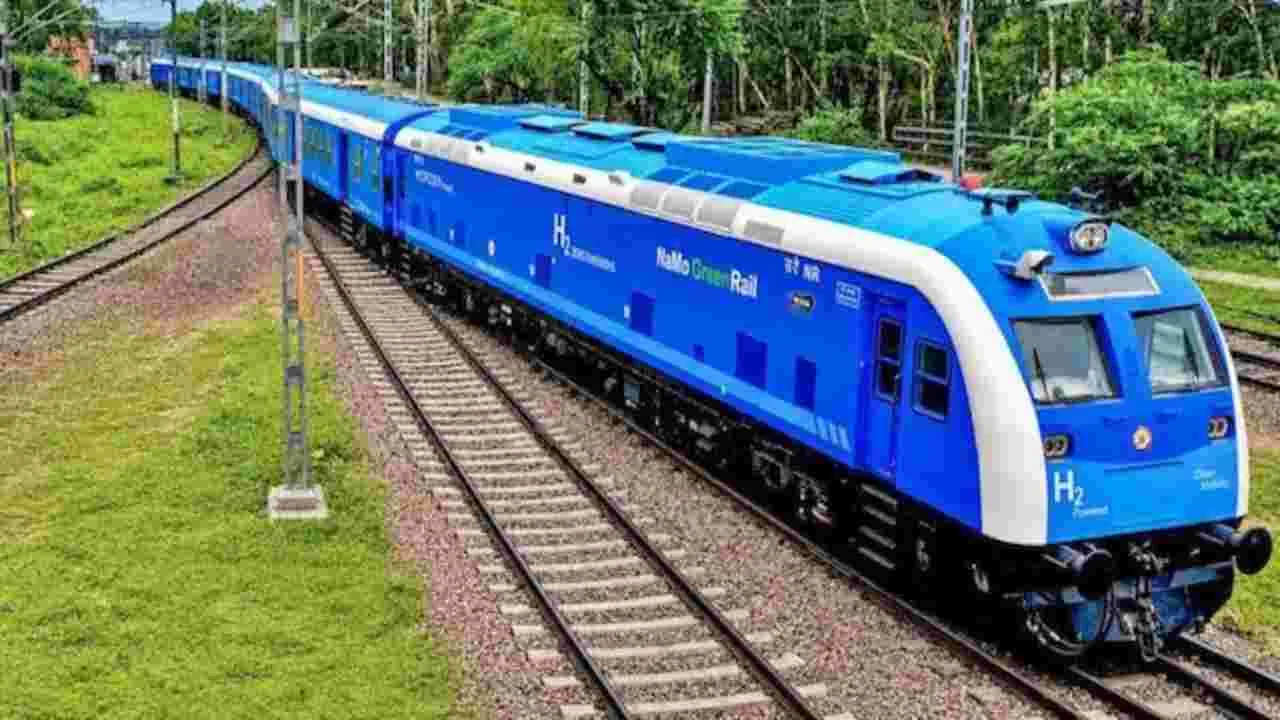
Hydrogen Trains: Big news for railway lovers. On July 17, 2026, Prime Minister Narendra Modi inaugurated the first commercial hydrogen train in India, located in Haryana. This train operates along an approximately 89-kilometer stretch between Jind and Sonipat. Since its launch, it has successfully traveled over 2,500 kilometers without encountering any issues or technical difficulties. Reports suggest that Indian Railways is gearing up to broaden the deployment of hydrogen-powered trains.
In pursuit of this goal, the Railways is looking into ways to expand its green hydrogen supplier network and lower fuel procurement expenses. This includes offering offtake guarantees to manufacturers. This initiative aligns with the Railways’ commitment to significantly enhance the operation of trains utilizing this innovative fuel. Railway sources indicate that minimizing the supply costs of green hydrogen is crucial for the widespread implementation of hydrogen trains. Consequently, the Railways is assessing various strategies.

Supply costs pose a significant hurdle for hydrogen trains. The Railways is convinced that ensuring a steady supply of green hydrogen at competitive prices is vital for the growth of the hydrogen train network. As a result, they are contemplating options such as onboarding new suppliers and providing manufacturers with guaranteed demand or offtake assurances. This approach could instill confidence in investors and contribute to lowering hydrogen prices over time.
Currently, a robust hydrogen train is operational in India, supported by a dedicated hydrogen production and supply unit. The Railways plans to initially deploy 35 hydrogen-powered trains on heritage routes, many of which traverse challenging mountainous regions where full electrification is not feasible.
The central government is also promoting green hydrogen
The central government is already providing incentives to promote electrolyzer manufacturing and green hydrogen production. A total of Rs 17,490 crore has been allocated under the National Green Hydrogen Mission until 2029-30. Its objective is to increase domestic production and create green hydrogen export opportunities for India. The government aims to develop a green hydrogen production capacity of 5 million metric tons (5 MMT) annually in the country by 2030. This is expected to promote the use of clean fuel in industries and the transportation sector.
Reduction in the price of green hydrogen
In February of this year, a tender for the supply of 10,000 tonnes per year of green hydrogen to the Numaligarh Refinery in Assam quoted a price of Rs 279 per kilogram. This is reported to be one of the lowest bid prices for green hydrogen in India so far. It equates to approximately $3.08 per kilogram. Former NITI Aayog CEO Amitabh Kant attributed this price to government incentives and the support from low-cost renewable energy, saying that this has increased the cost competitiveness of green hydrogen. According to him, given the progress being made in the sector, a price of $2 per kilogram is no longer as far-fetched as it once was.
The Railways is now focusing on strengthening its supplier base and reducing fuel costs to expand hydrogen trains. The initial plan to run 35 trains on heritage routes, the start of commercial hydrogen train operations, and government incentives for green hydrogen are important steps in this direction. In the future, the price and availability of hydrogen will play a key role in determining the scale at which the Railways adopts this technology.