

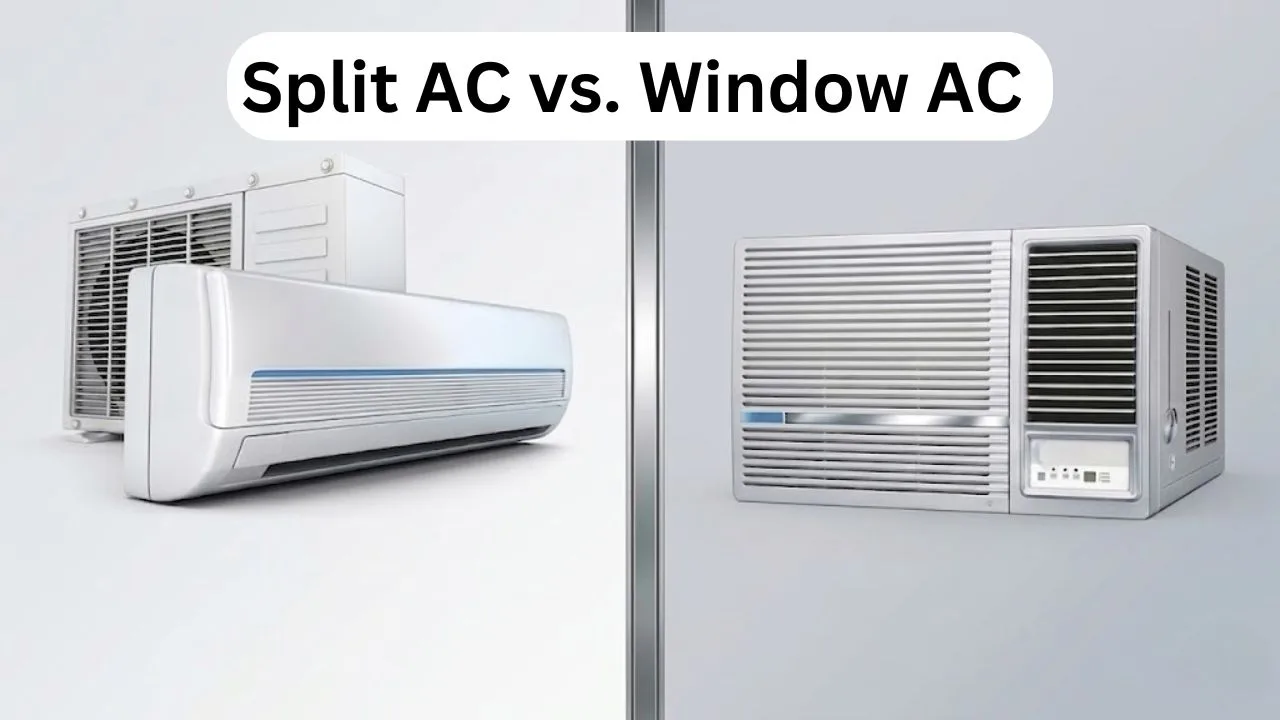
Split AC vs. Window AC Safety: Summer heat brings more than discomfort – safety slips into focus when picking cooling options. Not looks alone shape today’s choice between split and window units. Lately, reports of mishaps have shifted attention toward how these systems are built inside. One doesn’t simply weigh features; hidden structures affect risk levels differently. Though each type cools well, their wiring paths and part layouts behave in distinct ways under stress. Hidden details matter most when power surges strike without warning.
Split AC vs. Window AC: Quick Comparison
| Feature | Split AC | Window AC |
| Safety Level | Moderate (Higher risk of leaks/shorts) | High (More secure design) |
| Installation | Complex (Indoor & Outdoor units) | Simple (Single compact unit) |
| Noise Level | Very Low (Compressor is outside) | High (Everything is in one unit) |
| Best For | Large rooms & high ceilings | Small to medium-sized rooms |
| Risk Factor | Long copper pipes (Leakage risk) | Short internal piping (Low risk) |
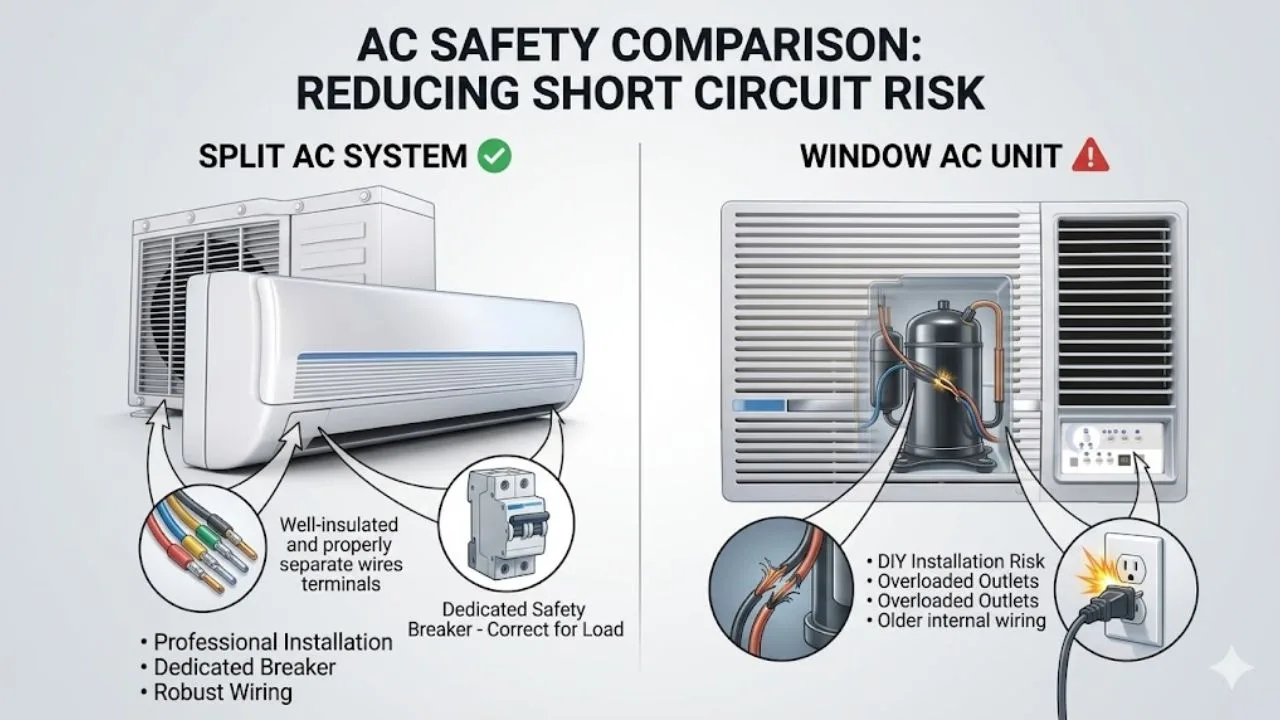
Why Window ACs Are Considered Safer
A machine’s risk level tends to grow when it becomes more complicated, especially if the tubing for coolant runs long distances.
- One thing about window ACs: they pack everything into a tight space, so there is less room for trouble. With such brief inner tubing, leaks become far less likely than in split systems that stretch pipes across walls and outside. The design itself helps block most escape paths for refrigerant by keeping connections minimal and contained within one frame.
- One box holds all parts: so wires stay sealed by the factory – fewer chances they get damaged when set up. Mistakes made while installing from outside? That is what often leads to short circuits in split systems.
- Lower Short-Circuit Potential: Heat buildup often follows faulty setup in split air conditioners. Wires that aren’t tightly connected can spark trouble over time. Long copper tubing, if fitted wrong, raises risks inside these systems. Faulty links between indoor and outdoor parts may ignite problems without warning.
Best Practices for AC Safety
To ensure your cooling system remains efficient and safe, follow these essential maintenance steps:
- Avoid Overuse: Running your air conditioner nonstop can push it too hard. When it never gets a break, the compressor might get too hot. Give it time off now and then it works better that way.
- Regular Servicing: Every now and then, a technician clears out buildup so airflow stays open. Loose wires get noticed during these visits, keeping things running smooth. Dust has less chance to settle when inspections happen on time.
- Use a Stabilizer: Out where power jumps without warning, protection comes built into its frame. Not just blocking surges but doing it before heat builds up. When current wobbles day after day, one of these keeps things from going too far.
- Check for gas leaks: A sudden loss of cool air, or a funny odor, signals trouble shut the system down right then. Running it while leaking raises danger sharply explosions become far more likely.
FAQs
Is a Split AC dangerous?
The device does not pose any danger by itself yet professional installation is necessary for safe operation. The system experiences most problems because the indoor and outdoor units connect through their long pipes which suffer from electrical wiring defects and gas leakages.
Which AC is better for a small bedroom?
A Window AC unit provides the most suitable solution for small spaces because it costs less and its installation process is simple and it provides higher safety protection in small areas.
Why do ACs blast?
Blasts occur when two conditions exist together which include gas leaks and electrical short circuits and when a compressor operates beyond its limits without receiving proper maintenance and voltage control.






💬 Comments
0