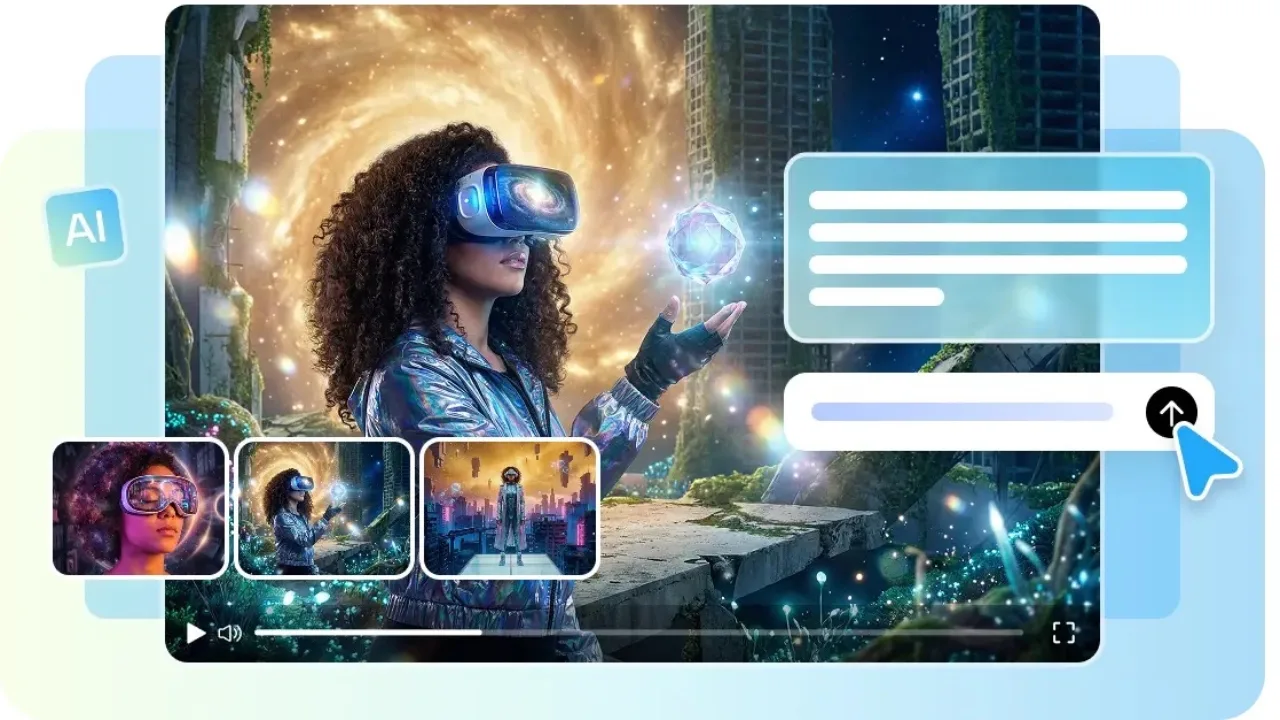
Tech brands often have powerful ideas to share: innovative features, advanced systems, and impressive capabilities. The problem for many tech brands is how to communicate these ideas in a way that resonates with viewers who actually stop to watch the content.
In a world where users scroll through content at lightning-fast speeds, long-winded explanations don’t stand a chance at holding anyone’s attention for more than a few seconds. That’s why many tech marketers are turning to platforms like Pippit and its free AI video generator to help them communicate complex brand ideas in a dynamic and easy-to-understand video scene format.
Instead of communicating complex ideas through long-winded paragraphs or static images, tech brands can now leverage video scenes to communicate complex ideas in a visual format. The key for many tech brands is how they can leverage this approach to communicate complex ideas in a visual format that resonates with viewers in a matter of seconds.
When great technology struggles to capture attention
Tech brands often place a lot of emphasis on communicating complex ideas about their features, specifications, and performance metrics. While these ideas are certainly important, they don’t always lend themselves well to a social media or advertising format.
Most users will never stop scrolling through a feed long enough to read a detailed description about how something works. What users can relate to is a fast visual narrative about how something can be valuable for them.
Instead of a long description about different benefits a tech solution can offer, a short video can be used to visually represent how a solution can solve a problem in a matter of seconds. That’s where video scenes come in.
Why tech marketing works well as a visual storytelling format
Technology can be a somewhat abstract concept. Software programs, cloud services, and digital products often exist behind the scenes in a way that makes them difficult to visualize in a marketing campaign.
Video scenes help solve this problem by creating a visual narrative about how a product can be used in everyday life instead of telling users about how something works or what it can be used for. A short tech video can be used to represent a creator struggling with a workflow, followed by a fast transition showing how a new tool can solve this problem in a matter of seconds.
The difference between information and engagement
Information does not tend to hold the viewer’s attention on its own. Engagement is provided through the presentation.
Tech brands using text-based posts and static images are likely to be passing up opportunities to engage the viewer on an emotional level. Video scenes can be particularly effective in bridging this gap.
Scenes in a video can be particularly effective in bringing attention to certain aspects of the message, such as the activation of a feature in the product or the simplification of a process. This makes the message much more easily and effectively understood and remembered.
Breaking complex ideas into simple visual scenes
One of the best ways for tech video content to engage the viewer is by breaking the message down into small scenes. This way, the viewer is able to understand the message as the scenes are simple and convey a specific idea.
A simple format can be as follows:
-
A problem that grabs the viewer’s attention
-
An introduction to the product
-
Highlights of the product’s features
-
A message at the end
This approach guarantees that the message remains focused while still imparting important information.
How Pippit helps tech marketers move faster
Creating a video scene used to mean going through a complete process of scripting, filming, editing, and revising several times over. This process, while effective, might not be suitable for fast-paced tech companies.
With Pippit, creating a video scene is easier because the platform automatically creates a structure based on the content you input. This could be a product link, a presentation, images, or more, which Pippit then uses to create a draft of a video scene.
This helps tech marketers spend more time fine-tuning the message instead of creating a video scene.
Transforming product features into compelling scenes
Tech companies usually have a lot of great features in their products, but showing all of this in a single video might be overwhelming. Using scenes to tell a story helps marketers showcase all the features effectively.
For instance, a scene might show how fast a process takes, while another shows collaboration features or automated processes. This helps the audience digest the benefits of the product more naturally.
This method helps turn technical information into a visual experience.
How AI speeds up video production for tech brands
Technology has dramatically changed the way video content is made. Now, marketers can leverage AI to produce a video content draft.
An advanced AI video generator like Pippit can analyze images, links, and media content to produce a structured video content draft. This allows the marketer to refine the content rather than building the video from scratch.
This speeds up the video production process while still allowing marketers to have control.
Turning ideas into engaging video scenes that stop the scroll with Pippit
Even the best tech message is not effective if not delivered in the best way. This is why Pippit is here to help marketers transform their ideas into engaging video scenes.
Step 1: Add any link, media, or photo
First off, select the ‘Video Generator’ from the left menu in Pippit. You can add your content by entering your idea, adding a link, or adding PDFs, photos, and videos. Then, click ‘Generate’ to start the process.
Step 2: Edit your settings and video
Next, Pippit displays certain video clips and product information in the video template you have chosen. You can choose your video type and customize your preferences, including avatars, voice, ratio, language, and length.
Within the video editing interface, you can make further adjustments to your video content, including trimming your clips, adding text, transitions, visual effects, voice-overs, and background music. These will all contribute to the final look of your video, ensuring it is consistent with your brand’s style and marketing objectives.
Step 3: Export or publish your video
After you have finished editing your video, you can now click the “Export” button to create your final version of your video.
In this way, technology brands can easily reach their audiences through different channels.
Why short video scenes resonate with modern audiences
Modern audiences are accustomed to consuming content in small doses. They prefer videos that are easy to watch and understand without the need for long explanations.
Short video scenes assist tech brands in conveying their message effectively while keeping the audience engaged. Unlike the usual practice of bombarding the audience with complex information about the tech product, these videos present the key ideas in the most engaging way.
This is the perfect match for the fast-paced environment of social media and digital advertising.
Turning complex technology into simple stories
The best tech marketing is not complicated; it is simple and easy to understand. By using short video scenes to present the ideas of tech brands to the audience, complex tech products become easier to understand.
By using powerful visuals and short video scenes, tech brands can present their ideas in the most engaging way.
Build powerful tech video scenes with Pippit
Good tech deserves good storytelling. Instead of static images or lengthy explanations, tech brands can now transform their messages into engaging video scenes that grab attention and convey value at a glance.
At Pippit, we help tech creators transform their ideas, product links, and multimedia content into engaging video scenes that stand out from the crowd.
Are you ready to transform your tech brand message into engaging video scenes that stop the scroll? Try Pippit today and start creating engaging AI-powered video scenes that bring your ideas to life.
Latest News
- Weather warning – Heavy Rain, thunderstorms, lightning Alerts for 13 States Over Next 3 Days

- UP TGT Exam City Slip 2026 Released – Download at upessc.up.gov.in, Exam June 3-4

- ATM Alert: एटीएम में फंस जाए डेबिट कार्ड तो घबराएं नहीं, फटाफट यह काम करने से होगा समाधान

- Post Office Scheme – 7.5% Interest Rate, ₹5 Lakh Becomes ₹7,24,974 in 5 Years, Start with Just ₹1,000

- Best AI Video Editing Laptops Under 60,000 INR: Top Picks Her

- Best CNG Cars: पेट्रोल के बढ़ते दाम के बीच ये सीएनजी गाड़ी खरीदकर खर्च करें कम, माइलेज भी जबरदस्त

- Samsung Stable One UI 8.5 Update to Galaxy Tab S10 FE and Tab S10 FE+

- बुढ़ापे की लाठी बनेंगी ये तीन स्कीम्स, निवेश से पहले जानिए कितना मिल रहा ब्याज

- OnePlus Nord CE 6 vs Samsung Galaxy A57: Which Mid-Range 5G Phone Wins?

- Lenovo LOQ 15 Gen 11 Review: Best Budget Gaming Laptop?