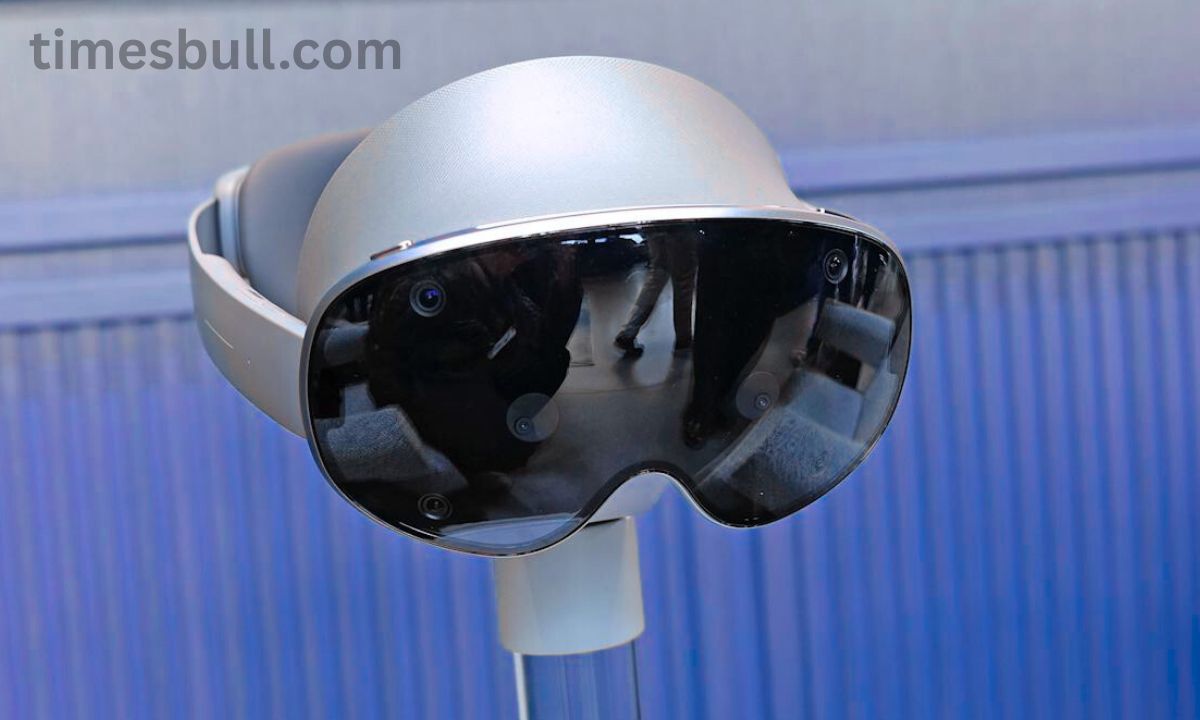
Apple Vision Pro vs Samsung Galaxy XR: Samsung’s Galaxy XR, which combines AI, 3D creation, and high-end specifications at almost half the price of Apple’s luxury headgear, competes with Apple’s Vision Pro in the mixed reality contest.
Android vs. Apple: The battle for supremacy in the mixed-reality space has officially begun, pitting Apple against Samsung Galaxy XR. The first Android-powered extended reality (XR) headset with native support for Gemini AI, the Samsung Galaxy XR, is competing against Apple’s first-ever Vision Pro, which is driven by the company’s proprietary VisionOS. Although one is almost half as expensive as the other, both gadgets promise to revolutionize how people engage with digital environments.
Apple Vision Pro vs Samsung Galaxy XR: Price and Availability
At $1,799.99 (about Rs 1.58 lakh) for the 256GB model, Samsung’s Galaxy XR joins the luxury market, while Apple’s Vision Pro prices an outrageous $3,499 (around Rs 3.08 lakh) for the same amount of storage. The Galaxy XR appears to be the “cheap” choice in an otherwise prestigious category based only on the price difference.
You should be aware that neither the Apple Vision Pro nor the Samsung Galaxy XR are available in India before you start budgeting.
The Galaxy XR is the first Android XR handset to include Google’s Gemini AI directly into its system. This implies that for an immersive experience, users can rely on eye-tracking, gestures, or conversation with Gemini. The AI is able to comprehend purpose, analyze its environment, and respond in a conversational, human-like manner.

Tech Inside: Samsung Galaxy XR vs Apple Vision Pro
Qualcomm’s Snapdragon XR2+ Gen 2 architecture, 16GB of RAM, and 256GB of storage power Samsung’s headset. Vibrant images are ensured by its Micro-OLED display’s sharp 3,552 × 3,840 resolution and up to 90Hz refresh rate. In addition, it has a powerful six-mic array with beamforming audio, eye-tracking, iris recognition, and 3D photo and video storing features. The battery has a two-hour lifespan, which can be extended while charging.
In contrast, Apple’s Vision Pro boasts the R1 chip for ultra-low-latency visuals and its proprietary M5 chip with a 10-core CPU and GPU. Although its Micro-OLED display has less pixels, it can sustain refresh rates of up to 120 Hz for smooth animation. Apple’s Optic ID system provides safe iris-based verification, and its spatial camera arrangement records 3D images and videos.
Apple Vision Pro vs Samsung Galaxy XR: Immersion & Apps
Samsung’s AI-powered strategy offers the Galaxy XR a significant advantage in terms of creativity and productivity. Because the headset is optimized for YouTube, Google Maps, Circle to Search, and Google Photos, users may build realistic 3D recreations of personal photos or explore cities in 3D.
Additionally, it supports Adobe’s Project Pulsar, which lets producers work with layered effects in a virtual workspace and edit videos in 3D. While sports fans can view numerous live matches on virtual screens, gamers can communicate with Gemini for instruction.
In contrast, Apple uses on its ecosystem advantage. With features like ray-traced images, AirPlay mirroring, and spatial audio, Vision Pro works in unison with Macs, iPhones, and AirPods. Its visionOS interface gives consumers a futuristic yet recognizable Apple experience by relying largely on hand, eye, and voice interaction.
Apple Vision Pro vs Samsung Galaxy XR: Final Rating
Samsung’s Galaxy XR offers incredible value by offering significant norms, AI intelligence, and creative potential for almost half the price of Apple Vision Pro, which is the industry standard for immersive design and ecosystem interaction.
Vision Pro may be the more expensive headset in the XR competition, but the Galaxy XR seems like the wiser one—a daring, AI-powered foray into the mixed reality future.