


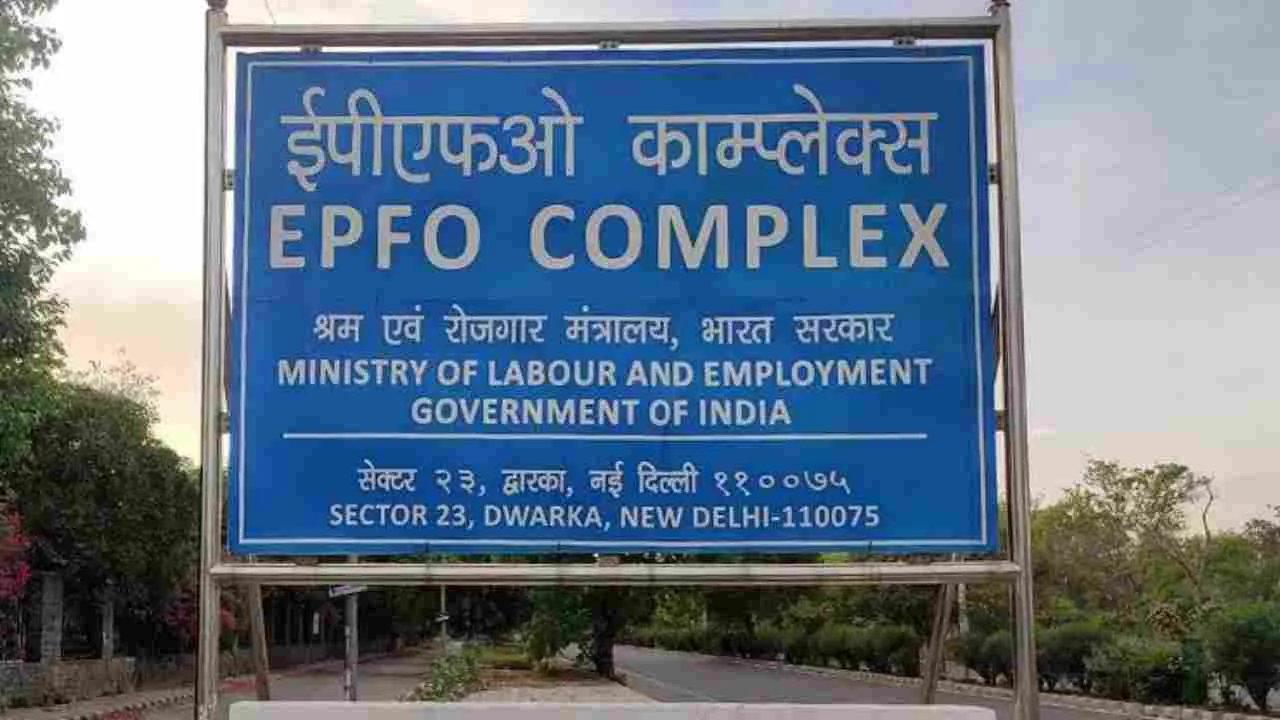
EPFO: The Employees’ Provident Fund Organization (EPFO) is preparing for a significant change in its investment strategy. So far, PF funds have mainly been invested in government securities, bonds, and stock market-related instruments. In the future, however, a portion of these funds may also go into startups and infrastructure. The EPFO may pursue this through Alternative Investment Funds (AIFs).
Under the proposal, the EPFO could invest up to 3% of the new contributions it receives in each financial year in AIFs. Investments could be made through the National Investment and Infrastructure Fund (NIIF) and SIDBI’s Startup India Fund of Funds 2.0 scheme. The proposal is due to be discussed at the EPFO’s Central Board of Trustees (CBT) meeting on November 19. If approved, it could broaden the investment options for the EPFO’s substantial PF corpus of around Rs 30 lakh crore. However, this would not mean that funds would be taken directly from employees’ PF accounts and invested in startups.
How much could the EPFO invest in AIFs?
According to the proposal, the EPFO could invest a maximum of 3% of the new contributions received each year in alternative investment funds. It is important to note that this cap would apply not to the EPFO’s total corpus of Rs 30 lakh crore, but to the new contributions received in each financial year. In FY 2024–25, the EPFO received contributions totaling approximately Rs 3.36 lakh crore. Based on that figure, 3% would be about Rs 10,080 crore, meaning this could be the maximum amount invested in AIFs under the proposal. This is only the upper limit; the EPFO’s investment committee would determine the actual amount.
What is an AIF?
Alternative Investment Funds (AIFs) invest in areas beyond traditional investment options. These may include infrastructure projects, startups, private companies, and other specialized investment opportunities.
According to the regulations of the Securities and Exchange Board of India (SEBI), AIFs are private investment instruments established in India. They raise funds from domestic and foreign investors and invest them in various sectors according to a set investment strategy. This type of investment has the potential to generate high returns over the long term. However, it also involves risk. Recovering investments can sometimes take a long time, and returns are not guaranteed.
Through which funds will EPFO invest?
Under the proposal, EPFO is considering investing money primarily through two government-backed investment schemes.
1. National Investment and Infrastructure Fund (NIIF): This fund raises capital for infrastructure and other large-scale investment projects in India. In addition to the central government, it also includes participation from domestic financial institutions, foreign investors, pension funds, and international financial institutions.
2. SIDBI’s Startup India Fund of Funds 2.0: This scheme aims to strengthen the startup ecosystem in the country and provide investment to new businesses. It provides capital to startup companies through various investment funds.
On one hand, this initiative can provide capital to infrastructure projects in the country, while on the other hand, it can help new startups in expanding their business.
How will EPFO investigate before investing?
Since PF represents employees’ savings, it’s crucial to consider risk and transparency in its investment. Therefore, under the proposed system, the fund will be thoroughly vetted before investment. SIDBI will be responsible for assessing the fund’s past performance, investment strategy, potential risks, management fees, and exit conditions. In addition, NIIF and SIDBI will be required to submit periodic investment reports to the EPFO.
These reports will include information on the amount invested, the fund’s value, the amount received, and compliance with regulations. The EPFO’s Investment Committee will decide how much money should be invested in each fund. Furthermore, these investments will be regularly reviewed to assess risk, if necessary.