


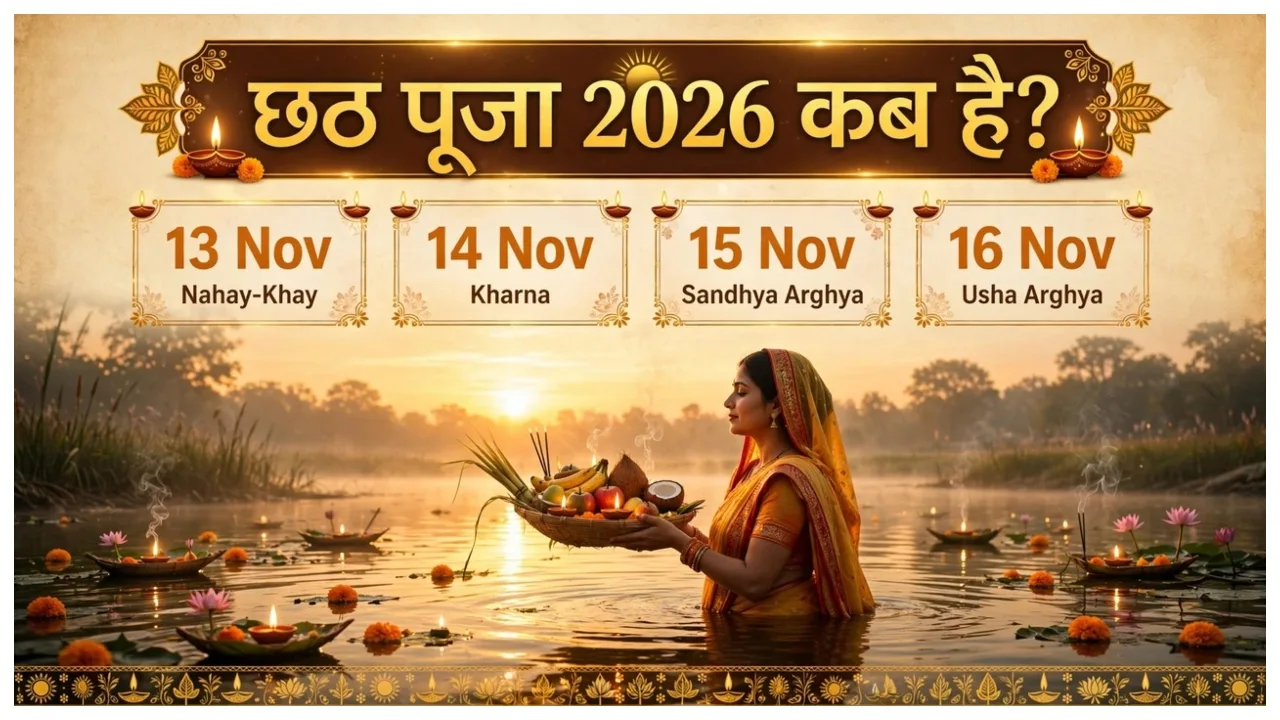
Chhath Puja 2026: People celebrate the grand festival of Chhath with immense enthusiasm across the country. As soon as Diwali concludes, people begin preparations for Chhath Puja. This festival is considered to be extremely rigorous. Chhath Puja commences on the fourth day (Chaturthi) of the bright fortnight (Shukla Paksha) of the month of Kartika and concludes on the seventh day (Saptami). During this festival, mothers observe a fast, praying for the long life and bright future of their children.
Those observing the fast (vratis) adhere to strict rules, maintaining a waterless (nirjala) fast and offering ‘arghya’ (oblations) to both the setting and the rising sun. Chhath Puja begins with ‘Nahay-Khay’ and concludes with ‘Paran’ (the breaking of the fast), which follows the ‘Usha Arghya’ (offering to the rising sun). In 2026, the Chhath festival will be celebrated from November 13 to November 16. Let us look at the complete schedule, covering ‘Nahay-Khay’, ‘Kharna’, ‘Sandhya Arghya’, and ‘Usha Arghya’.
When is Chhath Puja 2026?
This year, the grand Chhath festival will begin on Friday, November 13. There are very few days left until the commencement of Chhath Puja. It will conclude on Monday, November 16. During this period, those observing the ritual undertake a 36-hour waterless (nirjala) fast and offer prayers for the happiness and prosperity of their family, as well as for the well-being of their children.
November 13, 2026 (Friday) – Nahay-Khay
November 14, 2026 (Saturday) – Kharna
November 15, 2026 (Sunday) – Arghya to the setting sun
November 16, 2026 (Monday) – Arghya to the rising sun
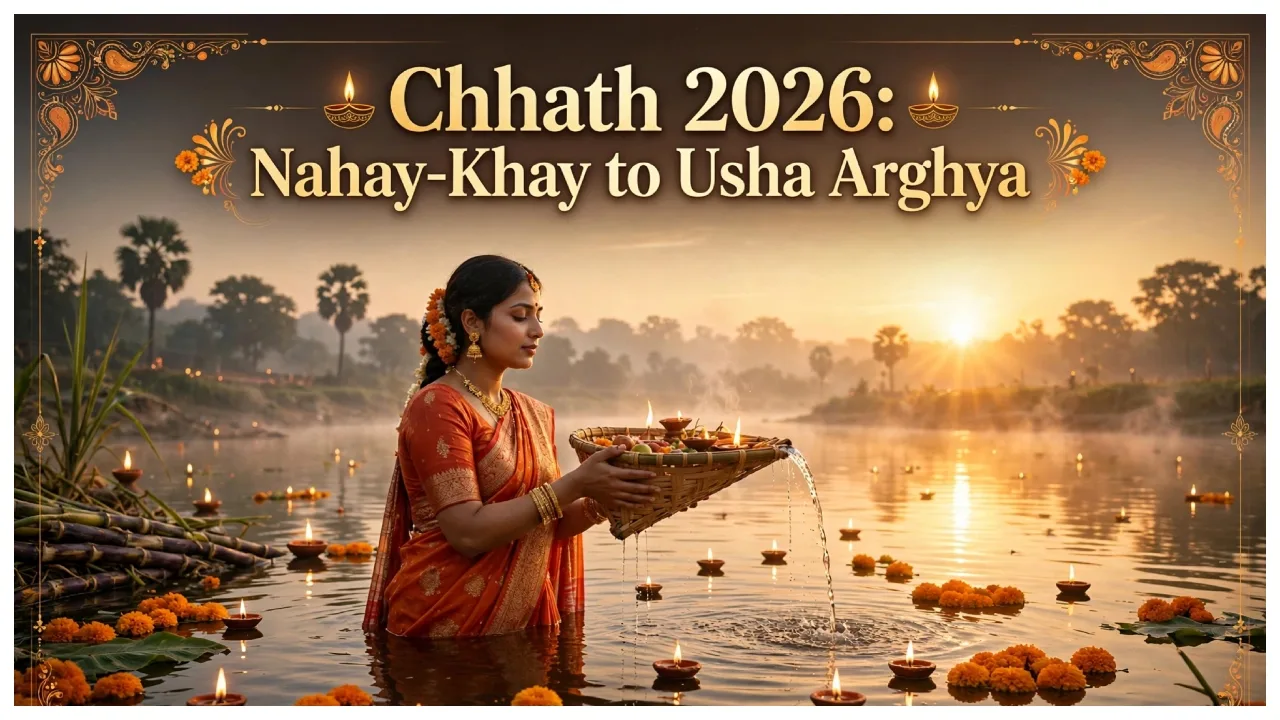
Nahay-Khay – Friday, November 13
Chhath Puja begins with ‘Nahay-Khay’. On this day, a ritual bath is taken; many devotees consider it auspicious to bathe in a river or a sacred water body. Following this, pure and sattvic (wholesome/virtuous) food is prepared. According to Hindu tradition, on this day, one consumes only rice, split Bengal gram (chana dal), and pumpkin curry.
Kharna – Saturday, November 14
The second day of Chhath Puja is called ‘Kharna’. On this day, those observing the ritual (vratis) fast throughout the day and break their fast only after performing prayers following sunset. The prasad (offering) for Kharna consists of kheer (a sweet pudding) made with jaggery and roti (flatbread). In many households, this prasad is prepared specifically on a traditional earthen stove.
The Vratis partake of the prasad after the evening prayers. This marks the beginning of a 36-hour nirjala (waterless) observance, which continues until the Sandhya Arghya (evening offering) and Usha Arghya (morning offering) are completed. During this period, the Vratis observe a strict fast without even a drop of water. This is considered the most arduous and significant phase of the grand Chhath festival.
Sandhya Arghya – Sunday, November 15
On the third day of Chhath Puja, devotees gather at rivers, ponds, or designated Chhath ghats (riverbanks) to offer arghya (oblations) to the setting sun. The Vratis offer water and milk to the Sun God. Additionally, offerings such as fruits, thekua (a traditional sweet snack), and other prasad are arranged in bamboo trays or baskets for the ritual. At sunset, prayers are offered to the Sun God and Chhathi Maiya.
Usha Arghya – Monday, November 16
The fourth day of Chhath Puja is ‘Usha Arghya’. On this day, the Vratis arrive at the ghats before sunrise and offer Arghya to the rising Sun. This concludes the four-day-long grand Chhath festival.
According to Hindu belief, the blessings of Chhathi Maiya ensure the protection of one’s children and the continued prosperity of the family. During this festival, Arghya is offered to both the setting and the rising Sun. This tradition reflects a sense of gratitude toward the Sun and deep respect for nature.