


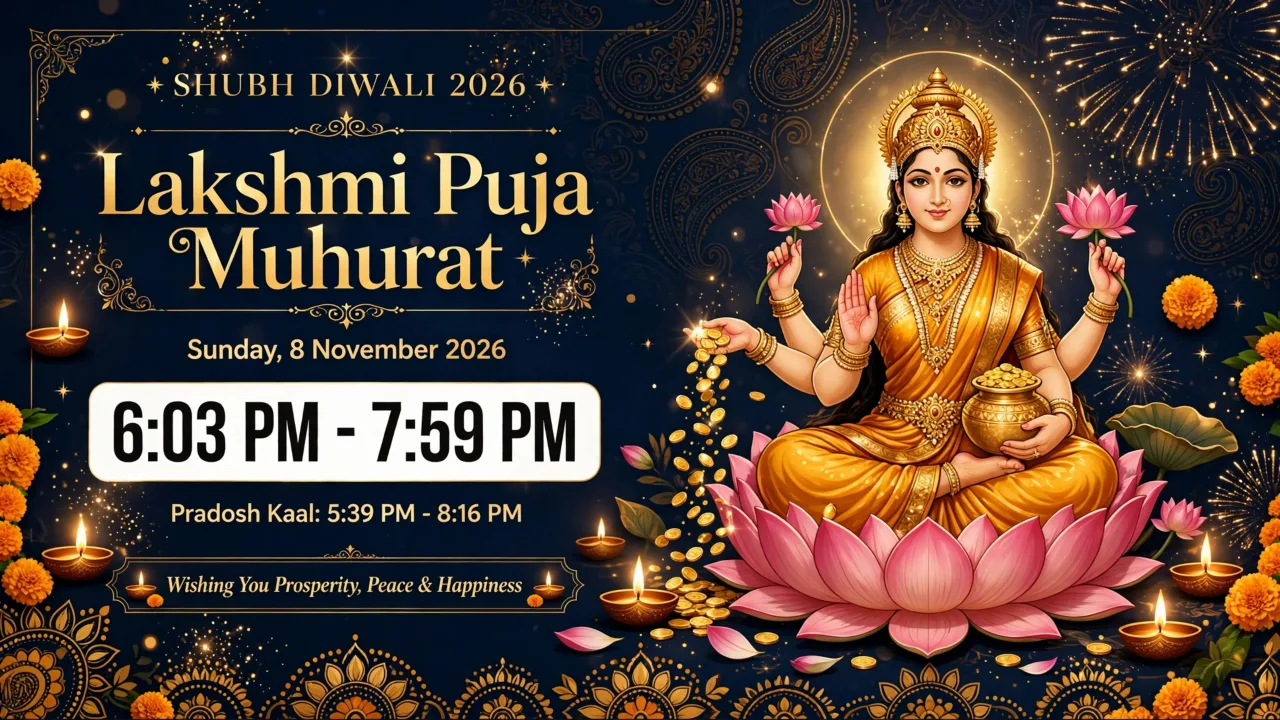
Diwali, the festival of lights, will be celebrated on Sunday, November 8, 2026, with traditional prayers, illuminated homes and festive celebrations. This year, the occasion is being considered astrologically significant because of the combination of Swati Nakshatra, Ayushman Yoga and the presence of the Sun, Moon and Mercury in Libra.
According to astrologers, these planetary positions form a rare Trigrahi Yog. Devotees traditionally consider the occasion auspicious for lighting lamps, worshipping Goddess Lakshmi and Lord Ganesha, and performing prayers for prosperity and well-being.
Here is a look at the important puja timings, traditional rituals and the special period recommended for Kali Puja.
Diwali 2026: What Makes the Festival Astrologically Significant?
Astrologer Acharya says Amavasya is expected to begin at 10:52 am on November 8 and continue until 11:32 am on November 9, according to the Panchang calculation cited in the report.
The combination of Swati Nakshatra, Ayushman Yoga and the Sun, Moon and Mercury in Libra is being described as a Trigrahi Yog.
In traditional astrological belief, Ayushman Yoga is associated with longevity and good health. Devotees consider this period favourable for lighting lamps, worshipping Goddess Lakshmi, Lord Ganesha and Lord Kuber, and performing mantra recitation.
These are religious and astrological beliefs; the promised benefits of rituals should not be understood as guaranteed financial or health outcomes.
Four Special Lakshmi-Ganesh Puja Muhurats on Diwali
According to the timings shared by astrologers in Prayagraj, devotees can consider four Lagna-based windows for worshipping Goddess Lakshmi, Lord Ganesha and Lord Kuber on Sunday, November 8.
| Puja Muhurat | Timings |
|---|---|
| Kumbha Sthir Lagna | 1:26 pm to 2:57 pm |
| Meena Dwiswabhav Lagna | 2:58 pm to 4:25 pm |
| Vrishabha Sthir Lagna | 6:02 pm to 7:58 pm |
| Mithuna Dwiswabhav Lagna | 7:59 pm to 10:12 pm |
The Vrishabha Sthir Lagna falls in the evening and is traditionally considered particularly suitable for Lakshmi Puja.
Important: These are the Lagna timings reported by astrologers in Prayagraj. Muhurat calculations can vary by city, so devotees should check the Panchang for their own location before finalising their puja schedule.
Lakshmi Puja Vidhi: How to Perform the Traditional Worship
Traditional method of performing Diwali worship.
Devotees can follow these steps:
- Prepare for the puja: Bathe before sunset and wear clean clothes. Place idols or pictures of Goddess Lakshmi, Lord Ganesha and Lord Kuber on a clean platform.
- Arrange the lamps: The suggested ritual includes six four-faced lamps and 26 smaller ghee lamps.
- Offerings and purification: Traditionally, the deities are offered water or Gangajal, roli, akshat, sweets, incense, paddy flakes, honey, dry fruits and seasonal fruits.
- Invoke Goddess Lakshmi: Light the lamps and offer prayers with devotion.
- Recite sacred texts: Read the Lakshmi Stotra and Shri Suktam as part of the worship.
The number and arrangement of lamps are part of the specific ritual method shared by the priest; families may follow the customs and traditions of their own household.
Lakshmi Mantra: Chant 108 Times with a Kamalgatta Mala
Kamalgatta, or lotus seeds, holds a special place in traditional Lakshmi worship. According to Acharya Vidyakant Pandey, devotees can use a Kamalgatta mala to recite the following mantra 108 times:
Om Shreem Hreem Shree Kamale Kamalalaye Praseed-Praseed, Om Shreem Hreem Shreem Mahalakshmyai Namah.
The mantra is traditionally chanted while meditating on Goddess Lakshmi. Devotees also worship Lord Ganesha and Lord Kuber and offer prayers for peace, prosperity and the removal of obstacles.
Kali Puja 2026: Know the Midnight Muhurat
Diwali night is also significant for devotees who worship Goddess Kali. Midnight worship, including Mahanishita and certain Tantric rituals, is observed by specific traditions.
Astrologer has identified 12:30 am to 2:43 am as a favourable period for Kali Puja, based on the Simha Sthir Lagna calculation cited in the report.
This timing falls after midnight, meaning the worship takes place in the early hours of November 9.
The midnight rituals are not a requirement for every household. Devotees should follow their family tradition and consult a knowledgeable priest for specialised Tantric worship.
Why Is Lakshmi Puja Considered Important on Diwali?
Diwali is traditionally associated with the worship of Goddess Lakshmi, the deity of wealth and prosperity, along with Lord Ganesha, who is worshipped for wisdom and the removal of obstacles.
Many households light earthen lamps, decorate entrances, prepare sweets and perform Lakshmi-Ganesh Puja after sunset. Business establishments may also worship their account books and begin new financial records as part of the traditional Chopda Puja or Bahi-Khata worship.
The festival is celebrated with the belief that prayer, charity and good conduct bring peace and prosperity to the household.
Before planning your puja: The muhurat timings quoted above come from a report featuring Prayagraj-based astrologers. For Jaipur, the published city-specific Lakshmi Puja window is 6:03 pm to 7:59 pm on November 8, 2026. Always use the local Panchang for your city rather than assuming that one set of timings applies across India.