


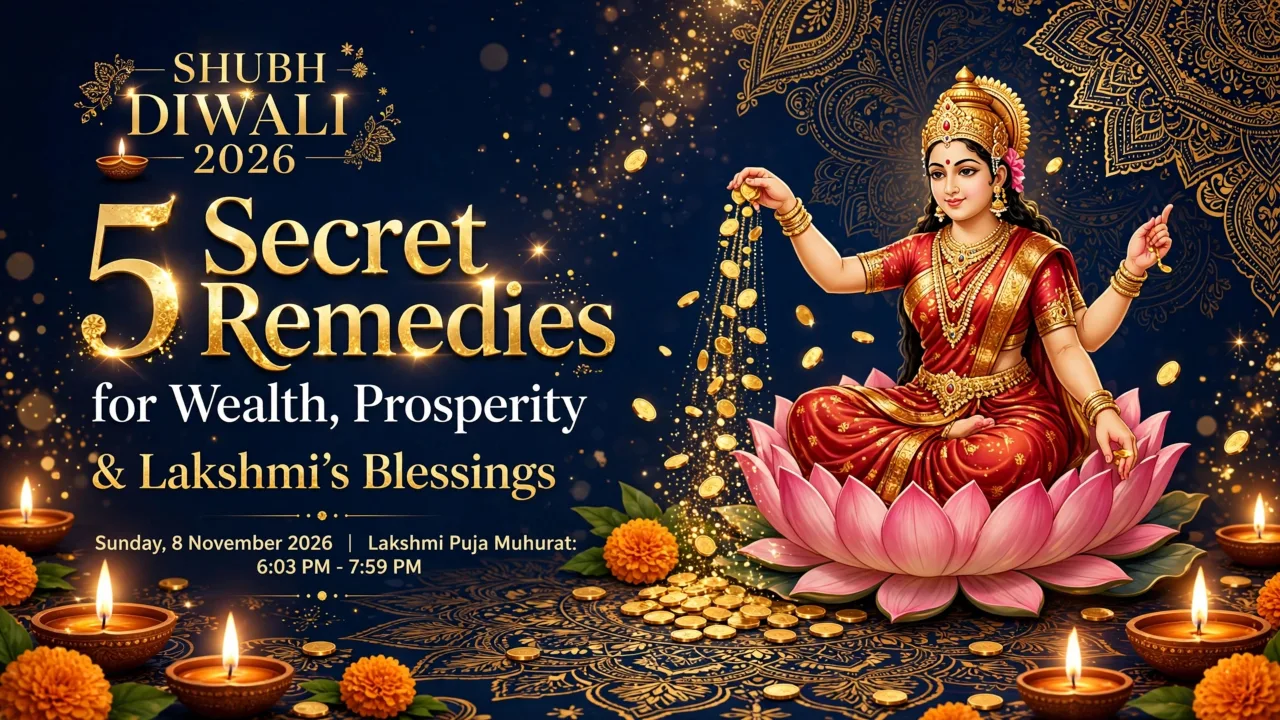
Diwali, the festival of lights, is one of the most auspicious occasions in Hindu tradition. Celebrated on Kartik Amavasya, the festival is associated with the worship of Goddess Lakshmi and Lord Ganesha. Devotees light earthen lamps, decorate their homes and perform special prayers to seek happiness, prosperity and peace.
Diwali night is traditionally considered significant for Lakshmi Puja. Along with the regular rituals, several traditional beliefs recommend performing specific remedies on this occasion to seek the blessings of Goddess Lakshmi and remove financial obstacles.
According to Ujjain-based astrologer Anand Bhardwaj, certain remedies performed on Diwali night are believed to invite prosperity and bring positive changes to the household and business. Here are five traditional remedies associated with the festival.
When Is Diwali 2026? Know the Lakshmi Puja Muhurat
Diwali will be celebrated on Sunday, November 8, 2026. According to the Panchang timings for the festival, Kartik Amavasya begins at 11:27 am on November 8 and ends at 12:31 pm on November 9.
The Lakshmi Puja muhurat varies according to the city. For example:
- Jaipur: 6:03 pm to 7:59 pm
- Ujjain: 6:09 pm to 8:07 pm
- New Delhi: 5:54 pm to 7:50 pm
Devotees should follow the local Panchang for their city while planning the evening worship.
Five Traditional Remedies to Perform on Diwali Night
1. Keep Five Suparis, Turmeric Knots and Gomti Chakras in a Red Cloth
According to a traditional belief, devotees can take five betel nuts (supari), five turmeric knots, five cowrie shells and five Gomti Chakras and tie them together in a red cloth.
After completing Lakshmi-Ganesh Puja, the bundle can be placed at the place of worship or tied near the main entrance of the house or business establishment, as described in the ritual.
This practice is traditionally associated with attracting wealth, happiness and prosperity.
2. Offer Sindoor, Curd and Whole Urad at a Peepal Tree
Diwali falls on Amavasya, which is considered significant in several Hindu traditions.
According to the suggested remedy, devotees can take sindoor, curd and whole black urad dal to a Peepal tree on Diwali evening. These items are placed near the roots, and an earthen lamp is lit as part of the ritual.
The practice is believed by some devotees to help overcome financial difficulties. It should be performed respectfully and without damaging the tree or leaving non-biodegradable material behind.
3. Use a Piece of Alum for Business-Related Problems
For people facing difficulties in business or shop sales, a traditional remedy involves taking a whole piece of alum (fitkari) on Diwali night.
As described in the ritual, the alum is rotated around the shop and then thrown towards the north direction at a suitable place away from people and public spaces.
This practice is associated with removing the effects of the evil eye and overcoming business-related obstacles. However, there is no scientific evidence that alum rituals can increase sales or guarantee business growth.
4. Light a Seven- or Nine-Wick Ghee Lamp Before Goddess Lakshmi
Lighting lamps is one of the most important traditions of Diwali.
As part of this remedy, devotees can light a special seven-wick or nine-wick lamp filled with desi ghee in front of Goddess Lakshmi during the evening worship.
According to traditional belief, offering such a lamp is considered auspicious for the family’s financial well-being and prosperity.
Keep the lamp on a stable, fire-safe surface and away from curtains, decorations and other combustible materials.
5. Rotate Seven or Eleven Black Peppercorns Around Family Members
Another traditional remedy involves taking seven or eleven whole black peppercorns and rotating them around the head of oneself and family members seven times in an anti-clockwise direction.
The ritual described in the supplied account recommends throwing the peppercorns outside the house towards the south direction afterwards.
This practice is traditionally associated with removing negative influences and seeking an improvement in the family’s financial condition.
The original source text ends before completing the explanation of this remedy. Therefore, no additional ritual steps or promised benefits have been added.
Do These Diwali Remedies Guarantee Wealth?
These five practices are based on traditional religious beliefs and astrological recommendations. Devotees perform them with faith while seeking the blessings of Goddess Lakshmi for prosperity, peace and happiness.
However, such rituals should not be treated as guaranteed solutions to financial problems. Responsible financial planning, disciplined spending, savings and consistent efforts in business remain important for long-term financial stability.
Diwali is ultimately a festival of light, hope and new beginnings. Along with prayers and traditional customs, celebrating with kindness, charity and care for others reflects the deeper spirit of the occasion.