
UPS vs NPS: Key Advantages and Disadvantages You Must Know Before Choosing
The government has started a new facility for central employees. In a notification issued on Monday, the government said that employees can switch from the Universal Pension Scheme (UPS) to the National Pension System (NPS) one time. But this facility is only for a limited

 Join Us
 Add as a preferred
UPS Vs NPS
The government has started a new facility for central employees. In a notification issued on Monday, the government said that employees can switch from the Universal Pension Scheme (UPS) to the National Pension System (NPS) one time. But this facility is only for a limited time. Employees can switch from UPS to NPS only till 30 September 2025.
Central employees can use this option one year before retirement. In case of voluntary retirement, they can do it three months before the retirement date. Let us know about the main features of both UPS and NPS pension schemes.
What is the Universal Pension Scheme?
The Modi government started the Universal Pension Scheme in 2024. This scheme is for all central employees. Under UPS, employees get a fixed pension, which is 50% of the average basic salary of the last 12 months before retirement. But the service period must be 25 years. If the service is more than 10 years, then after retirement one gets a minimum pension of ₹10,000 every month.
UPS Features and Drawbacks
In UPS, government employees give 10% of their basic salary and DA, while the government gives 18.5%. This share is higher than NPS. If the pensioner dies, the family gets 60% of the last pension. This scheme also has benefits like pension increase with inflation and gratuity.
But, there are some drawbacks. At the time of retirement, no lump sum is given. Tax benefits are not clear. Also, investment options are fewer compared to NPS.
What is National Pension Scheme (NPS)?
The National Pension Scheme started in 2004. In 2009, it was opened for private sector, self-employed people, and NRIs. NPS is a market-based pension scheme. The return depends on how much you invest.
In this scheme, employees also contribute regularly. After retirement, 60% of the money can be taken out tax-free, while 40% must be used to buy an annuity.
Avijit
Next Article
HBSE 10th Result 2026 – How to Check the result Via Roll Number, Direct Link bseh.org.in
Haryana Board 10th Result 2026: The Haryana Board is likely to release the Class 10 examination results this week. Students of the Haryana Board will be able to check their results by visiting the Board’s official website, bseh.org.in. To pass the examination, students must secure 33 percent marks.

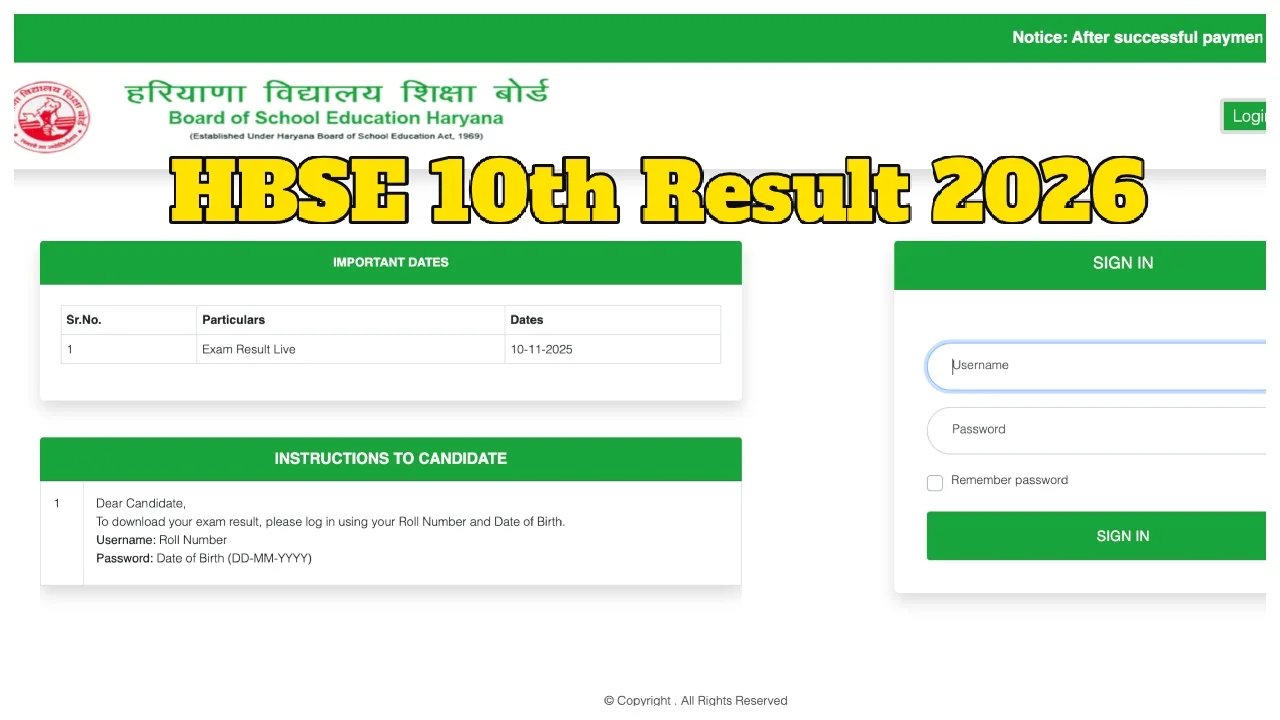
Haryana Board 10th Result 2026: The Board of School Education, Haryana (BSEH) has already released the Class 12 results, and Class 10 students are now eagerly awaiting their own. According to various media reports, the HBSE Class 10 Result 2026 is expected to be released sometime this week. The results will be published on the official Haryana Board website, where students can check their scores by entering their roll numbers. Students who appeared for the examination are advised to keep their roll numbers ready in advance to check their results promptly.
Check Your Result on These Websites:
bseh.org.in
results.bseh.org.in
digilocker.gov.in
Write a Comment