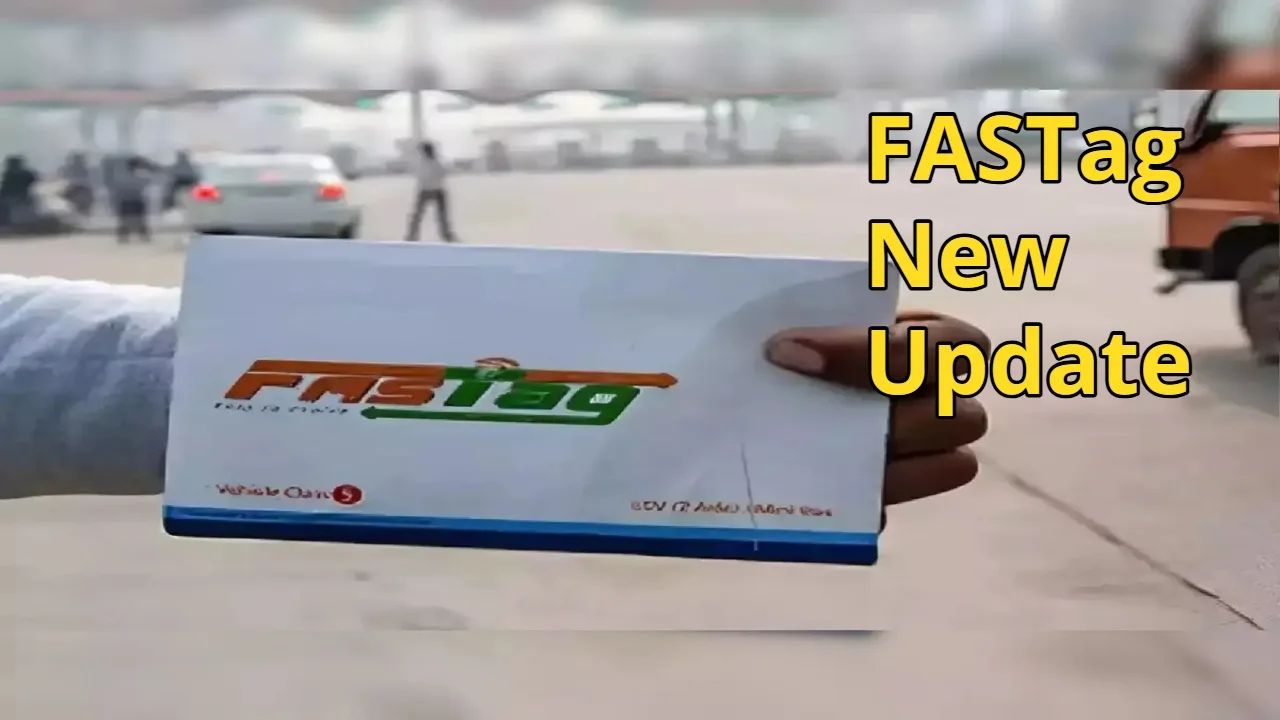
FASTag New Update: Most people use FASTag to pay toll tax at toll plazas. It was launched in 2014 to make the toll collection process easier and faster. After the introduction of FASTag, the long queues at toll booths were significantly reduced, and travel time was also saved. But now FASTag is not limited to just toll tax. Today, it is also being used for several other services, making everyday tasks easier for vehicle owners.
How FASTag works
FASTag is based on Radio Frequency Identification (RFID) technology. It is a small sticker that is affixed to the windshield of the vehicle. This sticker has a unique code that is directly linked to your FASTag account. This account is linked to a bank or digital wallet. As soon as your vehicle approaches a toll plaza or any other FASTag-enabled location, the RFID antennas installed there scan the sticker, and the stipulated fee is automatically deducted from your account. There is no need to stop the vehicle or make cash payments.
Read Here: 50 percent work from home mandatory in Delhi due to rising pollution, or face action
Where else is FASTag used besides tolls?
Now, FASTag is being used for various types of payments. Parking fees at many malls, airports, and metro stations can be paid using FASTag. This eliminates the need to take a parking ticket or stand in line at the counter, as the fee is deducted directly from the account. In addition, payment for petrol and diesel is also possible through FASTag at some selected petrol pumps, making fuel payment faster.
In some cities, FASTag is also being used to pay traffic fines. If traffic rules are violated, the fine amount is deducted directly from the FASTag account, eliminating the need for a separate process to pay the fine.
Read Here: UP Board 2026 – Class 12th Practical Exam Date Sheet 2026 Declared, Check Phase 1 & 2 District List
Also helpful in keeping track of vehicle-related information
You receive information about every payment made through FASTag via message or app. It also tells you where and when the amount was deducted. This helps in tracking the places the vehicle has traveled to. Additionally, based on the data provided by FASTag, insurance companies may be able to determine premiums in the future by analyzing vehicle usage and driving patterns. Drivers who travel shorter distances or use their vehicles less frequently could also benefit from this.