

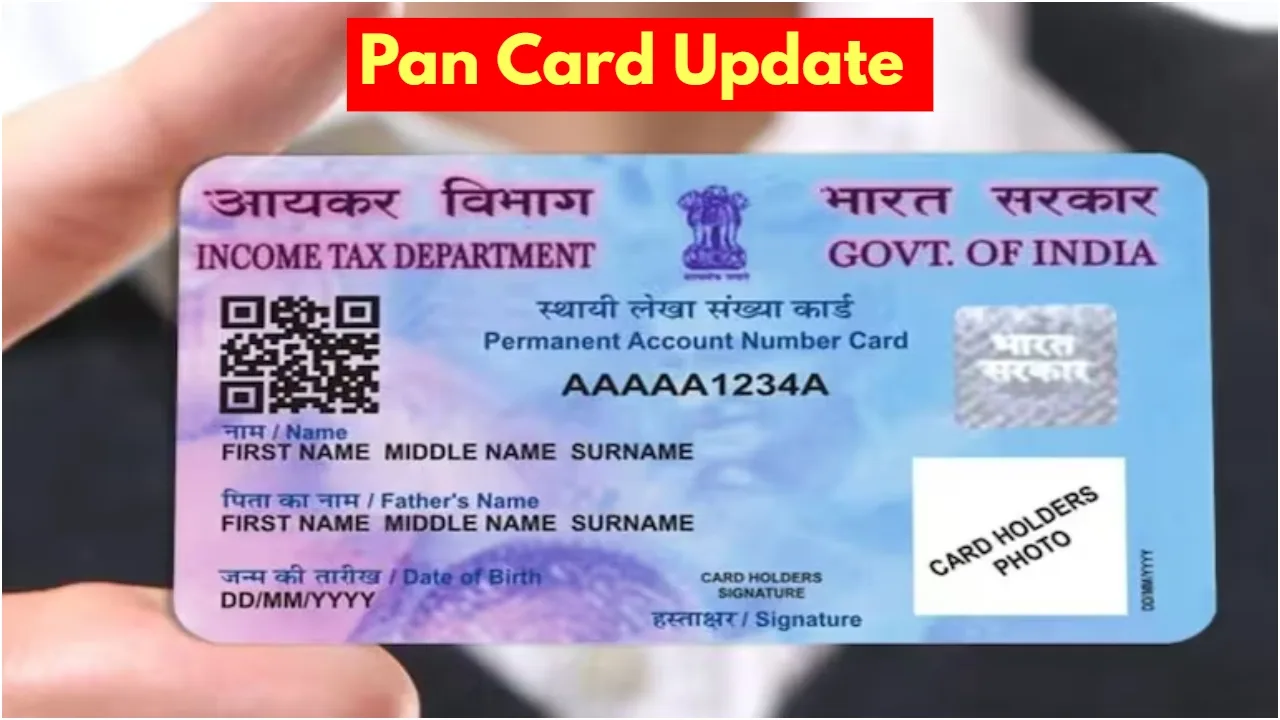
New Delhi: The PAN card has become an essential document; without it, numerous tasks often come to a standstill. Effective April 1, 2026, amendments introduced under the Income Tax Act, 2025, have expanded the scope of financial transactions for which quoting a PAN is mandatory. Form 97 has now replaced Form 60. This process has been designed to simplify procedures and align them with the requirements of digital reporting.
Key Highlights
Specific transactions requiring PAN
Bank / Demat account
Opening — any amount
Cash purchase
Exceeds ₹2 lakh (e.g. jewellery)
Travel expenses
Specified travel transactions
Credit card/loan
Application — any amount
Hotels, restaurants, events
Cash payment exceeds ₹1 lakh
Fixed Deposit (FD)
Account opening
Insurance policy
Annual premium ₹50,000 or more
Securities, MF, bonds
Above prescribed limits
The new form offers a more structured and technology-driven approach. It features pre-filled information, the purpose of which is to minimise human error. Concurrently, the scope for exceptions has been narrowed; for most high-value transactions, it is now mandatory to directly provide a PAN.
Form 97: Significantly Different from the Previous Form
Did you know that Form 97 differs from Form 60 in that it has been specifically designed from the perspective of regulatory compliance and reporting? Form 97 also represents an effort to curb the reporting of transactions where the identity of the parties involved remains concealed. Its ultimate objective is to gradually eliminate anonymity in financial transactions.
Learn Why a PAN Card is Essential for Various Transactions
Due to recent regulatory amendments, the requirement for a PAN card has been extended to several transactions that previously required only Form 60. This requirement now applies to a wide range of transactions. A PAN is mandatory for opening bank accounts as well as Demat accounts.
Furthermore, it is mandatory for any cash purchase exceeding ₹2 lakh—such as the purchase of jewellery—and even for travel-related expenses. A PAN card has also been made mandatory for transactions amounting to ₹45 lakh or more.
For transactions ranging from ₹20 lakh to ₹45 lakh, Form 97 may be utilised. Additionally, a PAN card remains a mandatory requirement for applying for credit cards and for availing loans. Furthermore, it is mandatory to provide this information when making cash payments exceeding ₹1 lakh to hotels, restaurants, or event managers.
Also Required for These Transactions
In addition to opening Fixed Deposit (FD) accounts, this is also a requirement for obtaining insurance policies with an annual premium of ₹50,000 or more. It is likewise mandatory to make investments in securities, mutual funds, and bonds that exceed the prescribed limits. Meanwhile, Nishant Shankar—a former Senior Tax Manager at EY and a tax strategy expert—stated, “The objective behind this is to curb anonymous participation within the financial system.”






💬 Comments
0