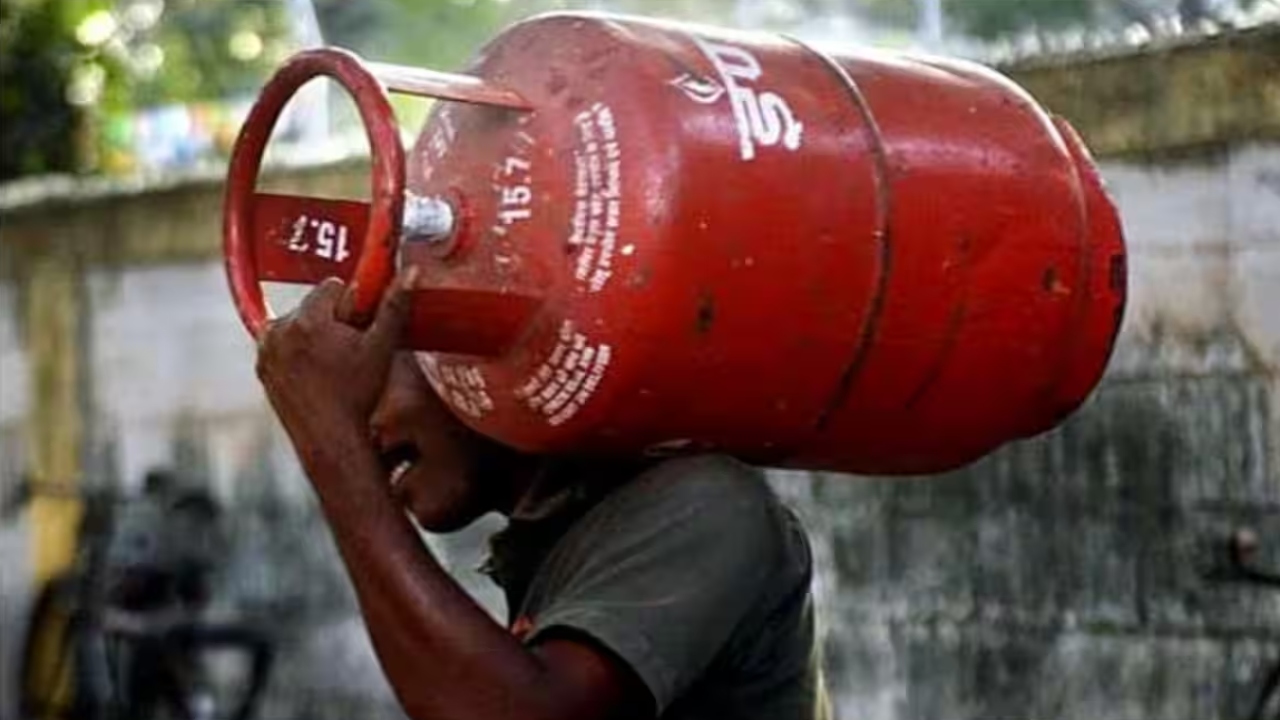
LPG Subsidy: The central government has several schemes that benefit a large section of the population. One such scheme is the Pradhan Mantri Ujjwala Yojana (PMUY). Under this scheme, beneficiaries receive refilled LPG cylinders at a price 300 rupees less than the average consumer. For example, in the national capital, Delhi, the price of a domestic cylinder is 853 rupees for average consumers, while it is 553 rupees for beneficiaries. This means that customers will receive the cylinder at a price 300 rupees cheaper.
Launching in 2016
The Ministry of Petroleum and Natural Gas launched this scheme in May 2016, aimed at providing LPG connections to families living in rural and backward areas. The scheme aimed to issue 80 million LPG connections by March 2020, which was achieved in September 2019. Subsequently, the government launched Ujjwala 2.0, which provided for an additional 16 million LPG connections, specifically targeting migrant families. This target was achieved in December 2022, increasing the total number of connections under the scheme to 96 million.
Further, under Ujjwala 2.0, it was decided to issue 7.5 million more connections between fiscal years 2023-24 and 2025-26, which was completed in July 2024. This brought the total number of LPG connections to 103.5 million. The government has now approved the issuance of 2.5 million additional LPG connections under the Ujjwala Yojana. This has increased the total target of the scheme to 106 million connections. The process of issuing these new connections is currently underway .
According to a report by Crisil Intelligence, LPG consumption is projected to increase to around 31.3 million tonnes in FY 2024-25, up from 21.6 million tonnes in FY 2016-17. It is projected to reach 33 to 34 million tonnes in FY 2025-26. The report said that domestic consumption is also steadily increasing. The average annual refill of Pradhan Mantri Ujjwala Yojana consumers is expected to increase from 3.9 cylinders in 2016-17 to around 4.5 cylinders in FY 2024-25. Non-Ujjwala Yojana households have maintained a stable refill level of 6-7 cylinders per year over the past five years.
Latest News
- Apple MacBook Neo Deal Alert: Get It For Under ₹58,000 on Amazon Right Now

- Pakistan Attack: आत्मघाती हमले से दहला पाकिस्तान, 23 लोगों की मौत, 50 से ज्यादा घायल, जानें

- Honor Magic 9 Series Leaks: Flagship Upgrades with Massive 8,000mAh Battery and 200MP Cameras

- Motorola Edge 60 Fusion Review: Mid-Range King or Outdated?

- FD Update– Breaking Your FD Early? Know the consequences

- Bank Holiday–RBI Announces Closure of SBI, HDFC and All Banks Next Week, Save the Dates

- Samsung Galaxy S26 Ultra Amazon Deal – Get ₹23,509+ Discount with Bank Offers and Exchange Benefits

- Best Scooters For College Girls 2026 – Perfect Mix Of Mileage, Style And Lightweight Design
- Kodak Matrix QLED Google TV 2026 Series Launched in India Just Under 10,999

- Senior Citizen FD Rates: सीनियर सिटीजन को यहां से मिल रहा बंपर ब्याज, जल्द करें निवेश