
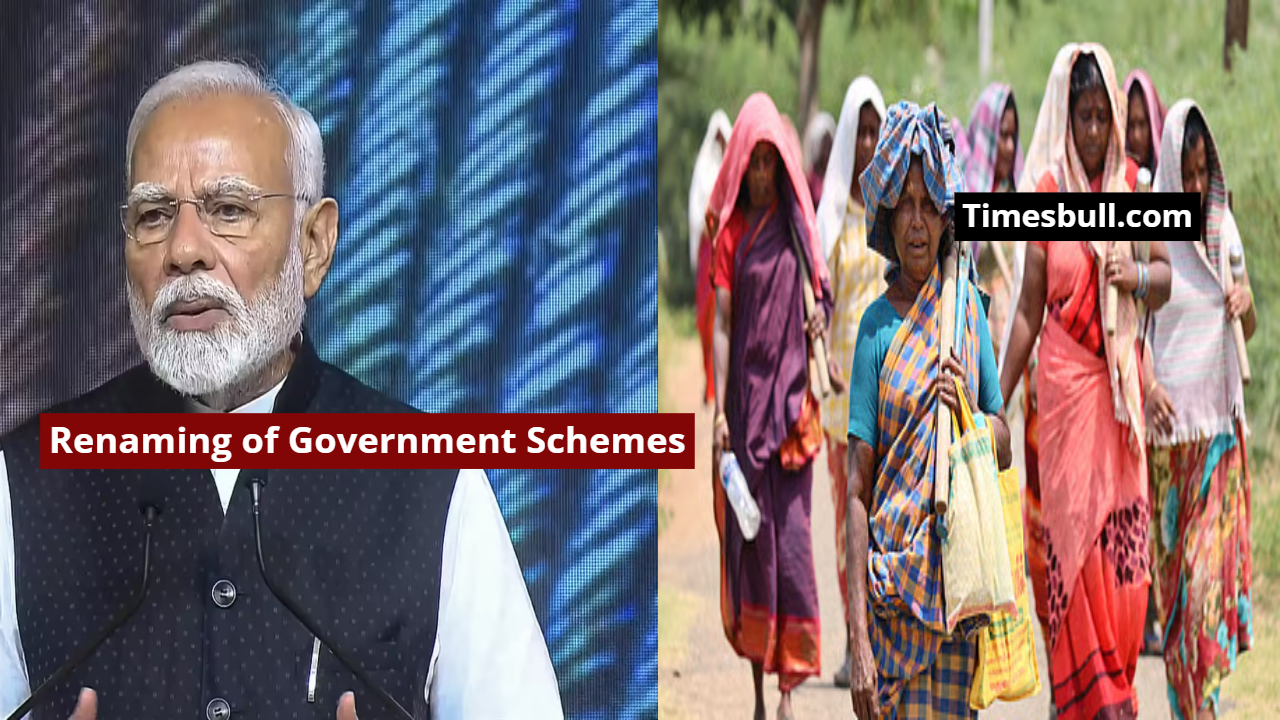
During the winter session of Parliament on Tuesday, a major policy change related to employment was proposed in the Lok Sabha. The central government introduced a new bill to change the name of the MNREGA scheme, which led to a heated debate and uproar in the House. This scheme was introduced during the UPA government’s tenure and has been considered the largest employment guarantee program in rural India.
Read More- 8th Pay Commission: Salary, pension, allowance, bonus! What will be the fate of 5 million employees?
The journey from MNREGA to VBG RAM G
The Mahatma Gandhi National Rural Employment Guarantee Scheme is now being prepared to be implemented under a new law as the Viksit Bharat – Guarantee for Employment and Livelihood Mission, or VBG RAM G. The government says that this is not just a name change but a change in the scope and vision of the scheme. Under the new law, rural families will be guaranteed work for 125 days a year instead of 100 days. The scheme has also been linked to the Viksit Bharat 2047 goal, which will emphasise rural infrastructure, water conservation, livelihoods, and climate-resilient development.
Why the uproar in Parliament?
As soon as the bill was introduced, opposition parties started protesting. The Congress party alleges that the government is deliberately changing the names associated with the schemes’ identities. The party claims that the names of more than 30 schemes and projects started during the UPA government’s tenure have been changed or merged into new missions. Congress has also released a list of such schemes on its website.
The new form of the Indira Awas Yojana
The Indira Awas Yojana, launched for the rural poor, was started in 1985 and expanded during the UPA government’s term. In 2016, the Modi government restructured it as the Pradhan Mantri Awas Yojana Gramin (for rural areas) and Pradhan Mantri Awas Yojana Urban (for urban areas). The government argued that this change also strengthened the financial framework and technical capabilities of the scheme. Changes in Urban Development Schemes
The Jawaharlal Nehru National Urban Renewal Mission, launched in 2005 to improve urban infrastructure, was replaced in 2015 by the Atal Mission for Rejuvenation and Urban Transformation (AMRUT). The government described this as a new framework tailored to urban needs.
Rural Electricity and Sanitation Missions
The Rajiv Gandhi Rural Electrification Scheme, aimed at providing electricity to rural areas, was renamed the Deendayal Upadhyaya Gram Jyoti Yojana. Similarly, the sanitation-related Nirmal Gram and Nirmal Bharat Abhiyan were expanded and implemented as the Swachh Bharat Mission, encompassing both urban and rural areas.
Changes in Livelihood and Food Security Schemes
The National Rural Livelihoods Mission was continued under the name Deendayal Antyodaya Yojana, while the food grains provided under the National Food Security Act were rebranded as the Pradhan Mantri Garib Kalyan Anna Yojana. This scheme was particularly highlighted by the government as a major achievement during the COVID-19 pandemic.
Read More- Video – Commentator creates magic with poetry on Miyan Shmit’s eye beauty, video viral
Not Just Schemes, a Broader Renaming Process
Besides schemes, the names of several government buildings, roads, and laws have also been changed. Rajpath was renamed Kartavya Path, the Prime Minister’s residence address was changed to Lok Kalyan Marg, and new codes with Indian names have replaced colonial-era laws. The government describes this as a step towards Indianization, while the opposition calls it a political move to change identities.
Latest News
- Apple MacBook Neo Deal Alert: Get It For Under ₹58,000 on Amazon Right Now

- Pakistan Attack: आत्मघाती हमले से दहला पाकिस्तान, 23 लोगों की मौत, 50 से ज्यादा घायल, जानें

- Honor Magic 9 Series Leaks: Flagship Upgrades with Massive 8,000mAh Battery and 200MP Cameras

- Motorola Edge 60 Fusion Review: Mid-Range King or Outdated?

- FD Update– Breaking Your FD Early? Know the consequences

- Bank Holiday–RBI Announces Closure of SBI, HDFC and All Banks Next Week, Save the Dates

- Samsung Galaxy S26 Ultra Amazon Deal – Get ₹23,509+ Discount with Bank Offers and Exchange Benefits

- Best Scooters For College Girls 2026 – Perfect Mix Of Mileage, Style And Lightweight Design

- Kodak Matrix QLED Google TV 2026 Series Launched in India Just Under 10,999

- Senior Citizen FD Rates: सीनियर सिटीजन को यहां से मिल रहा बंपर ब्याज, जल्द करें निवेश