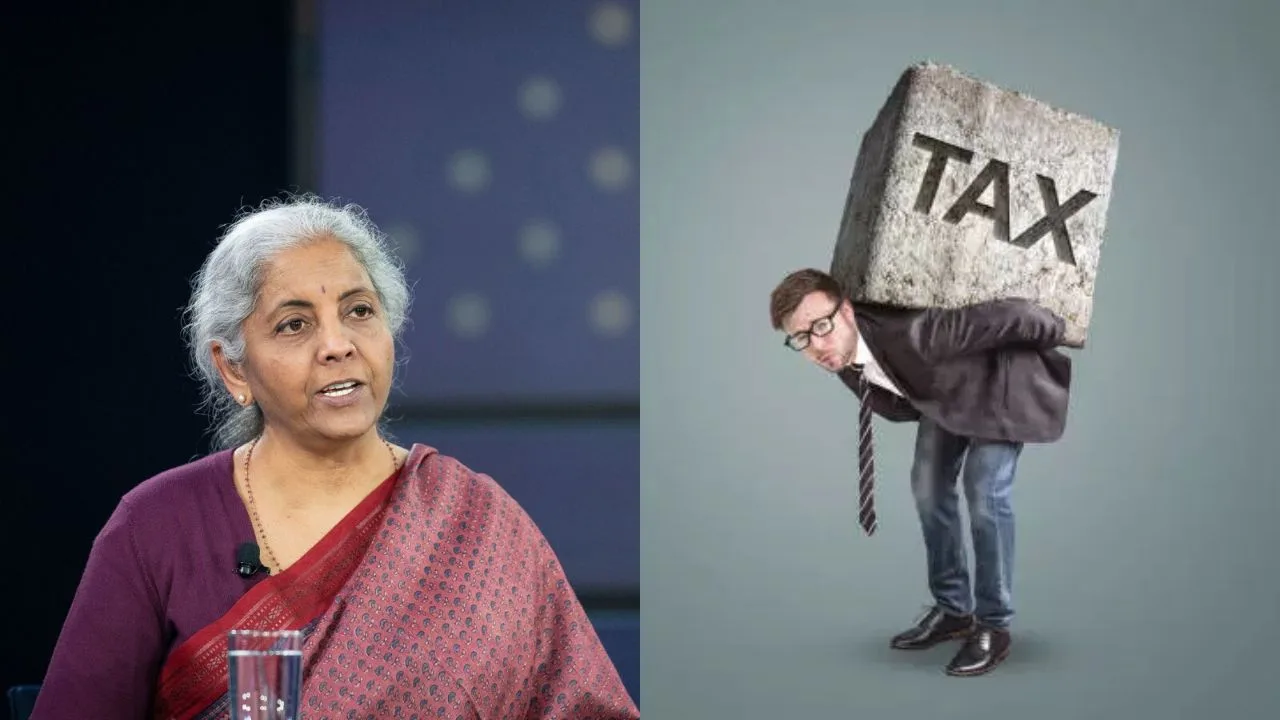
The expectations of salaried and middle-class individuals were high from the Union Budget 2026-27 on income tax. People were expecting changes in tax slabs, increase in standard deduction or additional relief in the new tax regime. But instead of shaking up the tax rates, Finance Minister Nirmala Sitharaman opted for reforming the entire income tax system. The government’s focus was on simplifying the law, making it easier to file Income Tax Returns (ITRs), reducing compliance and resolving long-standing tax disputes.
Income Tax Act, 2025: Farewell to 60-year-old law
The biggest aspect of the Budget 2026 is the new Income Tax Act, 2025, which will come into effect from April 1 and will replace the six-decade-old law of 1961. The government has made it clear that the law will be revenue neutral, meaning there will be no change in tax rates.
The new law will reduce clauses and language by about 50%, remove ambiguous rules and try to reduce tax disputes. Also, ITR forms will be redesigned for general taxpayers to simplify the filing process.
1. The difference between a mistake and intentional tax evasion
The Budget has clearly differentiated between under-reporting and incorrect reporting. If under-reporting is due to mistake or negligence, the penalty will be 50% of the tax amount.
advertisement
However, if information is intentionally misrepresented or income is concealed, the penalty can increase to 200% of the tax amount. The government’s aim is to provide relief to honest taxpayers and curb intentional tax evasion.
2. Time to understand simplified ITR forms
The Finance Minister has announced that new and simplified ITR forms will be released soon in line with the new income tax rules. These forms will be tailored to the needs of general taxpayers and they will be given sufficient time to understand the changes. This move is being seen as a major relief for first-time ITR filers and small taxpayers.
3. More time for revised ITR
The government has proposed to extend the deadline for filing revised income tax returns. Earlier, the deadline was December 31, but now it will be extended till March 31, with a nominal fee. This will give taxpayers more time to correct mistakes and disclose missing income.
4. Benefit of TDS refund even if ITR is filed late
A significant relief is that taxpayers can now claim TDS refund even if they file their ITR late. There will be no penalty for late filing, only for claiming refund. This is especially helpful for salaried employees who face high TDS deductions and are unable to file their returns on time.
5. No interest on penalty during appeal
If a penalty is imposed in a tax case and the matter is pending before the first appellate authority, then interest will not be levied on the penalty amount during that period. Whatever the verdict, it will ease the financial burden on taxpayers during protracted tax disputes.
6. 6-month special deadline for foreign assets
The Budget has announced a six-month foreign asset disclosure scheme for small taxpayers. This is seen as a significant relief for students, technology professionals and those returning from abroad, which will allow them to rectify past careless mistakes and not face any harsh consequences.
7. MAT relief and rate reduction
The Budget also provides relief on Minimum Alternative Tax (MAT). Non-residents who pay presumptive tax will be exempted from MAT. MAT will be treated as a final tax and its rate is proposed to be reduced from 15% to 14%. This is expected to reduce uncertainty for businesses and foreign taxpayers.
8. Small but impactful tax changes
The Budget also includes several small but significant tax relief measures. Motor Accident Claims Tribunal judgments have been made tax-free. Under LRS, TCS on education and medical expenses has been reduced from 5% to 2%. Also, TCS on foreign travel packages has been reduced to 2%.
9. Stringency on investors and traders
There are also some changes that will directly impact investors and traders. STT on futures has been increased from 0.02% to 0.05% and STT on options from 0.1% to 0.15%. Along with this, the income received from share buyback will now be taxed as capital gains for all shareholders.
10. Tax rates have not changed, the system has changed
Overall, the income tax slabs have not been changed in the Budget 2026-27, but there have been some changes to make the tax system simpler and more transparent. It has made a significant effort to do so. The government is emphasizing on simplified laws, easier filing, reduction of disputes and more time for taxpayers. While there may not be any reduction in direct tax rates, these changes could make the system more reliable for taxpayers in the long run.
Latest News
- Train Ticket: How to book a confirmed train ticket without an agent? Learn the Easy Steps

- Indian Railways– 155 Trains Express Declared High-Speed, Thousands of Railway Staff to Benefit

- Monsoon Alert – Warning Heavy to Very Heavy Rain alert & thunderstorms in 22 States Over Next 4 Days

- America-Iran War: मिडिल ईस्ट में तनाव होगा खत्म! ईरान ने होर्मुज रास्ते पर कही बड़ी बात

- PM Surya Ghar Yojana 2026: Get Up to Rs 78,000 Subsidy within 6 Easy Steps, Know Here

- Cheapest Available 5G Smartphones in India Under 10000

- UPSC Prelims Answer Key 2026 – How to Download UPSC Prelims Answer Key at upsc.gov.in

- 8th Pay Commission: एनपीएस और पुरानी पेंशन में कौन सी बेहतर, जानिए बड़ा अपडेट

- Xiaomi 17T Launching With Leica 5x Zoom and Huge 6,500mAh Battery Under ₹60,000

- NEET UG 2026 – Haryana & Bihar Announce Free Bus Service for Candidates on June 20-21