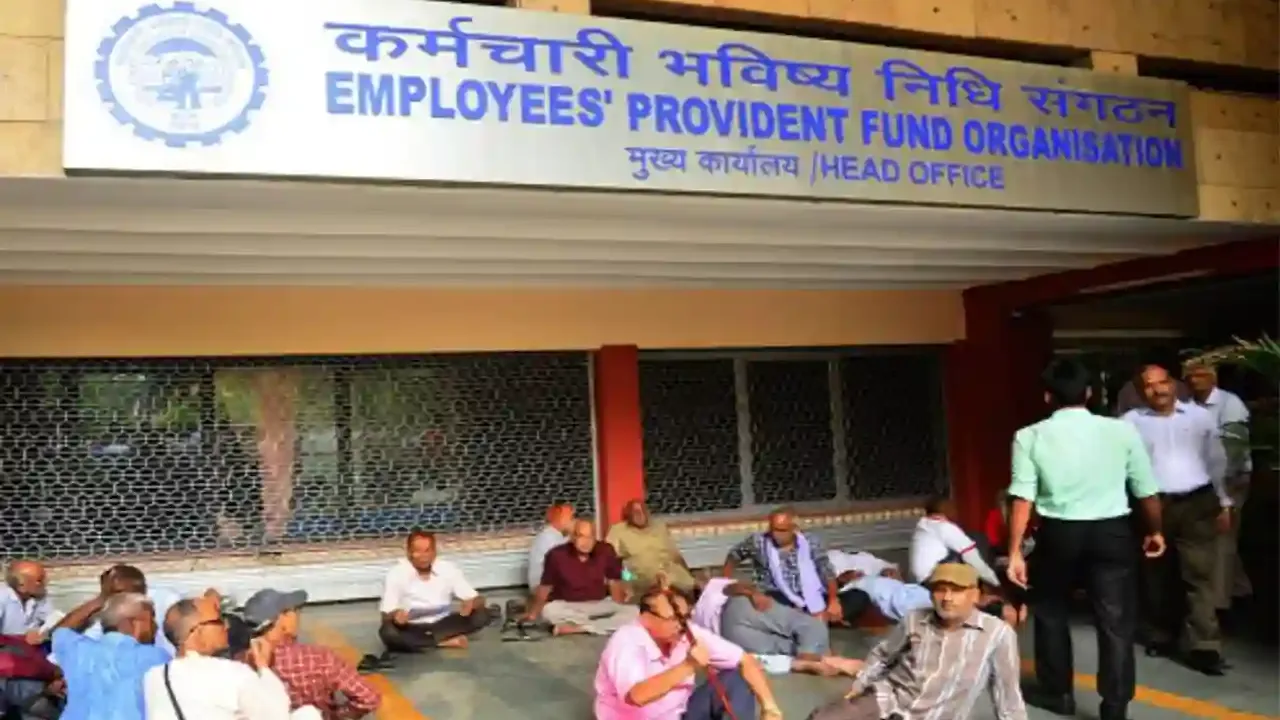
EPFO rules: Many employees withdraw their Provident Fund (PF) when they change jobs or become unemployed. However, few people know that withdrawing PF before completing five years of continuous service may be taxable and subject to TDS (Tax Deducted at Source). Therefore, it is important to understand the rules before withdrawing PF. According to the Income Tax Act and the rules of the Employees’ Provident Fund Organization (EPFO), whether PF withdrawals are taxable depends on the employee’s continuous service period.
Why is the 5-year rule important?
Under Section 10(12) of the Income Tax Act, if an employee withdraws their PF funds after completing at least five years of continuous service, they are fully tax-exempt. In this situation, the employee’s contribution, the employer’s contribution, and the interest earned on the contributions are tax-free. Continuous service doesn’t simply mean working for a single company. If an employee changes jobs and transfers the balance from their old PF account to the new account, the previous employment period is also counted. This means that the five-year requirement can be considered met if they continue to transfer their PF funds despite changing jobs.
When does PF fall under the tax net?
If an employee takes out their full PF balance before finishing five years of continuous service, that amount becomes taxable. In these situations, the withdrawn sum is treated as income for that financial year and is taxed according to income tax regulations. Nevertheless, there are instances where withdrawals made before five years may still be exempt from tax.
Serious illness of the employee
Closure of a company or institution.
Completion of a project.
Other reasons beyond the employee’s control.
In these scenarios, early PF withdrawals are not subject to taxation.
TDS regulations on PF withdrawal
When withdrawing from PF, TDS rules apply in addition to taxes.
As per the EPFO and the Income Tax Department, if the service duration is five years or longer, no TDS will be deducted. If the service is under five years and the withdrawal amount is less than Rs 50,000, TDS will not be deducted either. However, if the service is under five years and the withdrawal amount is Rs 50,000 or more, a 10 percent TDS will be deducted if a PAN is provided. If no PAN is available, TDS may be deducted at a higher rate. Eligible individuals can claim relief from TDS by submitting Form 15G or Form 15H, as long as they meet the necessary conditions. It is crucial to note that TDS is not a final tax; credit for it can be claimed when filing the return. If too much TDS has been deducted, a tax refund can also be requested.
PF withdrawal during unemployment
According to EPFO regulations, if an employee is unemployed for two consecutive months, they are permitted to withdraw the entire amount from their PF account. However, just because they can withdraw the funds does not mean the withdrawal is tax-free. Taxes will still be assessed based on the five-year service period.
What are the rules on partial withdrawals?
The EPFO also allows partial withdrawals for needs such as home purchase, marriage, children’s education, or medical treatment. Such withdrawals are not treated like normal PF settlements and are subject to different rules. They are generally not taxed like full withdrawals.
It is necessary to provide information in ITR
If the PF withdrawal is taxable, it must be reported in the Income Tax Return (ITR). TDS deducted by the EPFO can also be claimed in the return. Employees should keep their Aadhaar and PAN details updated along with their UAN to avoid any issues during the withdrawal process.