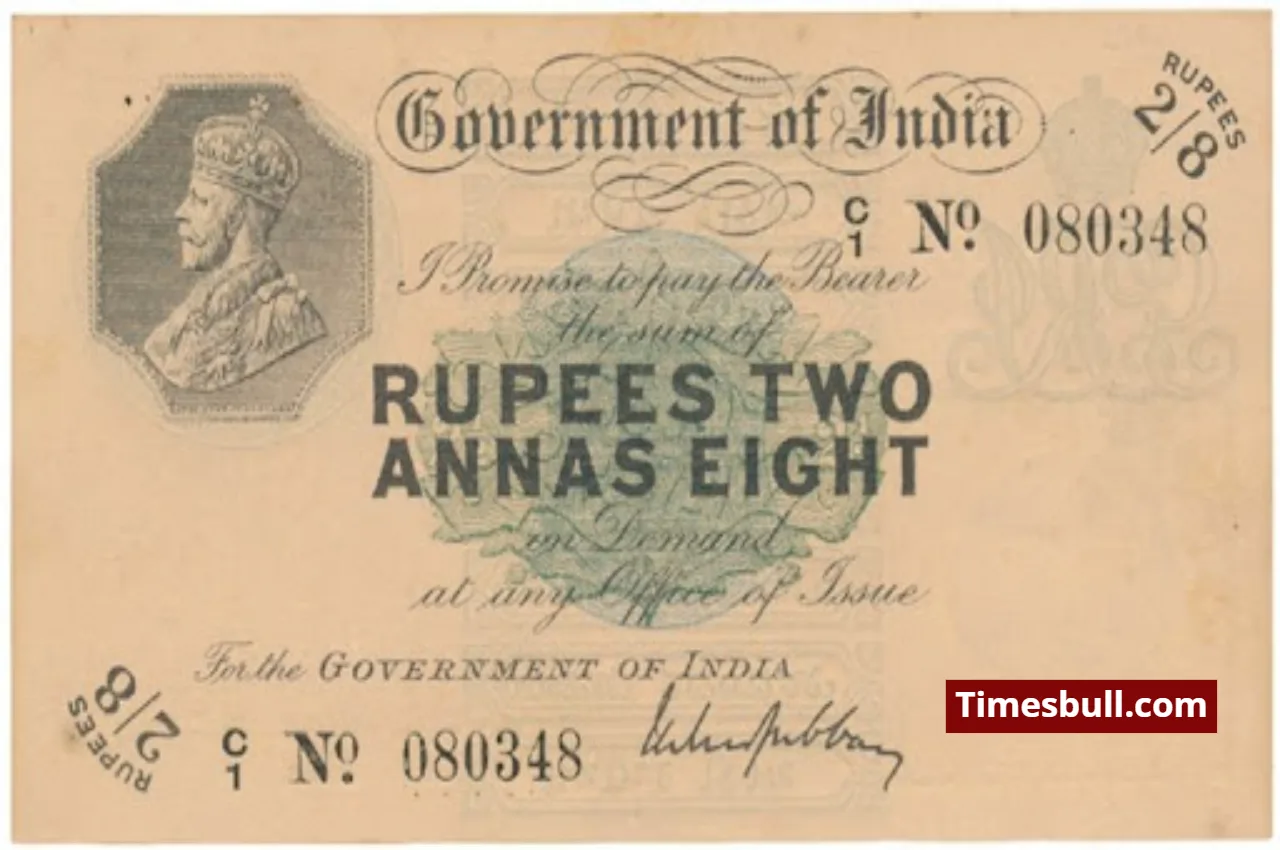
The history of India’s currency system has been incredibly rich and fascinating. Over time, many coins and notes have been issued that are now part of history. One such example is the 2.5 Rupee note, considered one of the most unique and rare currencies in Indian monetary history. Today, this note is not just a medium of exchange but a valuable treasure for collectors. The hobby of numismatics, or collecting old coins and notes, is rapidly growing in India, and this is why the prices of rare currencies are constantly increasing.
Read More- Punjab Board Class 12 Exams 2026 Admit Card – Now Available on Official Site at pseb.ac.in
The 2.5 Rupee Note was issued during the British era
The 2.5 Rupee note was first issued during British rule. This note was equivalent to 2 rupees and 8 annas, or 2.5 rupees. At that time, one rupee was divided into 16 annas in India. This note was issued on January 2, 1918. Due to a shortage of silver and increased demand for coins at that time, the government had to issue paper currency. Later, this note did not remain in circulation for long and was withdrawn in 1926.
This note was considered to be of equal value to the US dollar at that time and was printed in England. It also bore the emblem of the British monarch, King George V.
Why is this note so rare and valuable today?
The value of any old note depends on its rarity and demand. The 2.5 Rupee note was in the market for a very short time, so very few well-preserved specimens remain. This is why such notes sell for millions of rupees at auctions. In some cases, its price has reached approximately 6.4 lakh rupees.
Experts believe that old paper notes deteriorate faster than coins, so their value increases even more when found in good condition.
Jharkhand’s Jain Coin Gallery becomes a hub for collectors
The Jain Coin Gallery, located in the Hazaribagh district of Jharkhand, is considered quite popular among enthusiasts of old coins and notes. Here, you can find everything from Mughal-era coins to British Indian banknotes and commemorative coins of independent India. The gallery owners collect rare currency and make it available to collectors.
Visitors here believe that every old note and coin is not just metal or paper, but a piece of history. This is why such museums and private galleries are playing a crucial role in preserving monetary history.
The hobby of currency collecting is growing rapidly in India
The hobby of numismatics is growing rapidly in India. Many people are making good profits by selling old banknotes and coins. Some rare notes can fetch prices in the lakhs (hundreds of thousands), while notes with special serial numbers can even sell for crores (tens of millions). However, not every old note is necessarily expensive. Its condition, rarity, and historical significance determine its value.
Read More- Rs. 5000 pension every month after 60 years, Are you eligible?
A historical legacy for future generations
Rare currency is not just a collector’s item but also a means of understanding history. It reveals how the country’s economic system and monetary system have changed over time. The two-and-a-half rupee note is an example of how governments can issue new types of currency during times of need.

Rohit P
My name is Rohit Pal, and I have been working in the field of journalism for the past five years. During this time, I have written on a variety of topics, including business, automobiles, technology, and politics. I have worked with several major organizations and am currently working with Timesbull.
Related Stories
 latest news
 Business
 Business
 India
India Business
 Business
 Business
 Business
 India
India Business