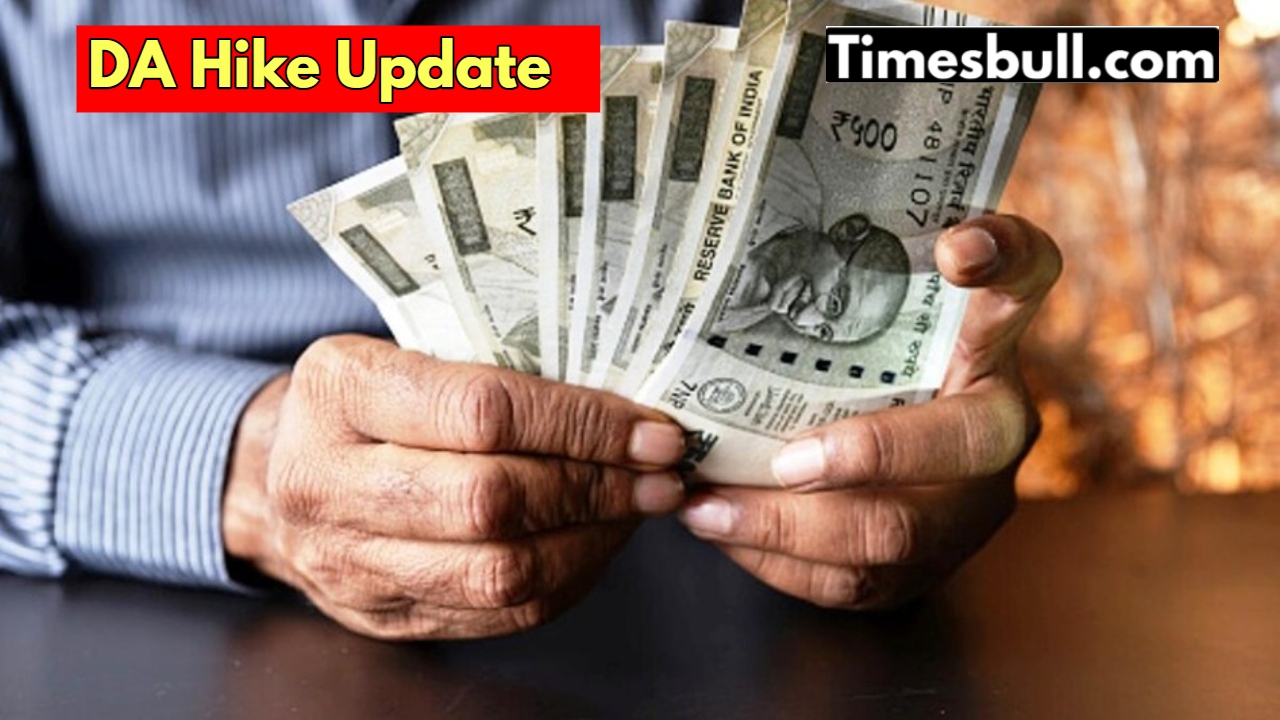
DA Hike Update: The Modi government is expected to bring good news to central employees and pensioners in the next half year. It is believed that in the second half of 2025, the central government may increase the DA of central employees and pensioners, resulting in a significant salary increase. It is being speculated that this time, the DA can be improved by up to 333 per cent, which will benefit more than one crore families.
On the other hand, the government can also form a committee of the 8th Pay Commission. If this happens, then two pieces of good news will be received together, which is enough to win over the hearts of the employees. However, no official announcement has been made on the DA hike yet. Such a claim is being reported in the media.
How much will the DA be?
If the Modi government increases the DA by 3 per cent, it will rise to 558 per cent. Currently, central employees are receiving a 55 per cent DA benefit. After the increase, the employees’ salaries will jump like a cheetah. For example, if an employee’s salary is Rs 30,000 per month, then according to a 3 per cent DA, an increase of Rs 900 can be observed.
If calculated for the whole year, there can be an increase of up to Rs 10800. The increased amount will work like a booster dose in the era of inflation. Employees will reap significant benefits from this. However, the government has not yet made an official announcement
When will the 8th Pay Commission be implemented?
Central government employees are eagerly awaiting the 8th Pay Commission. The question arises in everyone’s mind: When can it be implemented? B? The way, the government has not yet constituted the 8th Pay Commission. After the formation, it takes several months to review.
Earlier, it was expected that the government would implement the 8th Pay Commission on January 1, 2026, but now it is not anticipated to happen. It is likely to be implemented by January 1, 2027. The salaries of employees will be increased based on the fitment factor, which everyone is eagerly awaiting.
Latest News
- New Honda City Facelift 2026 Launched – Sporty Coupe Look And ADAS Safety Revealed

- 8th Pay Commission: केंद्रीय कर्मचारियों की बढ़ेगी बंपर सैलरी! आयोग ने उठाया यह बड़ा कदम

- China: चीन के कोयला खदान में भयंकर विस्फोट, 90 लोगों की गई जान, पीएम मोदी ने भी जताया दुख

- Weather warning – Heavy Rain, thunderstorms, lightning Alerts for 13 States Over Next 3 Days

- UP TGT Exam City Slip 2026 Released – Download at upessc.up.gov.in, Exam June 3-4

- ATM Alert: एटीएम में फंस जाए डेबिट कार्ड तो घबराएं नहीं, फटाफट यह काम करने से होगा समाधान

- Post Office Scheme – 7.5% Interest Rate, ₹5 Lakh Becomes ₹7,24,974 in 5 Years, Start with Just ₹1,000

- Best AI Video Editing Laptops Under 60,000 INR: Top Picks Her

- Best CNG Cars: पेट्रोल के बढ़ते दाम के बीच ये सीएनजी गाड़ी खरीदकर खर्च करें कम, माइलेज भी जबरदस्त

- Samsung Stable One UI 8.5 Update to Galaxy Tab S10 FE and Tab S10 FE+