
2.20 lakh bank accounts are inactive; 39% of unused accounts in Jan Dhan Yojana
PM Jan Dhan Yojana- Big news for PM Jan Dhan Yojana account holders. As many as 2 lakh 20 thousand accounts opened under the Prime Minister Jan Dhan Yojana in Goa. BankInformation in the Lok Sabha has revealed that the accounts are inactive. This rate

 Join Us
 Add as a preferred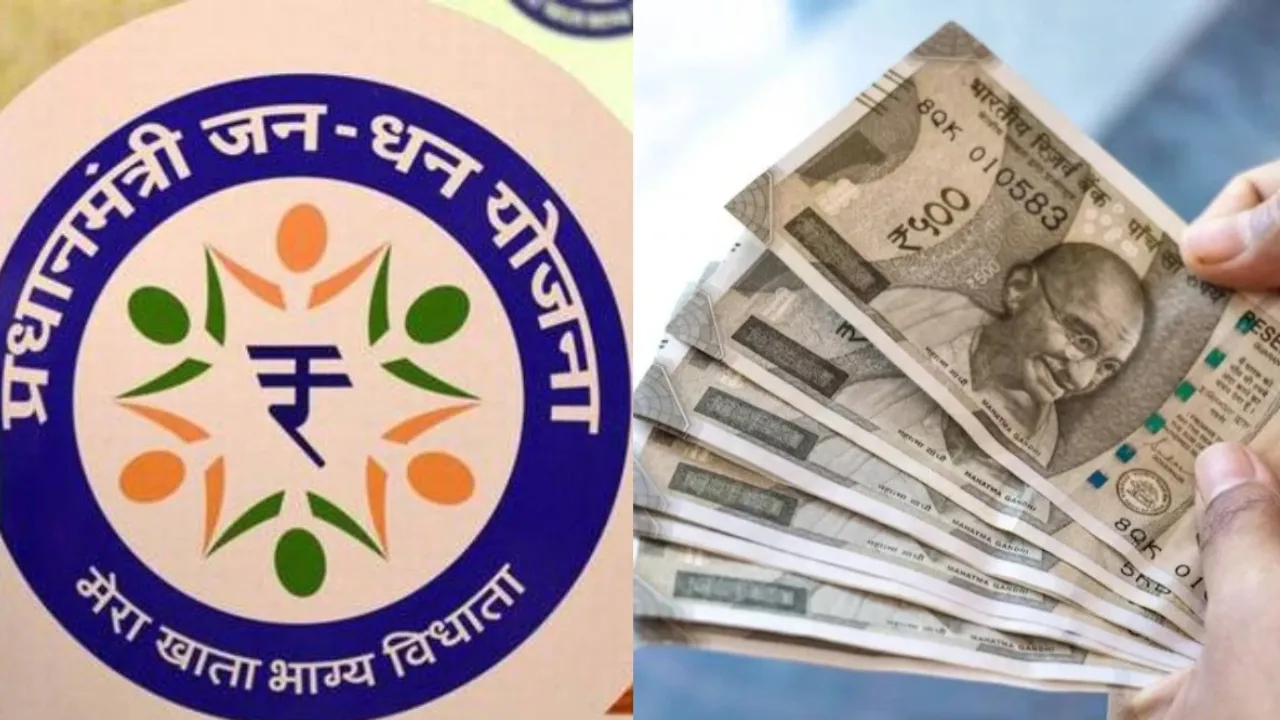
PM Jan Dhan Yojana
PM Jan Dhan Yojana- Big news for PM Jan Dhan Yojana account holders. As many as 2 lakh 20 thousand accounts opened under the Prime Minister Jan Dhan Yojana in Goa. BankInformation in the Lok Sabha has revealed that the accounts are inactive. This rate is a significant 39 percent.
According to the information given in a written reply by Union Minister of State for Finance Pankaj Chaudhary in the Lok Sabha, a total of 2.20 lakh people were displaced in the state as of July 31.Bank Accounts are unused. A total of 56.04 crore PM Jan Dhan accounts were opened across the country. Out of these, 13.04 crore accounts are inactive. This is 23 percent. Uttar Pradesh, Bihar, Madhya Pradesh have the highest number of inactive accounts.
In this regard, the Union Minister of State for Finance said, ‘The government has taken various steps to ensure that these accounts are smooth. Uttar Pradesh has the highest number of 2.75 crore Jan Dhan accounts, followed by Bihar with 1.39 crore and Madhya Pradesh with 1.07 crore accounts,’ he said. Chaudhary said in a written reply, ‘As per the guidelines of the Reserve Bank of India dated February 18, 2009, a savings account is considered dormant if no transactions have been made in the account for more than two years. The government has taken various steps to ensure the smooth functioning of Pradhan Mantri Jan Dhan Yojana accounts. This includes Direct Benefit Transfer (DBT). Banks provide written information to the account holders through letter or email or SMS and contact the dormant account holders through letter, email, SMS on a quarterly basis.’
Meanwhile, he has clarified that the total capital raised by public sector banks in the form of equity and bonds in the three years of financial years 2022-23, 2023-24 and 2024-25 is Rs 1,53,978 crore. The amount is Rs 44,942 crore in financial year 2022-23, Rs 57,380 crore in financial year 2023-24 and Rs 51,656 crore in financial year 2024-25.
In response, Chaudhary said, “The newly raised capital by banks is used for various purposes. These include meeting the capital requirements of banks to support credit growth, meeting regulatory requirements for capital adequacy, increasing public shareholding to comply with minimum public shareholding norms, etc. Along with this, the objective is to replenish bonds payable to exercise call options, strengthen the overall capital position of the bank.”

Sweta Mitra
Next Article
Weather Update – IMD Issues Heatwave & Rain Alert for 15+ States, Full State-Wise Forecast
Heatwave Alert: The Meteorological Department has forecast that heatwave conditions will persist across most states in Northwest, Central, and East India for the next 6 to 7 days. An ‘Orange Alert’ has been issued for Punjab, Haryana, the NCR-Delhi region, Coastal Andhra Pradesh, and Odisha. Additionally, the Meteorological Department has issued an alert regarding heavy rainfall in several states across the country.


Heatwave Alert: A heatwave alert has been issued across North India due to severe heat. The Meteorological Department has issued an alert for several states across the country due to intense heat. The Delhi-NCR region is currently experiencing the full brunt of this severe heat. Temperatures recorded at various weather stations in Delhi include 44.5°C at Safdarjung, 45°C at Aya Nagar, 44.9°C at Palam, and 44.6°C at Lodhi Road. Alerts regarding severe heat have also been issued for most districts of Uttar Pradesh.
Stepping out of the house during the daytime is becoming increasingly difficult. A heatwave alert has also been issued for Eastern India. Meanwhile, alerts for heavy rainfall at isolated places have been issued for South India, Sub-Himalayan West Bengal, Sikkim, the Northeast, and adjoining parts of Eastern India. Additionally, the Meteorological Department has issued a warning regarding potential rainfall over the next five days in Tamil Nadu, Kerala, Puducherry, Karaikal, and surrounding areas.
Write a Comment