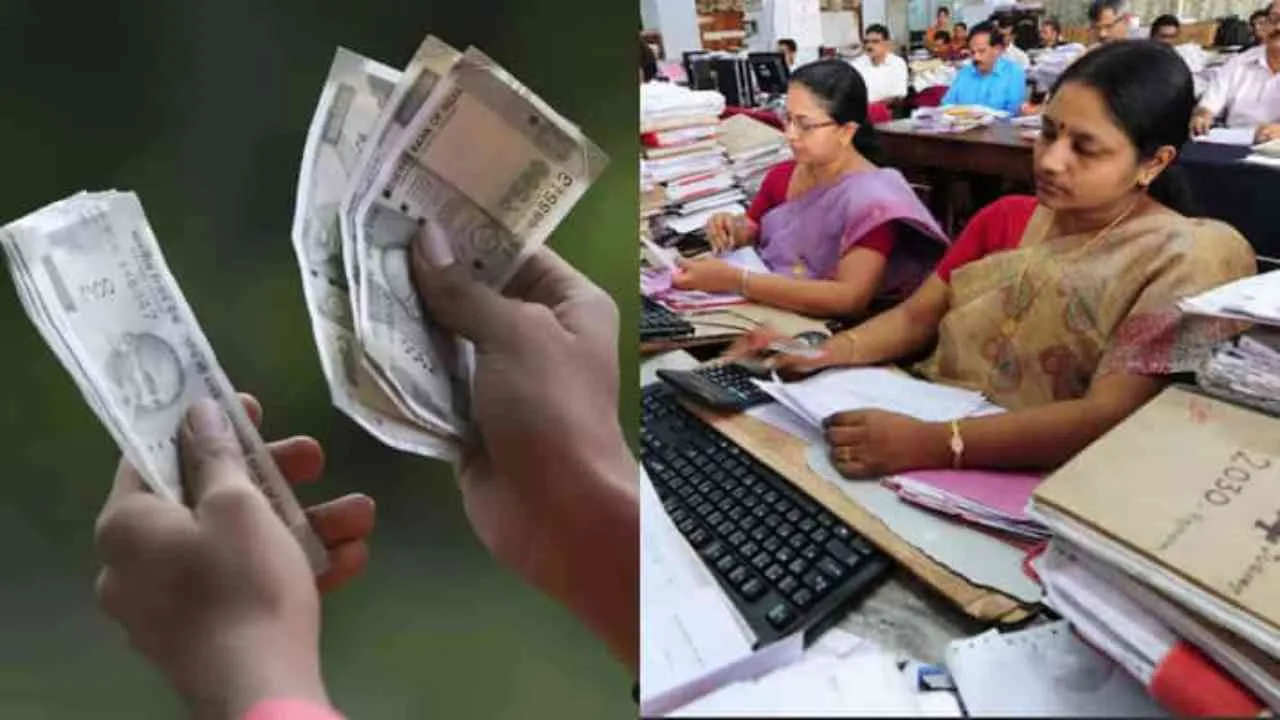
8th Pay Commission: The 8th Pay Commission has created quite a buzz among central government employees and pensioners nationwide. The process of finalizing adjustments to salaries, pensions, allowances, leave, and other benefits is moving swiftly. After recent meetings in Delhi, the Commission is set to visit various cities to engage directly with employees and their organizations.
Reports indicate that several dates in May and June are deemed critical. Significant meetings are planned to occur in different regions of the country during this period. The first meeting is scheduled in Pune on May 4th and 5th. This will be succeeded by discussions in Hyderabad on May 18th and 19th. Meetings are also planned in Srinagar from June 1st to 4th, with the final round of discussions set for June 8th in Ladakh. Additionally, May 31st is an important date, as employees and pensioners can submit their suggestions until then.
Why are these meetings significant?
The Commission’s goal is to grasp the demands, suggestions, and challenges faced by employees through these meetings. Topics such as salary structure, pensions, allowances, leave, health facilities, and service conditions will be on the agenda. If you are a central government employee or pensioner, make sure to mark these dates on your calendar. What transpired during the Delhi meetings? The 8th Pay Commission team has already engaged with representatives of employees and pensioners in Delhi and nearby areas.
During these discussions, various organizations voiced their demands, including a more favorable pay structure, enhancements to pensions, adjustments in dearness allowance, and the necessity for better working conditions. Now, the Commission is heading to other cities to gain a more thorough understanding of these suggestions. In these meetings, employee unions, pensioner groups, and other stakeholders will have the opportunity to present their perspectives directly to the Commission.
1) Demand for a minimum wage of Rs 65,000
It was also requested that the existing minimum wage be raised from Rs 18,000 to Rs 65,000.
2) Demand for a fitment factor of 3.8
The most significant issue affecting the Pay Commission is the fitment factor. Previously set at 2.57 in the 7th Pay Commission, there are now calls for it to be increased to 3.8.
3) Family unit of 5 members instead of 3
The family unit plays a crucial role in determining the minimum wage and fitment factor. Therefore, it was proposed that the family unit should be recognized as consisting of 5 members, including parents, rather than the current definition.
4) Setting a minimum DA increase
At present, the low rate of DA increase does not align with the rising inflation, leading to a demand that the Commission should establish a default minimum DA increase rate of 4%.
5) Enhancement of HRA rates
In the 7th Pay Commission, HRA rates were tied to the dearness allowance (DA). These rates varied from 10%, 20%, and 30% based on the city, but were only set when DA surpassed 50%. Initially, they were 8%, 16%, and 24%.
The organization has requested that HRA be provided at higher rates from the start of the 8th Pay Commission and not be linked to DA, as this linkage causes employees to lose between Rs 2,000 to 6,000 monthly.
The Commission acknowledged that this issue would not arise in the 8th Pay Commission. Additionally, they took the demands for increasing HRA rates from 10%, 20%, and 30% to 12%, 24%, and 36% seriously.
6) Increase in Travelling Allowance (TA):
Similar to the 6th Pay Commission, there is now a demand for a 2.5 times increase in travel allowance.
7) Increase in special incentive allowance for challenging areas
8) Raise in annual salary increment from 3% to 5%.
9) The 10, 20, 30 Assured Progression Scheme should also be applied to teachers.
10) Pay anomalies in promotions under 10, 20, 30 or 12, 24, 36 schemes should be removed.
The issue of not receiving a pay increase upon promotion after 10 years of service was presented to the Commission with evidence, which was acknowledged by the Commission members present. The organization demanded that pay be fixed at the next level in such cases.
11) Re-introduction of Special Increment Scheme
This scheme of 5th Pay Commission for outstanding work, which was discontinued from 6th Commission, was demanded to be restarted in the 8th Pay Commission.
12) Pension Reforms: Key Points
Implementation of the Old Pension Scheme (OPS), Necessary changes in OPS scheme, Inconsistencies in the UPS Scheme .
13) It was demanded that the calculation formula should be changed to 1/3 of the salary instead of 1/4, service years should be calculated as per actual years instead of 33 years and the maximum limit should be Rs 50 lakh.
14) Improvement in Death Gratuity Calculation:
There was a demand to increase the gratuity multiplier to provide more benefits to the families of deceased employees.
Following the meeting with the Commission, the organization’s members thanked the Commission officials. The meeting was attended by the organization’s State President, Vitesh Khandekar, along with State Secretary Govind Ugale, Vinayak Chauthe, Babanrao Mhalaskar, Jitendra Fapale, Somnath Kudale, and Anand Londhe.
Latest News
- Weather warning – Heavy Rain, thunderstorms, lightning Alerts for 13 States Over Next 3 Days

- UP TGT Exam City Slip 2026 Released – Download at upessc.up.gov.in, Exam June 3-4

- ATM Alert: एटीएम में फंस जाए डेबिट कार्ड तो घबराएं नहीं, फटाफट यह काम करने से होगा समाधान

- Post Office Scheme – 7.5% Interest Rate, ₹5 Lakh Becomes ₹7,24,974 in 5 Years, Start with Just ₹1,000

- Best AI Video Editing Laptops Under 60,000 INR: Top Picks Her

- Best CNG Cars: पेट्रोल के बढ़ते दाम के बीच ये सीएनजी गाड़ी खरीदकर खर्च करें कम, माइलेज भी जबरदस्त

- Samsung Stable One UI 8.5 Update to Galaxy Tab S10 FE and Tab S10 FE+

- बुढ़ापे की लाठी बनेंगी ये तीन स्कीम्स, निवेश से पहले जानिए कितना मिल रहा ब्याज

- OnePlus Nord CE 6 vs Samsung Galaxy A57: Which Mid-Range 5G Phone Wins?

- Lenovo LOQ 15 Gen 11 Review: Best Budget Gaming Laptop?