
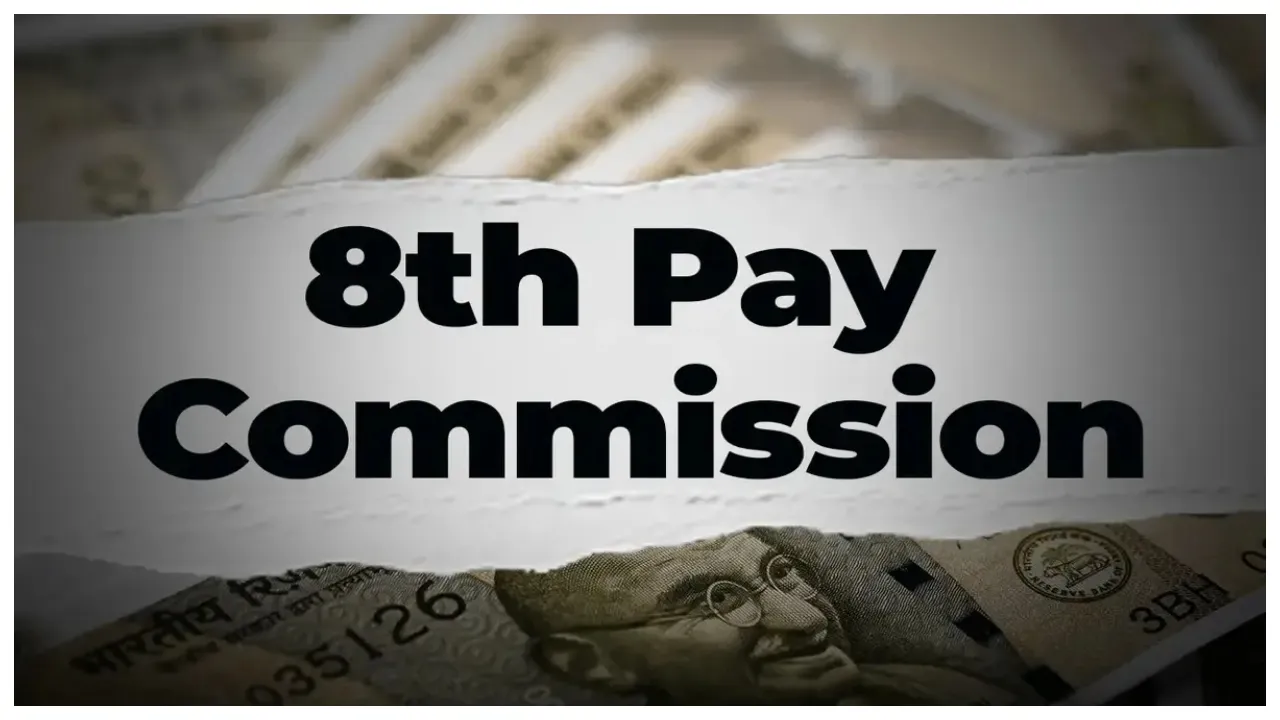
A big update has come from the government regarding the Eighth Pay Commission. With its implementation, there will be a major change in the salary, allowances, and pension of central government employees and pensioners. The government has started taking steps to implement it. The Finance Ministry has begun early discussions for forming the new Central Pay Commission (CPC). In a written reply in the Lok Sabha during the monsoon session of Parliament, Minister of State for Finance, Pankaj Chaudhary, shared this important information.
8th Pay Commission Update: What the Finance Ministry Said
The Finance Ministry has started discussions with different departments, ministries, and state governments about the Eighth Pay Commission. These include the Ministry of Defence, Ministry of Home Affairs, and others.
In the Lok Sabha, Minister of State for Finance Pankaj Chaudhary said that inputs have been taken from all departments. Once the formal notice is issued, the chairman and members of the pay commission will be selected. However, no names have been announced yet.
Right now, the recommendations are not ready. But like the 7th Pay Commission, which was formed in 2014 and implemented in 2016, the 8th Pay Commission may be implemented from January 1, 2026.
The minister also said that it will only be implemented after the report is submitted and approved by the government.
DA Hike and Benefits for Employees and Pensioners
When the new pay commission is applied, around 50 lakh central employees and over 65 lakh pensioners will benefit. Until then, there will be no change in salary or pension. But employees will still get DA (Dearness Allowance) hikes twice a year.
The DA is linked to the AICPI-IW index, which is checked every 6 months. As of May 2025, the index has reached 144, so a 3% to 4% DA hike is expected from July 1. The government may announce it in September or October.
When the 7th Pay Commission started, DA was 0%, and by January 2025, it rose to 55%. If a 3% hike is added in July 2025, DA will be 58%. After the next review in January 2026, it could go up to 60%.
Latest News
- America Update: व्हाइट हाउस के दरवाजे पर 25 राउंड फायरिंग से मची खलबली, संदिग्ध हमलावर की मौत

- Tata Tiago Facelift Launching Soon – Aggressive Design And High-Tech Cabin Revealed

- LPG Gas Connection Transfer Made Easy, Learn the Complete Process

- New Honda City Facelift 2026 Launched – Sporty Coupe Look And ADAS Safety Revealed

- 8th Pay Commission: केंद्रीय कर्मचारियों की बढ़ेगी बंपर सैलरी! आयोग ने उठाया यह बड़ा कदम

- China: चीन के कोयला खदान में भयंकर विस्फोट, 90 लोगों की गई जान, पीएम मोदी ने भी जताया दुख

- Weather warning – Heavy Rain, thunderstorms, lightning Alerts for 13 States Over Next 3 Days

- UP TGT Exam City Slip 2026 Released – Download at upessc.up.gov.in, Exam June 3-4
- ATM Alert: एटीएम में फंस जाए डेबिट कार्ड तो घबराएं नहीं, फटाफट यह काम करने से होगा समाधान

- Post Office Scheme – 7.5% Interest Rate, ₹5 Lakh Becomes ₹7,24,974 in 5 Years, Start with Just ₹1,000